
Can plastic still be part of our world?
by Giovanna Landi*.
3' min read
3' min read
The European Union is devoting a lot of attention to plastics, passing legislation with significant impact, starting with the 2018 European Strategy for Plastics in the Circular Economy. The Union's stated goals are to increase the recycling capacity of plastics and to increase recycled material in plastic products and packaging.
For example, Directive (EU) 2019/904 on the reduction of the impact of certain plastic products on the environment envisages an ambitious programme of restrictions on the placing on the market of single-use plastic products and oxo-degradable products (i.e. plastic products with additives that, through oxidation, break down into very small particles resulting in so-called 'microplastics'). The Member States had to implement the provisions of this Directive mainly by 2021 (Italy has adapted with legislative decree 196/2021); however, there are still targets to be reached, such as the one, scheduled for next 3 July, to ensure that only those single-use plastic products that have caps and lids attached to the containers for the duration of the intended use of the product are placed on the market. This obligation has already been taken up by the market, as seen by the criticism on social media about the inconvenience of drinking from the new PET bottles with the cap attached.
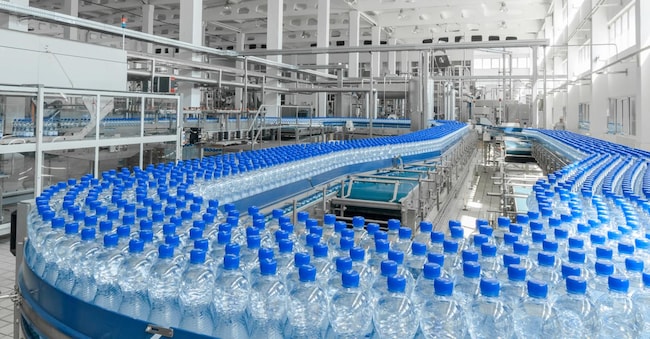
The same Directive also sets targets on the minimum recycled plastic content that must be present in single-use plastic beverage bottles (in particular, PET bottles). In 2025, each European State will have to ensure at least 25% recycled plastic, as an average for all PET bottles placed on the national market, and this target rises to 30% in 2030.
In order to ensure uniformity and transparency of calculation, the European Commission was mandated to establish a common methodology for calculating the percentage of recycled plastic in bottles, presented on 30 November by Implementing Decision 2023/2683.
However, this Decision only considers plastics recycled by mechanical treatment, which is considered the only recycling technology currently available, and excludes any reference to other forms of recovery or recycling, such as chemical recycling. This position, already present in the European legislation on recycled plastics intended to come into contact with foodstuffs, derives from the assumption that chemically recycled plastic is not substantially distinguishable from virgin material, and therefore cannot be used to check compliance with the mandatory recycled content quantities required by the legislator. This choice is also strongly criticised by European political bodies and confirms the dominance of mechanical recycling, which is very strong in Italy especially in packaging. The fear of 'greenwashing' phenomena is obvious, but this risks limiting the technological development of chemical recycling in which many companies have been investing for years, also with a view to the green development of chemistry.

