
Plastic recycling: zero profit for companies in 2025
Assorimap's alarm. The crisis, triggered by high energy costs and competition from non-EU products, is on the government's radar

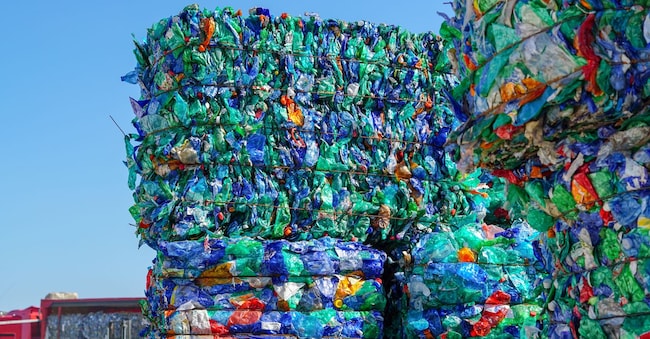
To the Ministry of Made in Italy, the plastics recycling companies brought the demands of a sector in difficulty due to high energy costs and competition from cheaper non-EU products. "We had a meeting with Mimit, which will think of a solution to the crisis we are going through, also discussing it with Mase. We hope it will come soon," says Walter Regis, president of Assorimap, the association that includes 90% of the plastics recyclers and regenerators supply chain, a sector that in Italy has over 350 companies, about 10,000 employees, a turnover of 690 million euro in 2024, and an installed recycling capacity of 1.8 million tonnes (Plastic Consult data).
Tripled production costs
At the beginning of October, a round table with the entire plastics supply chain, which shares the growing difficulties, had already been convened at the Ministry of the Environment: 'It has grasped the emergency and the need to proceed with urgent solutions. It is not a sudden crisis: it started with Covid, and has now exploded. The overall cost of producing the second raw material (the fruit of recycling, ndr) in Italy, driven by energy, is three times higher than in Turkey and China and five times higher than in Vietnam. The market price of recycled PET is now 1,400-1,500 euro per tonne. This compares with 8-900 euro for virgin PET produced in Europe and 500 euro for virgin PET from Asia. It is not competitive. It is an unsustainable situation. With the risk of creating a plug for the waste collection process,' Regis reiterates.
Closed facilities
The rest of Europe is no better off, Assorimap reports that since 2023 some 40 plants have closed on the continent, mainly affected by the United Kingdom and the Netherlands. And if the total installed recycling capacity in the EU in 2023 was 13.2 million tonnes, it has now been eroded by 135 thousand tonnes in 2023 and 280 thousand in 2024, with forecasts for 2025 to lose a further 380 thousand tonnes. With non-EU polymer imports increasing by 10% in the first half of the year.Between 2024 and 2025 there were the first two closures in Italy as well.
Utilized to zero
"Our companies are suffering and continue to produce because they believe in the decarbonisation objectives that Europe has set itself. But by 2022 they have lost 30% of their turnover. And if we look at the profits from plastics recycling, removing all integrated activities, we find worrying figures: 155 million in 2022, 6 million in 2023, probably zero in 2025,' continues Regis, who lists the solutions to restore oxygen to the market: 'A minimum recycled content in plastic goods, not only in packaging as envisaged by the Pwpwr, to give new breath to demand. White certificates for those who produce using secondary raw materials, recognising the energy and CO2 savings, carbon credits, greater traceability of imported materials, controls and penalties for those who do not respect the rules.
Revet's polyolefins
Le imprese associate confermano il momento complicato, ciascuna con le proprie specificità. La Revet di Pontedera (Pisa), con 270 dipendenti, copre tutto il ciclo, dalla raccolta dei rifiuti al riciclo di plastiche e di altri materiali. «Entrano annualmente 174mila tonnellate: il 70% sono imballaggi in plastica, il 65% dei quali è un mix di poliolefine che trasformiamo in granuli per applicazioni in edilizia, automotive, elettrodomestici e altro. Abbiamo appena inaugurato il raddoppio dell’impianto e dalle 20mila tonnellate prodotte l’anno scorso arriveremo a 40mila», racconta Alessia Scappini, ad di Revet: «Siamo passati da 60 milioni di ricavi nel 2023 a 55 nel 2024. Vediamo una contrazione della domanda, anche per l’impatto del costo dell’energia sui prezzi del prodotto riciclato. Tuttavia pensiamo che la strada sia segnata: continuiamo a investire perché il futuro è dei materiali innovativi e performanti dal punto di vista ambientale come quelli che produciamo. Serve tuttavia un sistema reg


