
Plastic recycling: the crisis continues – collection services are at risk of being suspended
Giorgio Quagliuolo, president of the Corepla consortium: action is needed to tackle businesses’ energy costs and encourage the use of recovered materials

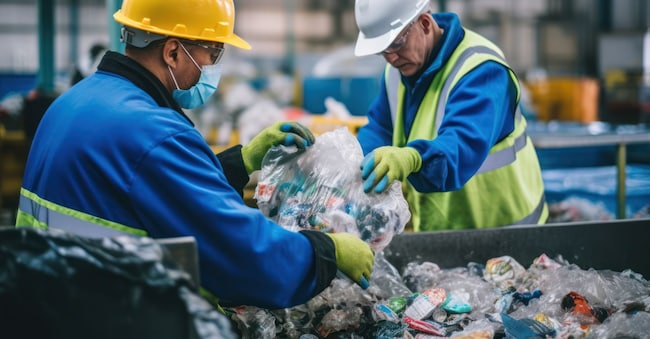
The crisis in plastic packaging recycling, which came to a head last year, continues: ‘The supply chain is now under pressure that is no longer sustainable. The build-up of waste at collection and sorting centres has reached critical levels and risks jeopardising the continuity of the service. Without urgent and extraordinary measures, the suspension of separate waste collection in large parts of the country is a real risk, which has already materialised to some extent,” emphasises Giorgio Quagliuolo, who returned as chairman of Corepla – the consortium for the collection, recycling and recovery of plastic packaging – at the start of June.
“Recently in Europe,” continues Quagliuolo, “45 recycling plants have been closed, and in Italia two plants are already at a standstill whilst another two are due to undergo refurbishment shortly; processing capacity has fallen. This is a critical moment.” Competition from products sourced from non-EU countries at very low prices, combined with rising costs – particularly energy costs – has put companies under pressure.
The president of Corepla emphasises that this crisis primarily affects the less valuable types of plastic: mixed polyolefins (polyethylene and polypropylene) and other packaging that is difficult to recycle. It is no coincidence that these are the categories for which the Conai consortium, in agreement with Corepla, has this year approved the largest increases in the environmental levy – that is, the fee that producers must pay to ensure the proper end-of-life management of the packaging they place on the market – with effect from 1 October.
With regard to the treatment of packaging waste, the consortia have, by law, a subsidiary role in relation to the market: if the market is unable to manage the materials collected in an economically sustainable manner, the consortia are required to step in, paying recyclers to process those fractions that nobody wants, so as to ensure that the waste is disposed of in all circumstances. The larger the quantities to be processed, the higher the costs will be; these costs must therefore be covered by the levy paid by producers.
“We are facing a structural crisis from which it is difficult to envisage a way out. The price rises for virgin plastic caused by the blockage of the Strait of Hormuz have boosted demand for recycled plastic, but that is not enough,” summarises Quagliuolo, whilst also suggesting some solutions: “Increasing the authorised processing capacities of plants – although I fear this will take a long time – and, as a last-resort emergency measure, implementing energy recovery for non-recyclable waste streams.”


