
Plug-in hybrid cars: 5 models with low fuel consumption and a long electric range

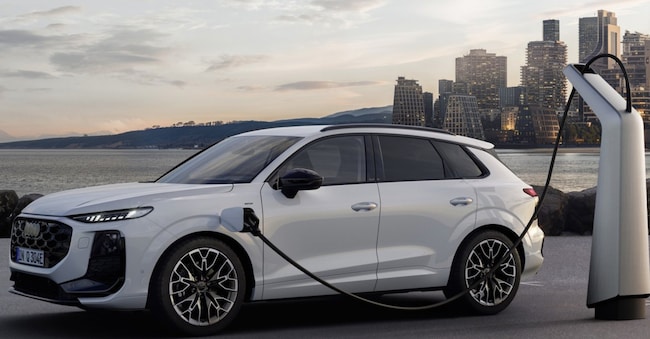
Plug-in hybrid cars with a generous range are a viable solution for those looking for long-range capability and the option to travel in electric mode for over 100 kilometres in certain models. Compared to the past, PHEVs offer low fuel consumption even when driving on a flat battery, although the best option is to plug the car in whenever possible.
Audi Q3
The Audi Q3 e-hybrid is the plug-in hybrid version of the German brand’s C-segment SUV. Available in standard and Sportback versions, it is powered by a 1.5-litre four-cylinder Miller-cycle engine producing 177 cavalli, combined with an 116 cv electric motor, for a total output of 272 cavalli and 400 Nm of maximum torque. The claimed electric range is 119 kilometres, average fuel consumption is 1.7 l/100 km, type-approved CO₂ emissions are 39 g/km and the kerb weight is 1,825 kg. In terms of performance, it reaches a top speed of 215 km/h and accelerates from 0 to 100 km/h in 6.8 seconds. The 25.7 kWh battery can be charged at 11 kW using alternating current and up to 50 kW using direct current, enabling it to go from 10% to 80% charge in less than half an hour.
BMW X3
The BMW XDrive30e xDrive is the plug-in hybrid version of the German SUV, available exclusively with all-wheel drive. The system combines a 2.0-litre turbocharged four-cylinder petrol engine producing 190 cavalli with an electric motor delivering 184 cv, resulting in a total power output of 299 cavalli and a maximum torque of 450 Nm. The claimed electric range varies from 80 to 88 kilometres; average fuel consumption is between 2.8 and 3.3 l/100 km, whilst CO₂ emissions range from 64 to 76 g/km. The kerb weight is 2,140 kg. In terms of performance, it reaches a top speed of 215 km/h and accelerates from 0 to 100 km/h in 6.2 seconds. The battery has a gross capacity of 22.7 kWh, of which 19.7 kWh is usable, and can be charged at 11 kW using alternating current, taking 2 hours and 15 minutes to go from 0 to 100 per cent. Direct current charging is not supported.
Geely Starray EM-i
The Geely Starray EM-i is a 4.74-metre-long plug-in hybrid SUV, developed on the Chinese group’s GEA platform and featuring front-wheel drive. The system combines a naturally aspirated 1.5-litre four-cylinder engine producing 99 cavalli with an electric motor delivering 218 cv. The unique EM-i architecture delivers a maximum power output of 218 cavalli and torque of 262 Nm. The claimed electric range is 83 kilometres, average fuel consumption is 2.4 l/100 km and type-approved CO₂ emissions are 54 g/km. The kerb weight starts at 1,730 kg for the Pro version and rises to 1,770 kg for the higher trim levels. In terms of performance, it reaches a top speed of 170 km/h and accelerates from 0 to 100 km/h in 8.1 seconds. The 18.4 kWh lithium-iron-phosphate battery can be charged at 6.6 kW using alternating current and up to 30 kW using direct current. In the latter case, it takes 20 minutes to go from 30% to 80% charge, whilst with alternating current, charging from 25% to 100% takes 3 hours.
Jeep Compass
The Jeep Compass e-Hybrid Plug-in is the plug-in hybrid version of the third-generation C-segment SUV, built on the STLA Medium platform and featuring front-wheel drive. The system combines a 1.6-litre turbocharged four-cylinder petrol engine producing 150 cavalli with an electric motor delivering 125 cv, resulting in a total power output of 225 cavalli and a maximum torque of 350 Nm. The claimed electric range varies from 90 to 92 kilometres, average fuel consumption is between 2.7 and 2.9 l/100 km, and CO₂ emissions range from 61 to 63 g/km. The kerb weight is 1,924 kg. In terms of performance, it reaches a top speed of 216 km/h and accelerates from 0 to 100 km/h in 8 seconds. The 17.9 kWh battery can be charged at up to 7 kW using alternating current, taking 2 hours and 53 minutes to charge from 0 to 100 per cent. Direct current charging is not supported.

