Pnrr, fibre and dispersed hotels: so marginality becomes a value
A total of one billion in funding to promote the attraction of villages. Open Fiber: in inland areas only 8% of homes connected

3' min read
Key points
- Fibre, Open Fibre data
- Pnrr boroughs projects
- 21 municipalities
- The case of Santo Stefano di Sessanio
- Labro, the stone village
- The recovery of Art Nouveau
3' min read
In the beginning were pioneering initiatives by enlightened administrators or passionate entrepreneurs. Then came the one euro houses boom. Now, when the fight against the depopulation of inland areas has become more urgent, organic paths of public-private collaboration prevail. Thus widespread hotels, community cooperatives, and the recovery of dilapidated buildings, as well as of ancient traditions, have become potential levers for injecting new life into the economic and social life of the villages and reversing the trend of departures, through projects based on smart working and highly digitalised initiatives. Two strategic assistants, the fibre and the Pnrr funds, to transform marginality into added value. The conditional is obligatory, however, pending feedback that can only be evaluated in the long term.
Fibre, Open Fiber data
To dream of working with the world while admiring mountains and sheep tracks, digital infrastructure is essential. To date, Open Fiber reports that it has reached 5,560 municipalities with fibre out of the 6,000 envisaged in the national plan, or 94% (there are 7,884 municipalities in Italy), with 5.4 million real estate units equipped with fibre between homes, businesses and public offices. But the turnaround has not taken place, because in countries where mostly elderly people live only 8% of homes are connected (34% in large cities), so much so that the company has launched a voucher plan to encourage activation by private individuals.
The Pnrr boroughs projects
Fibre has also arrived in Castel Del Giudice, a Molise village of 300 souls, which has gone from a depopulation record compared to the days when it had a thousand inhabitants to having an 'arrivals and returns' office, the mayor Lino Gentile is proud, recounting the stories of the 40 new inhabitants in 7-8 years: "migrants, descendants of families who emigrated abroad, and citizens of neighbouring areas, attracted by the professional opportunities we are creating and by a path of regeneration of uninhabited houses: the nurses of the residence for the elderly, for example, are Italian-Venezuelan". The primary schools are 3 kilometres away and the post office is only open three days a week, but there is optimism about the effects of the projects launched thanks to the Pnrr-borghi (see IlSole24ore of 2 July): Castel Del Giudice is in fact one of the 21 municipalities to receive 20 million each for sustainable, replicable projects capable of germinating the entire territory.
21 municipalities
Investments are being made in the recovery of historical and cultural heritage in Gerace, in Calabria, as well as in Cunziria, in the Catanese area, in the name of Giovanni Verga or in Borgo Castello, in Friuli Venezia Giulia. In Basilicata - amidst political controversy - the focus is on Monticchio Bagni for the creation, among other things, of start-up incubators and research activities in the perspective of so-called south smart smorking. Sport, natural and cultural heritage and receptivity are the axes of the projects - among others - of Ulassai, in the Nuoro area, or of Sanza, in the Cilento area, around an Albergo Diffuso.
The case of Santo Stefano di Sessanio
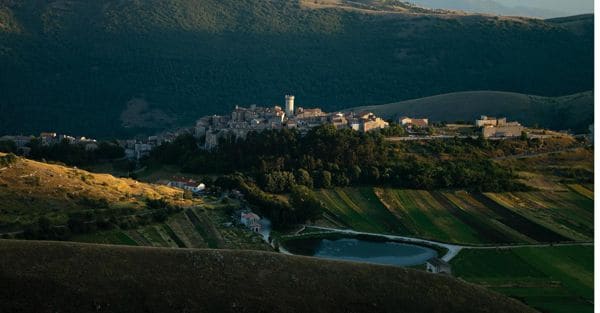
Past examples such as the Santo Stefano di Sessanio experiment, on the borders of the Gran Sasso National Park in Abruzzo, where the village's "preserved identity", due to its progressive abandonment, was noticed by the Milanese entrepreneur Daniele Khilgren, the driving force behind a conservative restoration that led to the creation of what the Times listed as one of the most beautiful hotels in the world. "Many foreign guests, with an economic induced activity that has generated another 23 accommodation facilities and given rise to 55 VAT numbers. Thirty years ago,' he says, 'the country seemed to be dying'.