
Pokémon, the new frontier of collecting: cards are now worth millions
From nostalgia for the 1990s to a global market worth billions of dollars. The rarest cards are traded for hundreds of thousands or millions

They used to be just a pastime for children, but today, thirty years after their launch, Pokémon cards have become assets worth millions of dollars, thanks to a thriving market fuelled by collectors and investors. The Financial Times has documented this transformation, having closely followed some of the key players in the UK market. Among them is Jordan Dunne, 34, who in 2025 left his job as a data analyst at a law firm in Chester to devote himself to buying and selling Pokémon cards. His company, Big Box Gaming, is expected to generate around £4 million in sales this year, up from £1.2 million in 2025, according to Dunne himself. During his live streams on eBay, Dunne sells individual cards for more than 2,000 pounds and claims he can generate up to 60,000 pounds in sales in just a few hours. His business model is simple: he buys cards at specialist markets and fairs and then resells them online.
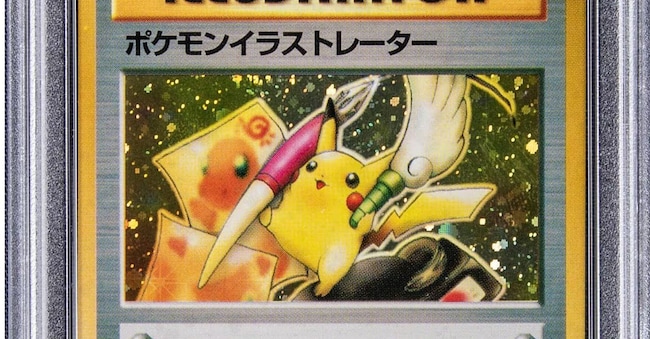
In this context, the Pokémon ‘case’ is interesting because it illustrates the evolution of an item that began as a game and ended up taking on characteristics similar to those of other collectables. In its journey from the child’s bedroom to the global market, the Pokémon card has thus become a small financial asset: it does not pay dividends, but it can be worth millions simply because someone, on the other side of the table, places a value on its rarity and the memories it evokes. And that value is constantly rising. In the first half of the year, ‘Pokémon’ was the most searched-for term in eBay’s collectables category. In February, the auction house Goldin, a subsidiary of eBay, sold a 1998 Pikachu Illustrator for $16.5 million, setting a new world record. The winning bidder was AJ Scaramucci, founder of Solari Capital. That sale was followed by other transactions worth over a million dollars. “This isn’t money that people simply spend to play with friends,” observed Adam Ireland, eBay’s global head of collectables. That is precisely the point: a section of the market now regards Pokémon cards as a genuine investment asset, on a par with other luxury goods such as watches or paintings.
According to Chase Society, a platform specialising in industry data, the estimated total value of professionally certified Pokémon cards on the market could reach almost 9 billion dollars. The market is international, stretching from Japan – where Pokémon originated – to the United States and Europe. The United Kingdom has become a major hub for English-language cards, although the greatest liquidity remains in the United States.
There are at least two factors driving this growth. The first is nostalgia. The generation that played with Pokémon in the 1990s is now in their thirties or forties and, in many cases, has the income needed to buy the items from their childhood. The second is scarcity. A card printed twenty-five years ago cannot be replicated indefinitely on the secondary market, and the number of copies that have survived in near-perfect condition is inevitably limited.
A scenario in which Pokémon itself has sought to reinvent itself. The first time was with the ‘151’ collection, launched in 2023 and dedicated to the first 151 characters in the series – the ones with which the first generation of fans began their journey; the second time in 2024, with the mobile version of the card game, which brought new users into the Pokémon universe. And the franchise’s 30th anniversary represents a further catalyst for the collectables market.

