
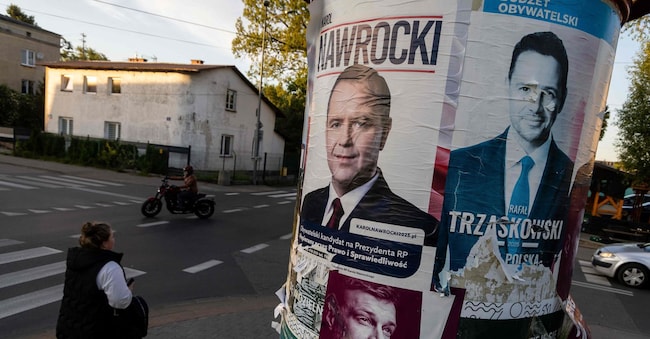
Poland on the ballot, head-to-head between Trzaskowski and Nawrocki
Both candidates, according to the polls, are hovering around 46%.

3' min read
Key points
- Poland is a member country of the EU and NATO
- The themes of the campaign are three: abortion, migrants, relationship with the EU
- Warsaw Mayor Trzaskowski is pro-European, Nawrocki Eurosceptic
3' min read
Poland returns to the polls for the presidential election runoff between Warsaw Mayor Rafal Trzaskowski and nationalist historian Karol Nawrocki. The clash, scheduled for tomorrow, promises to be close and full of domestic and international political implications.
Poland is a member of the EU and NATO. The presidential duel is a reflection of a clear ideological split: on the one hand there is 53-year-old Trzaskowski, a liberal and pro-European supported by the centrist coalition in government with Donald Tusk; on the other hand there is 42-year-old Nawrocki, a radical conservative supported by the opposition Law and Justice (PiS) party, to which outgoing president Andrzej Duda also belongs. The two candidates are neck and neck in the polls, both credited with around 46% of the voting intentions, according to Politico's surveys.
Campaign themes
The central themes of the campaign were three: abortion, migrants and the relationship with the European Union. Currently, assisting abortion is punishable by imprisonment, while no law punishes women if they perform it with pills ordered online. The migration issue continues to have relevance mainly because of the pressure along the border with Belarus, while tensions with Brussels have a dual nature, economic and political.
The challenge is largely played out among the protest electorate, in particular the young people who, in the first round on 18 May, rewarded the 'new' Polish extreme right of the Confederation and its leader Slawomir Mentzen, who achieved almost 15%. Both candidates sought his endorsement, participating in interviews on his popular YouTube channel and courting his electoral base. Nawrocki signed a document live on air with eight demands, including a veto on Ukraine's entry into NATO, while Trzaskowski was only open on a few points, reiterating instead his support for Kiev and Lgbtq+ rights, a sensitive issue in a strongly Catholic country.

