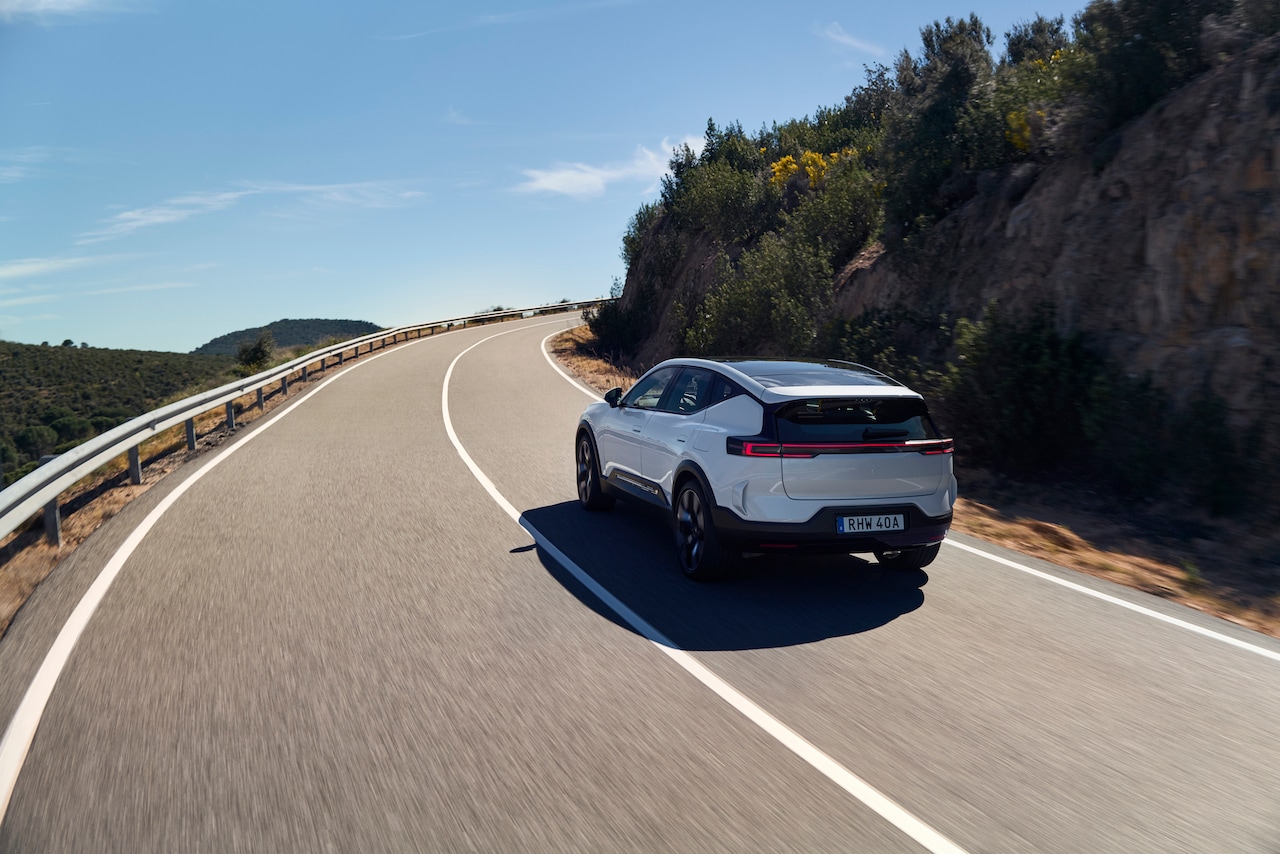
Polestar 3, we tested the electric maxi-suv: here's what it offers, how it goes and how much it costs
The third model from the Chinese, but Swedish-based brand challenges the big, luxurious battery-powered SUVs with its own design, two powerful versions, a huge load of technology and promising long range.
5' min read
Key points
5' min read
The long march towards commercialisation of the Polestar 3 that began in 2022 comes to an end at this time. The electric maxi-suv of the brand based in Gothenburg in Sweden but now completely under the control of Geely after Volvo sold its stake to the Chinese manufacturer, produced in Chengdu China and in the United States in South Carolina, is the first high-wheeler of the Polestar in which it also plays the role of flagship. For the record, the Polestar 4 suv-coupé is also on its way, a little smaller and technologically very different from the flagship suv. After this model, the Polestar line-up will get even longer. In fact, the fastback 5 sedan will arrive in 2025 and the roadster 6 in 2026, also obviously full-electric.
Polestar 3, two powerful powertrains and maxi-battery
.The maxi-suv is the brand's first car based on Volvo's Spa 2.0 architecture developed specifically for full-electric models, but it is easily the last to use this platform as the next Polestars will be based on components designed in-house. The Polestar 3 comes in two variants, both defined as long range and dual motor with all-wheel drive: one has a powertrain with 489 horsepower and 840 Nm of torque, the other, thanks to the Performance Pack, puts out 517 horsepower and 910 Nm of torque. Both are powered by a large 111 kWh lithium-ion battery, but the different power peaks of the two versions ensure different mileage ranges: 631 kilometres in the case of the normal Dual Motor, 561 kilometres in that of the more powerful variant, which sprints from 0 to 100 km/h in 4"7 instead of 5"0, but also reaches 210 km/h. Recharging the battery from 10 to 80 per cent on direct current at 250 kW takes half an hour, while a full charge on alternating current at 11 kW takes eleven hours. The Polestar 3 has active air suspension, a Brembo braking system and electronically controlled rear-wheel drive vectoring as standard.
Polestar 3, digitisation to the nth degree
.The Polestar's technological equipment is completed by the extreme digitalisation conveyed by the 9" instrumentation displays and the central vertical 14.5" infotainment display from which practically every configuration, function and service of the car can be managed, even going so far as to the paradox that to open the dashboard drawer you have to scroll through the menus and click on the screen. The system is based on an Android Automotive Os operating system with an interface developed by Polestar with integrated Google apps and services, which interacts with Snapdragon Digital Chassis for cloud connectivity and Nvidia Drive for processing the data collected by the twelve ultrasonic sensors, the five radars and as many cameras, as well as the Lidar sensor destined to activate level 3 semi-assisted driving included in the Pilot Pack, when regulations permit. Added to this array scattered throughout the bodywork are two infra-red interior cameras that monitor the driver's attention and, if necessary, activate the car's autonomous approach and distress call, and four radars for the anti-collision system that prevents the car from closing when it detects people or animals in the passenger compartment.
Polestar 3, smooth and muscular line
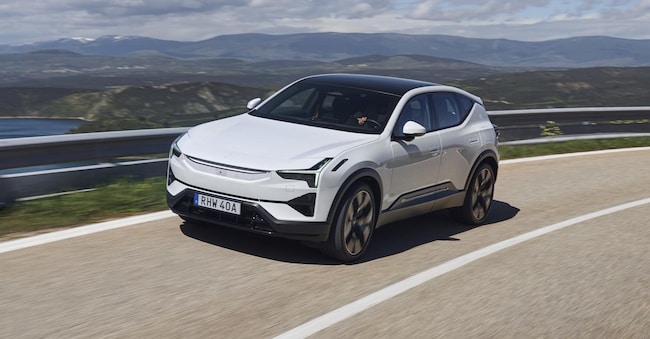
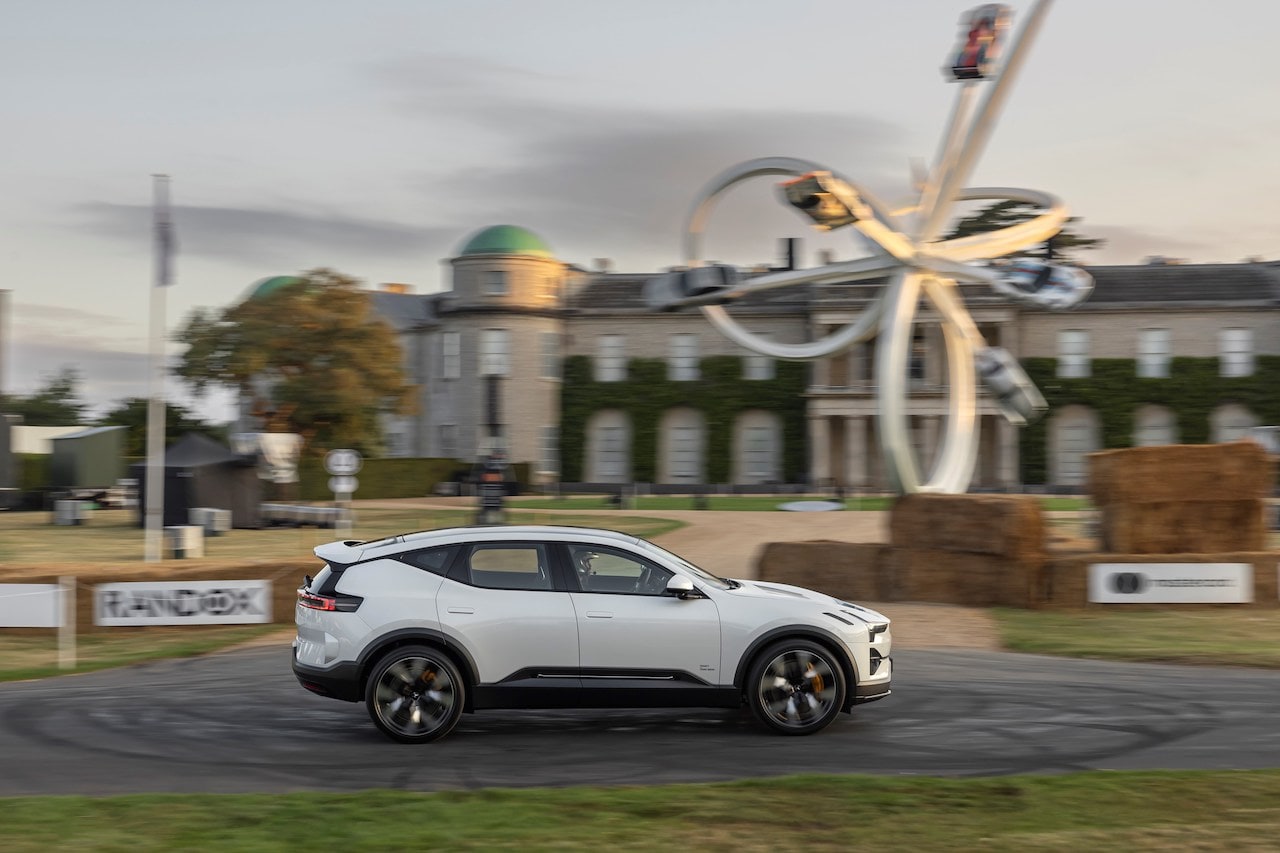
.With a length of 4.90 metres, a width of almost 2 metres, a height of 1.61 metres and a wheelbase of almost 3 metres, the Polestar 3 doesn't go unnoticed on account of its build. This impression is accentuated by the design of the bodywork, which defines a muscular and polished line that is not exactly monolithic, because to optimise aerodynamics it integrates an original spoiler at the front above the front that attempts to camouflage itself by linking the headlights and interacts with the rear spoiler that almost wraps around the rear window.
Polestar 3, large, minimalist and refined interior
.The cabin is very spacious thanks both to the Polestar's wide wheelbase and to the minimalist style of the furnishings, made of fine materials and carefully assembled, which draw a linear and slender dashboard, from which sprout the instrumentation and infotainment displays that, as mentioned, accommodate every type of control by clearing the field of any physical switches. The always-connected system is responsive and has an even intuitive and customisable graphic interface but, in our opinion, this does not detract from the fact that you have to choose from many menus to activate the command that interests you. Charging plate and wireless integration with smartphones, interaction with Google Home together with the possibility of opting for the 1,610 watt Bowers Wilkins system with twenty-five speakers complete the system's radiography. In spite of its sturdy build, the Polestar 3 has a boot capacity ranging from 4,854 to 1,411 litres, so as big as that of smaller cars. The 32-litre front frunk is suitable for holding charging cables.