Interview

Polimi in the world top 100: 'Now more investment in research'

Milan University Rector Donatella Sciuto: 'Young people are the future of the country. We must focus on education'

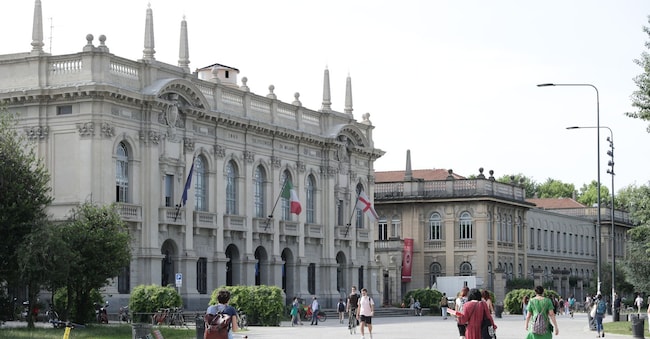
by Marco Alfieri

SEDE ESTERNI POLITECNICO DI MILANO

3' min read

3' min read

"The most important challenge is research. If we are convinced that young people represent the future of our country, we must invest more in their education." Donatella Sciuto, an electronics engineer, ordinary professor and long-time academic manager, is the rector of the Politecnico di Milano, one of the most prestigious technical-scientific universities in Europe, freshly entered in the top 100 of the QS World University Ranking 2026, a first for an Italian university.

Professor, what does this achievement mean for the Politecnico di Milano and, more generally, for the Italian university education and research system?

Loading...

Meanwhile, it is an award to the quality of the Politecnico in general and to the people who have been working there and doing research and training for years. It is a path started in 2013, when we began to internationalise our university. And then it is an acknowledgement of the Italian public research system, which is often underestimated, and of the value of university education in attendance. But we do not want to stop here.

'Employer Reputation', 'Employment Outcomes' and 'Academic Reputation' are three areas in which you have grown the most in the ranking. In which areas, however, do you still need to improve?

Our goal is to grow more and more in terms of research, teaching, innovation and infrastructure. It is no coincidence that the largest investment we have in place is the new campus in Bovisa, which responds to a very specific vision of the university.

What vision?

That of a university where, within the same campus, a virtuous ecosystem is created, a fruitful contamination between education, businesses, start-ups and research laboratories.

What are the most urgent challenges for a technical-scientific university like the Politecnico today? Often the European model is accused of being less competitive and more bureaucratic than the American and Asian ones.

The most important challenge is investment in research. Both public and private. If we are convinced that young people represent the future of our country, we must invest more in their education. Today the investment gap, even with some Swiss universities alone, without necessarily looking at the US, is sidereal. So it is complicated to continue competing.

What kind of graduates does the Politecnico want to train today? Which skills are really 'future-proof'?  

We aim to train solid technical-scientific basic skills, accompanied by the ability to think critically, the ability to work in an interdisciplinary manner and, finally, the ability to continue learning throughout one's professional life.

Is there a project or initiative that you consider particularly strategic for the future of the Politecnico?

I have already said about the Bovisa campus. I would say the effort we are making to spread a greater culture of entrepreneurship among students and researchers. The challenge is to bring the results of our research to the industrial world, stimulating the creation of new companies. This is an area in which we are particularly lagging behind in Italy and Europe.

The Politecnico is a fully international university, with 8,000 foreign students out of a total enrolment of 48,000, especially in master's degrees. But it is still a Milanese university. You have repeatedly taken a stand on the issues of the cost of living, high rents and the conditions of young people in the city. Is there anything that can be done, realistically, to offer students a more inclusive city model ?

The first thing to do would be to guarantee all eligible students the right to study, which is still not the case. Then, as a Polytechnic, we are committed to building student halls of residence at reduced prices, not least because those that are springing up, linked to private universities, are prohibitively expensive. Furthermore, it would be useful to provide a form of support that would allow, via platforms, large flats to be shared between students. Obviously these actions would not solve the root of the problem nor the difficulties of recent graduates, or young professors, who earn too little in Italy to be able to afford a rent in the city.

Copyright reserved ©
Loading...

Brand connect

Loading...

Newsletter Scuola+

La newsletter premium dedicata al mondo della scuola con approfondimenti normativi, analisi e guide operative

Abbonati