Financial Strategies

Political cohesion to make the budget plan credible

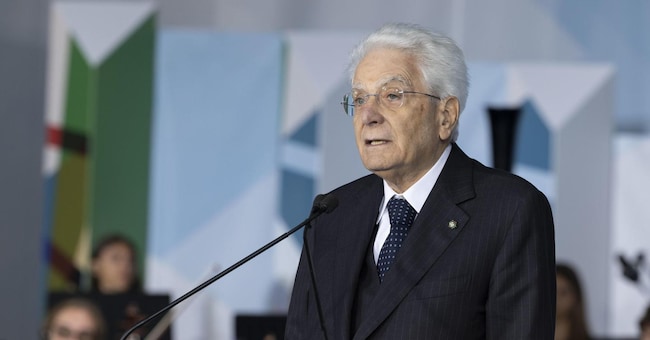
Il Presidente della Repubblica Sergio Mattarella. (Ansa)

4' min read

4' min read

As the economy minister prepares the budget plan that Italy will present to the Commission in a few days, according to the new European rules, it is appropriate to ask: Is it possible to make this programme more effective and credible than its predecessors? And how? Some original ideas, different from those already tried in the past often without success, could help.

Before we get to that, let us make a few premises. The first, which goes without saying, is that we should stop criticising or even commenting on European rules themselves. This applies to everyone: government officials and us commentators. They have been discussed at length, praised by some and criticised by others (including the writer). Finally approved, including by our government.

Loading...

Now the debate is over, those are and those remain. It is a matter of applying them as best we can, without reservations and ambiguities.

More important observations derive from President Mattarella's recent speech in Cernobbio. Three passages from that authoritative speech are worth recalling.

The first is the call to complete the European institutional edifice, adding the missing elements: the capital market, the banking union, green and digital transitions, peace and defence issues; themes also taken up by the recent Draghi report.

On these issues, there is often a lack of support from some countries, including our own. This call must therefore be understood, at least in part, as addressed to our government.

Two other observations relate directly to the issue of Italian public finance.

Let us read the first one in full, because every word carries weight. Mattarella says: "It is clear that there is still a long way to go to give rationality to a public securities market that neglects issues such as the ratio of public debt to households' net financial wealth. The thermometer of the markets' perception of a country's reliability may prove, as this example shows, to be at least questionable. A European dimension could restore truth'.

The exhortation, addressed this time to Europe, is to define fiscal sustainability parameters that also take private debt into account, in addition to public debt. As is well known, Italian households are less indebted than those in other countries.

This suggestion is well-founded and shared by many economists. But care must be taken. State resources are ultimately citizens' resources, so considering them together is reasonable. But it is only so if the state, whose fiscal sustainability the markets look to when subscribing to public bonds, can draw on private resources to the necessary extent and efficiently through the fiscal instrument.

If this possibility is precluded in whole or in part, either because the tax instrument leaves ample room for evasion, or because the government is reluctant to use it for political reasons, or for yet other
causes, private wealth cannot be equated with that of the state. Also for this reason, neither Europe nor the financial markets look at the two components as equivalent and sumable.

In another passage, the President notes that '... Italy is an honourable debtor, with a 30-year history of annual primary government surpluses, with a public debt that has grown largely, since 1992, mainly due to interest payments'.

The President is right to point out that Italy is an honourable debtor: our financial history in the post-war period proves this.

At the same time, primary surpluses only tell part of the story. Interest is also a price, like the prices of other resources the state buys.

The distinction between different types of resources has analytical relevance because the factors acting on them are different. But from the point of view of debt sustainability, interest expenditure and other expenditures must be considered together.

The new European rules, while setting an operational target expressed in terms of net primary expenditure, contain safeguards to ensure that the interest component is not lost sight of.

That being said, in order to give the commitment to reduce the debt over the seven-year period of the plan (a commitment defined as 'inescapable' by Mattarella) greater credibility and authority, the government could unilaterally insert two additional clauses.

The first would commit Italy to use any future 'treasure' from tax revenues not foreseen in the plan itself, or from statistical revisions that raise the national product, exclusively to reduce debt, and in any case not to finance current expenditure.

The second would provide that any new unbudgeted current expenditure, subject to exceptions for natural disasters or other proven crises, would be financed exclusively with taxation in the same year, and in any case not with new debt.

The proposals refer to current expenditure: they therefore keep the structural deficit net of investments unchanged

- what, incidentally, Keynes believed should always be balanced. This includes current defence spending, which is expected to increase in the coming years for geopolitical reasons and therefore would not create a deficit. Why should current expenditure for our security be paid for by our children's taxes and not our own?

To be effective, such provisions should be adopted together with the opposition. The cohesion of the entire country in that commitment is crucial because the duration of the budget plan (seven years) goes beyond that of this government and the very mandate of the President of the Republic, who could act as guarantor of that commitment.

It could be argued that both clauses are already, in part, implicit in the European rules. True. Just as it is true that they alone would not solve all the problems that the implementation of the plan, however it is designed, will encounter along the way. But making them explicit, binding and shared would make a difference. It would indicate, even in the face of the international community that looks at Italy's debt with concern, an unprecedented cohesion and seriousness of commitment.

Copyright reserved ©
Loading...

Brand connect

Loading...

Newsletter

Notizie e approfondimenti sugli avvenimenti politici, economici e finanziari.

Iscriviti