Mind the Economy

The political liberalism of John Rawls: tolerance, 'consensus by intersection' and 'duty of civilisation'

In a liberal society, the sphere of private and public values must remain distinct. Critics of Rawls' theory of justice have pointed out the lack of this separation. Aware of this limitation, Rawls developed the concept of 'political liberalism'.
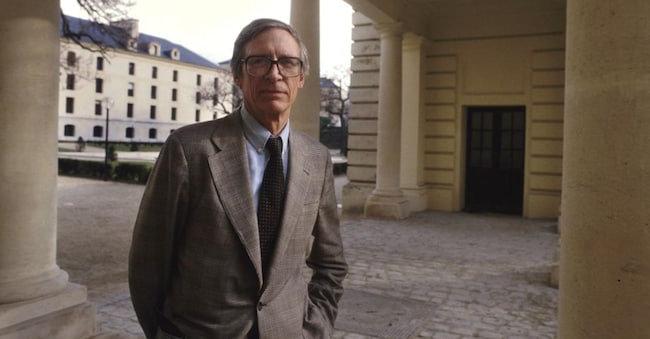
by Vittorio Pelligra

8' min read

8' min read

In a liberal society the sphere of private and public values must remain separate. In the private sphere it is, in fact, natural that we may accept duties and obligations in the name of beliefs, traditions and convictions to which we are attached and which we do not feel free to renounce. Religious, family, ethnic traditions impose in this sense choices and conduct that we must often accept precisely because of our belonging and identity. But in a democratic and liberal society, this can only be a matter ofpersonal choice, especially, but not only, in religious matters. In the political sphere, on the other hand, obligations and duties cannot be based on the conception of what is good or evil, characteristic of certain social groups that impose on all citizens behaviour and rules derived from their personal convictions.

Convictions that, on a personal level, may not be questioned, but that in the public sphere cannot not be questioned. Convictions that can be criticised and even disowned. In other words, the basic values of political coexistence should be as independent as possiblefrom the ethical convictions and worldviews of individuals. The lack of this explicit separation is one of the major problems that critics have pointedly imputed to the theory of justice of John Rawls . In the years following the publication of his first book, Rawls himself recognised this limitation and drew from it to propose an evolution of his vision that goes by the name of "political liberalism".

Loading...

Rawls' Political Liberalism

.

The starting point of this second phase of Rawlsian reflection originates both from the many criticisms received after the publication of "A Theory of Justice" and from the changed social conditions that seem to challenge the philosopher by undermining his unitary vision of justice, rational and valid for all. He seems to take note of the existence of a "reasonable pluralism of fact". In our societies, ideas and worldviews coexist that, while all reasonable, are completely incompatible with each other. 'Incommensurable' worldviews, to use the language of Isaiah Berlin.

The American philosopher's reaction to the realisation of this variety of incompatible worldviews is not a passive acceptance of pluralism tout court. In fact, he believes that the mere coexistence of reasonable and tolerant worldviews with other irrational, ignorance-based, malevolent or even aggressive worldviews can produce tensions and conflicts capable of undermining the stability of a society. Pluralism alone is not enough. What is needed is a qualified pluralism, a particular form of pluralism of ideas that, as he writes, is 'compatible with the reasonableness of those who disagree'.

The "duty of civilisation"

.

This 'reasonable pluralism' should therefore be understood as a reasonable disagreement that recognises the possibility that reasonable subjects even within just and free institutions may not reach unanimity on relevant issues of their life in common. This opens up a complex issue: the need to reconcile irreducible worldviews with the aspiration to live in a society capable of generating a sufficient degree of consensus on a public vision of justice to foster stability and cooperation even among those who embrace different worldviews. Central to the resolution of this issue is what Rawls calls the 'duty of civility' (duty of civility). This principle requires that those with decision-making power in the political sphere exercise their power exclusively according to the publicly shared principle of justice, on the basis of shared procedures and in the light of the best publicly available empirical evidence. Put another way, the 'duty of civilisation' requires that in the public sphere, decision-makers refrain from using the principles that derive from their particular worldview, religious or otherwise, and the interpretation of reality that may derive from that view. Compliance with this duty is what guarantees adherence to the principles of a liberal society even by those minorities whose status might otherwise lead to exclusion or discrimination.

Inside Rawls' Thought: Thomas Pogge's View

Commenting on this Thomas Pogge: 'Rawls does not hope that citizens in certain contexts will, so to speak, forget their religion. His hope is, rather, that they will interpret their religious duties in such a way that these allow - or even require - respect for citizens with profoundly different views' (John Rawls: His Life and Theory of Justice, Oxford University Press, 2007). It would be necessary to reason as if, while believing on a personal level, e.g. by virtue of a certain worldview, that a given choice may be pleasing to God, since this conclusion cannot be demonstrated with data accessible to all, believers and non-believers alike, this choice cannot be imposed on a political level. "To force someone to make the right decision," continues Pogge, "without being able to show them why it is right, this would not be a service to God but, on the contrary, would deny their God-given freedom. To urge them to accept this truth without being able to show why it is right would deny them the respect that is due to them as equally endowed with reason by our Creator'.

Abortion, end of life and beyond: the importance of applying Rawls' thinking

In the political sphere, therefore, it is always necessary to appeal to values and facts that all citizens can share and have access to. "Some of these political decisions," Pogge concludes, "will go against religious truths. But, from the divine point of view, this evil is lesser than denying other citizens their due recognition as creatures endowed with reason and conscience'. How different the debates around the issues of the end of life, abortion, civil rights, gestation for others would be if only the sincere adoption of the 'duty of civilisation' were a shared and more widely practised choice.

Mario Cuomo, an example of 'civic duty'

.

Pogge again gives an interesting example in this regard. In the years when Rawls was writing 'Political Liberalism', the governor of New York State was the Republican and devout Catholic, Mario Cuomo. From a purely personal point of view, by virtue of his religious beliefs, Cuomo was a convinced anti-abortionist. 'He believed, however,' Pogge recalls, 'that, in his capacity as governor, he should not allow his official conduct to be influenced [by his religious convictions] because the reasons for his beliefs were inaccessible to many of his fellow citizens and therefore could not reasonably be used as the basis of the rules that would constrain their conduct.' Cuomo, Pogge tells us, decided to politically oppose anti-abortion policies, even though they were consistent with his personal worldview, precisely because his worldview was personal and therefore not necessarily shared or sharable by the majority of his fellow citizens. This, Rawls tells us, is the essence of the 'duty of civilisation', an indispensable ingredient of public debate in a just liberal community.

Reconciling pluralism, diversity and common institutions: the 'consensus by intersection'

However, the question of stability and legitimacy still remains open. If our societies are characterised by 'de facto pluralism' where religious, moral, aesthetic ideas are all reasonable but also equally irreconcilable with each other, how can we hope to structure legitimate and stable common institutions? By going to seek consensus where it is most needed, says Rawls. By going to discover what unites us most instead of what divides us. By basing our life together on those shared values that despite different worldviews can often be identified. This desire for convergence and unity represents the core of the Rawlsian idea of consensus by intersection.

The "stability for the right reasons"

.

Traditionally, three different ways of achieving political stability are considered: that based on unanimity, that based on compromise between opposing interests, and that based on citizen autonomy. In the first case, stability emerges as the result of submission to a dominant vision of the good that is sustained through recourse to state power that imposes the one truth because, as Rawls writes, "A continuous and shared adherence to a single overarching religious and philosophical moral doctrine can only be maintained through the oppressive use of state power". A stability, then, that is the child of propaganda and oppression.

The second form is embodied in what Rawls calls a modus vivendi, a provisional order made up of contingent political compromises between conflicting interests and parties, as in the case of many representative governments or, even more so, in the case of international relations between states, which we see as fragile when not perpetually in conflict. Rawls is also sceptical of this form of stability as not based on moral values and incapable of recognising the value of individual autonomy.

The third form of democratic stability is the properly liberal one that is based on amoral conception of political justice and is compatible with individual autonomy in that it is founded not on compromise but on consensus. This is the view that Rawls calls'stability for the right reasons'.

How to identify the 'right reasons'

.

Where, then, do we find these 'just reasons'? Each in his own particular worldview, whether religious or secular. Consensus by intersection' is for Rawls, in fact, a process through which citizens espousing different values or religions, whether Muslims, Catholics or non-believers, Kantians or utilitarians, pluralists or monists, can reach agreement on fundamental political issues precisely from reasons they find in their particular worldviews. A Catholic who discovers reasons in the public sphere that are common to those of an agnostic on the end of life because, although he holds life sacred, he considers, like the agnostic, even more important not to use violence, not even political violence, to impose his own worldview by forcing others to do something whose ulterior motives they do not recognise.

Should I tolerate something I consider unjust? Rawls' answer

It is a high form of political liberalism because it excludes any appeal to the ultimate truths proclaimed by different worldviews. Such an appeal would, in fact, create divisions in the public sphere. At the same time, political justice based on 'consensus by intersection' is not pure neutrality or a form of mere secularisation with respect to individual worldviews. On this basis, liberalism has indeed been criticised by both the right and the left. Because this kind of tolerance and neutrality would be contiguous to acquiescence, laxity, disinterested secularism. Why should I tolerate something that I consider to be unjust? Claim the critics. Why should I leave the values of the good and the just out of public discourse and relegate them to the private sphere? Tolerance presupposes, then, an asymmetrical power relationship between those who are tolerated and those who can afford to tolerate.

But for Rawls things are not like that. His political liberalism is founded, Kantianly, on fundamental moral values such as equal respect and the protection of the person as an end in itself. In this sense, we cannot speak of a generic tolerance, but rather of the promotion of inalienable political values. These are those of impartiality, of coherence and, as we have said, of the equal respect we owe to others and others to us.

Being neutral with reference to religious or even secular but global worldviews, those proclaiming absolute truths, does not mean being sceptical or agnostic. It only means that these absolute truths are not of direct political relevance. Because, in Rawlsian liberalism, consensus and institutional stability are not based on exclusion or disinterest with respect to these worldviews, but precisely on the deep core of values they have in common with respect to various issues of political relevance. The only requirement is that these visions be reasonable, i.e. not aggressive, violent or intolerant.

Rawls' thought thus seems to be reassembled in a unified framework, for which with 'A Theory of Justice' we arrive, through the 'original position', at a rational justification of the principles of justice and with 'Political Liberalism' and the idea of 'consensus by intersection' at a political and public justification.

Copyright reserved ©
Loading...

Brand connect

Loading...

Newsletter

Notizie e approfondimenti sugli avvenimenti politici, economici e finanziari.

Iscriviti