Climate change

Politics and global warming: in Europe, air conditioning turns out to be right-wing

From France to Spain to the UK: the recent heatwaves in the Old Continent have opened a debate that has often seen opposing sides

4' min read

4' min read

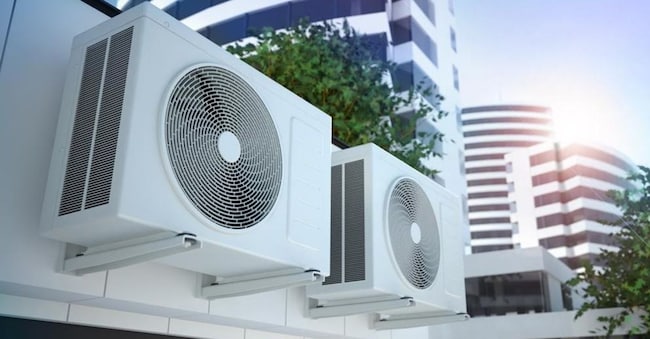
The heatwaves hitting Europe also have a political implication. Indeed, in many countries of the Old Continent, a real battle is being fought over whether air conditioning should be installed everywhere, in true American style, as revealed by an article in the Wall Street Journal.

The heat wave that hit Western Europe between June and July triggered a rush to buy air conditioners in appliance shops across the region. The scorching temperatures arrived unusually early, before many Europeans had a chance to go to the beach for their summer holidays, exposing the vulnerabilities of the cities where most of the population lives. One of the consequences was that more than a thousand French schools closed partially or completely due to lack of air conditioning.

Loading...

France: La Pen-Government back-and-forth

The situation was criticised by right-wing politicians, who claimed that the authorities had left the continent woefully lacking in air conditioning. Marine Le Pen, leader of the French far-right party Rassemblement National, proposed a campaign to install air conditioning in schools, hospitals and other institutions. In the United Kingdom, conservatives urged the Labour mayor of London to remove regulations limiting the installation of air conditioning in new homes. In Spain, the far-right Vox party highlighted the failures of air conditioning to criticise the country's institutional parties.

"Public services are unable to function due to the lack of air conditioning, unlike in dozens of countries around the world," said Le Pen. "The government is still out of touch."

The French authorities reacted. Energy Minister Agnès Pannier-Runacher said that large-scale air conditioning would heat up the streets with car exhaust fumes, making heat waves worse. "It's a bad solution," she told reporters during the latest heat wave, flanked by sweating Prime Minister François Bayrou. "We should install air conditioning for vulnerable people to give them some respite, but on the other hand we shouldn't do it everywhere."

It used to be a luxury

.

Extreme heat is the greatest climatic hazard facing Europe, ruining the continent's once mild summers with heat waves that are becoming more frequent and intense. Adaptation is expected to require huge investments and a radical change in European attitudes towards air conditioning, which many have long considered a luxury that Americans overuse.

"Abroad, the contrast is striking: the United States is investing several billion dollars to modernise the air conditioning of its schools, while hospitals are already largely air-conditioned," reads the bill proposed by the French conservatives this month, which would require the installation of air conditioning in all institutions in the country.

Thermal shock lurking?

.

The prospect of American-style air conditioning makes some Europeans shudder. In France, the media often warn that cooling a room 7 degrees below the outside temperature can cause a phenomenon called 'heat shock', resulting in nausea, loss of consciousness, and even respiratory arrest. This would be news to Americans who expect indoor temperatures to drop to around 24 degrees Celsius, even when it is close to 38 degrees Celsius outside.

Others fear respiratory infections that could result from spending long periods in air-conditioned rooms. Europeans particularly concerned about climate change want to avoid using electricity for air conditioning, which would generate additional greenhouse gas emissions.

The case of Europe, the energy problem

However, the need to stay cool is overcoming such scepticism. Europe is the fastest warming continent, with the temperature warming twice the global average since the 1980s, according to the World Meteorological Organisation. Last month was the warmest June ever recorded in Western Europe, according to the European Copernicus Climate Change Service.

Experts say that more air conditioning is needed to prevent thousands of people from dying during heat waves.

But there is also a significant 'against': air conditioning is expected to significantly increase the annual energy demand in Southern Europe: one study predicted an increase of about 10% in Italy by 2050. In northern Europe, the reduced need for heating in winter is expected to offset some of the additional energy demand in summer; however, the grid is expected to come under new pressure due to government plans to replace natural gas heating with electric heat pumps, devices that can be used for both heating and cooling. These dynamics are putting pressure on the continent to ensure it has sufficient renewable energy sources to meet the growing demand.

The alternatives to air conditioning

.

Some environmentalists and scientists argue that Europe can keep cool without massive reliance on air conditioning. Integrating more greenery into buildings and streets can lower extreme temperatures in cities. Designing buildings to allow ventilation can reduce the need for air conditioning, as can installing shutters that prevent sunlight from entering the building.

The London Case

.

However, regulations imposing such measures have become a target in the current political debate. In London, building firms must assess cooling design features before including air conditioning in new buildings. Conservative Member of Parliament Andrew Bowie this month called on Mayor Sadiq Khan to end 'the ridiculous restrictions on air conditioning units in new buildings in London'. 'We need to move away from this pauperistic mentality of forcing energy consumption down,' he said.

The response came from a spokeswoman for Khan: 'The mayor is not banning air conditioning,' adding that his development plan 'recommends that architects and engineers install other forms of ventilation in new homes to reduce energy costs for households.

The geothermal option

.

French officials want to expand geothermal heating and cooling systems to avoid the need for traditional air conditioning. Such systems circulate water from deep underground, removing heat from buildings to the ground in summer and returning it in winter. The process is much more efficient than normal air conditioning and avoids the loss of heat to the air. The initial investment, however, is significant and potentially prohibitive for installation in buildings with more than a century of history, common in European capitals of the old world.

Château Pontet-Canet, a winery near Bordeaux, installed such a system that worked perfectly during the last heat wave, cooling the property's wine vats, cellar and offices, said technical director Mathieu Bessonnet. "The ecological issue is whether or not we should air-condition," said Bessonnet. "Wine is our business and we don't want to produce vinegar. So we have to air-condition... The idea of consuming energy just for comfort, well, that seems absurd to me."

Copyright reserved ©
Loading...

Brand connect

Loading...

Newsletter

Notizie e approfondimenti sugli avvenimenti politici, economici e finanziari.

Iscriviti