
Politics as an architecture of possibilities

"A world with a few predestined people sitting down to a banquet and many more destined to hope for a few crumbs is not acceptable". President Mattarella does very well to reiterate this, he is one of the few, after all. The issue of social justice - mind you - has completely disappeared from the political agenda and even from public debate and we hardly notice it. There is in fact an effective and almost imperceptible way of diverting people's energies from the demand for greater equality and dignity. It can be done without ever declaring it openly. Simply divert their gaze from institutions and make it focus on individuals, from living conditions to personal choices, from institutional structures to moral character. It is enough to place at the centre of the prevailing narrative two words that designate unquestionable civic virtues - responsibility and merit - while slowly but surely distorting their meaning. Thus, with the passage of time, as in the boiling frog experiment, we will realise at some point that people will have stopped caring about inequality, poverty, segregation, exclusion, their future and that of their children. They will have stopped worrying and therefore complaining about it. They will have, above all, stopped protesting. And those few who still have the strength to express their dissent, even the most justified and legitimate, will be exposed to public ridicule, insulted as 'poor communists' and publicly declared 'useless'. There the frog has finally been boiled. Dead.
From justice to individual guilt
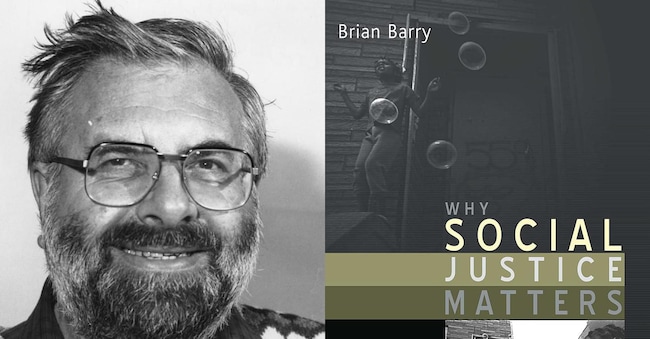
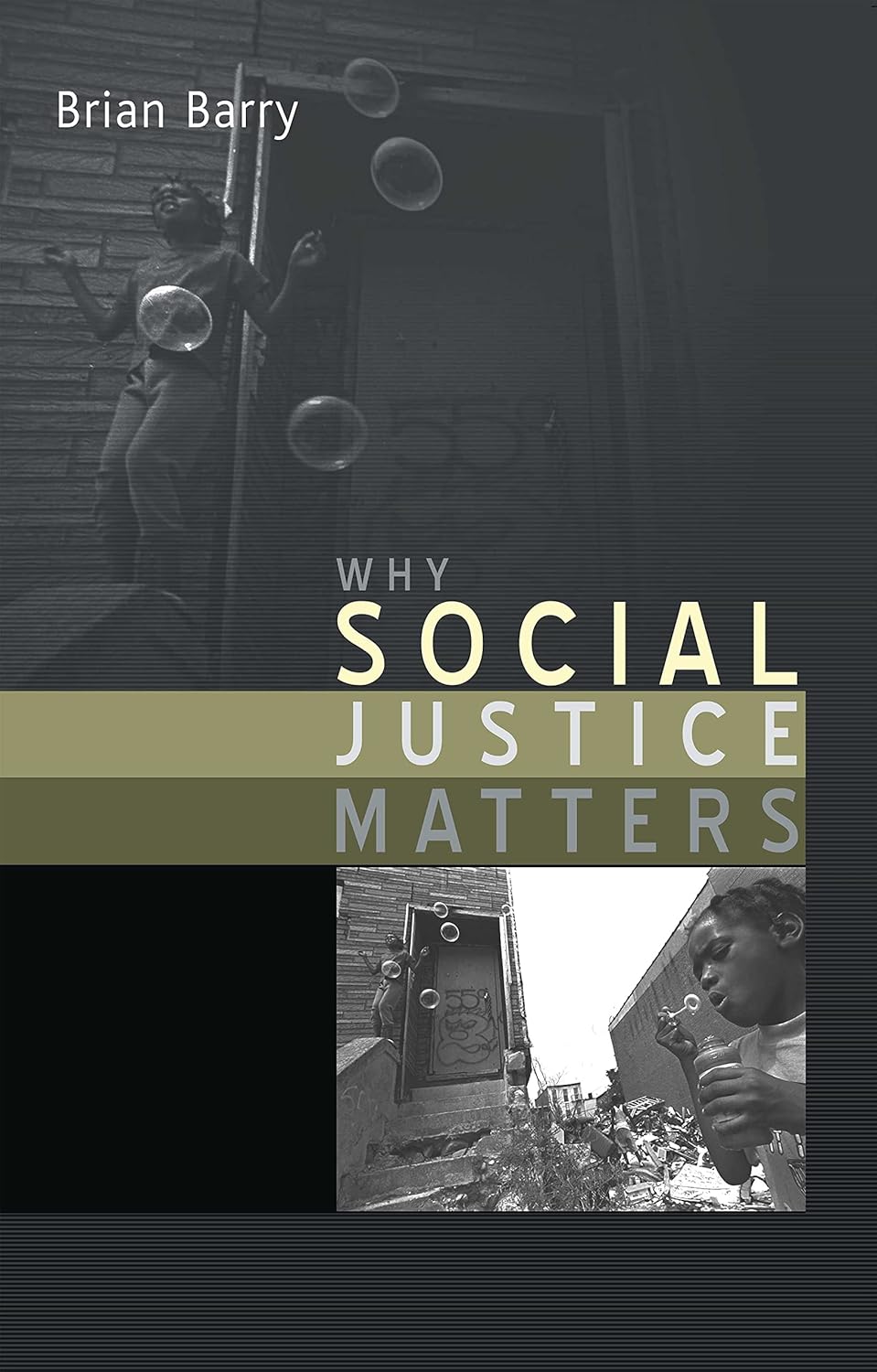
In his latest book Why Social Justice Matters, British philosopher Brian Barry focuses his critical analysis on the extraordinary ability of modern societies to justify injustice, to make it morally acceptable, even reasonable. And so, in our times, injustice is no longer suffered, but explained. It is no longer contested, because it is now internalised. And those few who still differ are regarded with annoyance and even contempt. It is the chronicle of this week.
This process of collective desensitisation is enacted through what Barry calls themachinery of social injustice: a silent, impersonal mechanism made up of many cogs working together. A deeply unequal initial distribution of resources and opportunities, on the one hand, is flanked, on the other, by institutions that instead of mitigating those advantages tend to amplify them. All wrapped up in a moral narrative that transforms differences into 'deserved' outcomes. The result is a society that produces inequality and, simultaneously, its widespread acceptance. Like John Rawls before him, Brian Barry by no means denies the existence of natural and social differences between people. This is not the focus of the critique, because like Rawls he too is convinced that the root of injustice lies not in these differences but in the way institutions manage the effects of these differences. Rawls writes in A Theory of Justice - "No one deserves either his greater natural abilities or a better starting position in society. But, of course, this is no reason to ignore and even less to eliminate these distinctions. Instead, the basic structure can be changed so that these contingent facts work for the good of the less fortunate'. It is the 'basic structure', i.e. the set of our institutions - the legal norms, the economic system, the family, the school, the welfare system - that must be designed to ensure that the initial inequalities do not turn into structurally unjust outcomes, but benefit the most fragile. In this sense Barry takes from Rawls the unwillingness to judge outcomes without first assessing the starting conditions, as well as the need not to attribute individual responsibility without taking into account the distorting effects of the institutional structure. This position is not tantamount to denying the role of personal responsibility. People act, choose, and are therefore accountable for their decisions. But the crucial point is how these responsibilities are attributed. In unequal societies, Barry notes, responsibility is usually assigned downstream, associated with outcomes, linked to results. In this way, however, one completely ignores what happened upstream, one ignores what contributed to generating or denying the very possibility of choice. This is the site of the decisive semantic shift. What is actually the result of structural conditions is reinterpreted through the machinery of social injustice as a product of individual character. Success becomes virtue and merit of the individual and failure, on the other hand, deficiency and fault. It is thus that meritocracy becomes an ideology, a powerful technology of legitimisation that does not measure contribution, but designates winners and losers, elevates the former and demolishes the latter. This is why one must fight for equal opportunities, one would say. That would not be enough. Here again Barry refers to Rawls according to whom 'Equality of opportunity means equal opportunity to overtake the less fortunate in the individual pursuit of power and social position'. To avoid any misunderstanding, on this point, it is necessary for Barry to emphasise the distinction between formal possibilities and real opportunities; a point that public debate generally tends to overlook. To say that everyone can succeed because no rule forbids it is, for Barry, a caricature of justice. The rhetoric of 'if you want, you can' implies, for example, that two cyclists will have an equal chance to win the Tour de France provided they both have a bicycle. But this is not what we should mean when we talk about equal opportunities. We should mean realistic conditions, not metaphysical possibilities. 'To say that Lance Armstrong and I have the same opportunity to win the Tour de France,' Barry writes, 'just because no rule prevents it is clearly ridiculous [because] an opportunity is more than just a formal possibility' (2005, pp. 44-45). A real opportunity is not a theoretically open door; it is a door that one can walk through without paying disproportionate costs, without betting everything on one move, without being penalised for minimal mistakes. When the distinction between substance and form vanishes, then the idea of responsibility becomes a moral shortcut. It serves to explain why we do not intervene in the conditions that produce the disadvantage. It serves to make acceptable the idea that those who are left behind will be left to their fate, because after all they have deserved it.
When injustice stops scandalising
There is a deep psychological reason that explains the fascination that meritocracy exerts on many, even in perfect good faith. It is an explanation that has to do with the functioning of our brain and our cognitive processes. The mechanism is powerful and pervasive. It is the so-called hindsight bias: a heuristic, a real mental shortcut, which induces us, once we know the outcome of a choice, to consider it inevitable, consistent, even obvious. And, above all, to reconstruct the path that led from the initial decision to the final result as if it had been guided, from the outset, by lucid intentions and stable personal qualities. Success, seen ex post, always appears as the result of right choices; failure, as the consequence of wrong choices. The role of fate, initial conditions, the contribution of others, implicit protections, disappears altogether. This is how meritocracy works: it tells the past as if it were written by character and not by circumstance. Barry dismantles this illusion by showing that, in highly unequal contexts, outcomes cannot be read as reliable signals of merit. They are too dependent on cumulative factors, too sensitive to initial advantages. But the hindsight bias makes the meritocratic narrative irresistible. Once someone has made it, everything seems to prove that it was right.
Where responsibility really comes from
It is here that Barry's reflection becomes decisive for understanding the role of politics and the Rawlsian 'grassroots structure'. Politics, for him, is not just downstream redistribution. It is 'architecture of possibilities'. It is that activity through which the playing field is constructed, that place where choices become more or less viable, more or less risky, more or less reversible. To ignore this is to attribute equal responsibility to individuals operating in radically asymmetrical contexts. It means judging decisions without looking at the price of error, which is never equal for all.


