
Foreign policy, the poor, finances and appointments: Leo XIV's agenda comes to life
Coming soon, previews of the first interview with the American website Crux,

3' min read
Key points
3' min read
The first hundred days of 'government' are a political thermometer for US presidencies, which last four years, but already mean little for other countries, especially where there is a parliamentary system. For the papacy, therefore, the first hundred days mean nothing, even though Francis put a lot in the pipeline in the first three months. For Leo, the first passage of 'verification' is represented - and this is entirely by chance - by his birthday, today he turns 70.
The first three months of my pontificate
The first three months were spent mainly listening to the heads of government departments, with almost no interlocutor (some optimistically interpreted this as a sign of approval, but who knows), delving into government issues, focusing on the most pressing problems, including finances. Then, with September, things started to change, and this was expected. He took a major foreign policy initiative with an audience with Israel's President Isaac Herzog, in which he reiterated the Church's position on the two states and the cessation of bombing.
Exhortation dedicated to the poor
.Then it came to light that he has finished his first document, which will be an Exhortation dedicated to the poor, which will see the light of day in October: for a real 'programmatic' Encyclical we will still have to wait. But he has given a wide-ranging interview - in truth he had already spoken to Tg1 on 19 June in a brief but dense exchange of jokes - to the American site Crux, the first previews of which will be published today and on the 18th the book by Elise Ann Allen will be published - it seems only in Peru, for now - which will contain the entire interview and more. In short, he is slowly coming out into the open, even though the youth day at Tor Vergata on 3 August was a substantial taste of his personality and thought.
The conversation with the new bishops
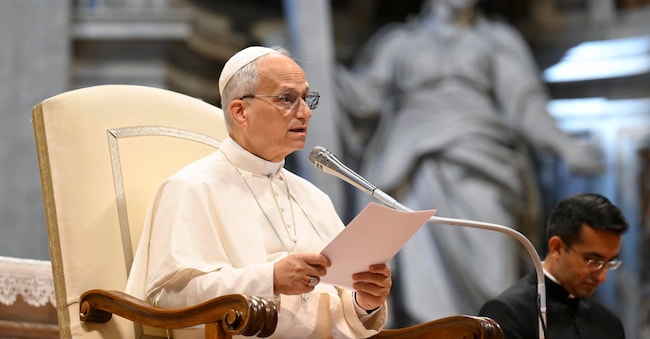
.Another very important passage of these days is the conversation he had with the new bishops, of which the press room has released an extensive summary. From the many topics emerges a glimpse of how Leo tackles some of the knots in the life of the Church, starting with the importance of local experiences. But he also insisted on the value of witness, on the ability to renew one's contact with the world in order to answer the questions that men and women are asking themselves in these times, on the meaning of life and evil in the world: "Ready-made answers, learned 25 years ago in the seminary, are not enough," he said.


