
Francis, the pope who spoke to a devastated land
Bergoglio's commitment is embodied in the revolutionary encyclical Laudato si', in which conversion becomes ecological

3' min read
3' min read
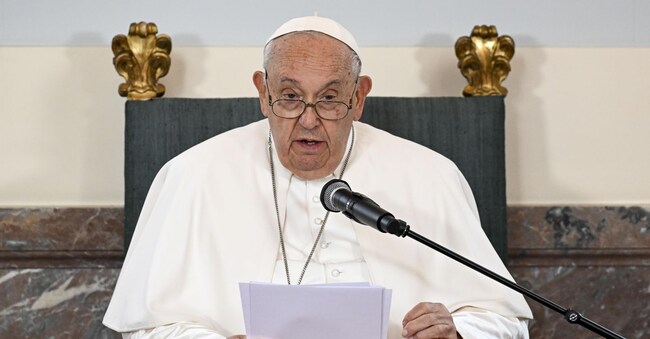
Pope Francis always chose sides and when faced with an 'oppressed and devastated earth' he responded with one of the most radical battles of his pontificate, the ecological one.
In May 2015, Bergoglio published Laudato si', the first encyclical dedicated to the Environment. The document introduced a revolutionary and unprecedented concept in the magisterium of the Church: that of 'integral ecology'. In the sense of an environmentalism that holds everything together: religion, economics, politics, attention to social injustice and respect for the Earth. Conversion to Christ for Francis also started from climate concern, an intuition that introduced the concept of 'ecological conversion' into Church history.
It was Bergoglio himself who declared, from the outset, the sides his papacy would take. On that 13 March 2013, looking out from the central loggia of St Peter's, he said that the cardinals had gone for him 'almost to the end of the world'. The Latin America of which he spoke (and from which he came) is one of the areas most affected by illegal deforestation and pollution of watersheds, often caused by illegal mining and agriculture in contexts of strong political and criminal collusion.
A few months after the publication of the encyclical, in December of the same year, the Cop21 closed in Paris with the adoption of the Paris Agreement by 196 states, including the United States, then under the Obama administration, to limit global warming to below 2°C. Today, under the new Trump administration, the United States has announced its intention to revise its climate commitments, as was the case in 2017, when Washington officially withdrew from the agreement.
An integral vision

