
The flattery of populism seduces Poland
The country is damaged by US policies but the far-right candidate wins, while it is different in Canada and Australia

3' min read
3' min read
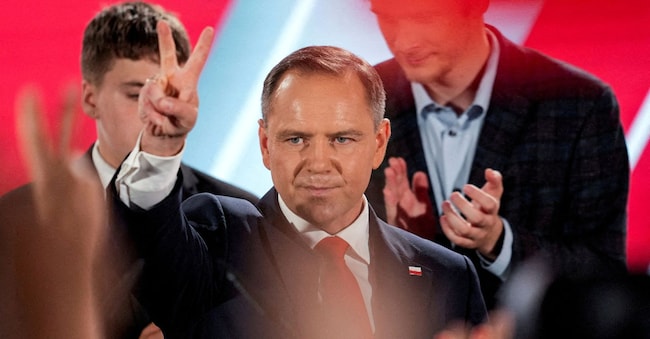
Have the victories in the recent Canadian and Australian elections fuelled premature and unfounded optimism in the global centre-left? Are national-populist candidates favoured by aligning themselves with Donald Trump, or even by an endorsement of the 47th president and his acolytes, primarily Elon Mask and JD Vence? This is at least the impression arising from Karol Nawrocki's victory in the run-off to occupy the Belweer Palace, the residence of Poland's president, for the next five years.
Certainly it was a victory by the narrowest margin in the history of presidential elections in the largest country in Central and Eastern Europe. Where the powers of the head of state are limited to refusing to sign legislative acts already approved in parliament and to refer them to ordinary justice, that is, far less than those of the head of government in the two immense Commonwealth democracies. And paradoxically it cannot be considered a defeat for the progressives, who saw the final on television, having already experienced the rigours of the manita in the first round in May, where the two left-wing candidates collected less than 10%.
But the defeat of the moderate centre-right candidate, and thus indirectly of Prime Minister Donald Tusk, shows how even in countries damaged by current White House policies, and in particular by trade protectionism, the lure of populism continues to seduce. The watchwords of the campaign of Nawrocki - 42 years old, historian and director of the National Institute for Remembrance (a state body dealing with Poland's heritage during World War II) - were four NOs. To immigration, Ukraine's NATO membership, policies to promote green transition and the removal of abortion bans. All this in a country that has grown over the last 20 years thanks in part to the welcome that Polish emigrants have received in Europe, through remittances and a lessening of the pressure on the labour market in their country of origin. Which joined the Atlantic Pact in 1999 and welcomes thousands of soldiers from allied countries on its soil. And which emits almost 11% of Europe's total greenhouse gases, whose performance in reducing them over the past two decades (-9.3%) has been modest compared to an EU average of -30.5%, and whose strategic plan on the matter is deemed inadequate by the Commission.
With the obvious differences in the political and institutional context, similar attitudes and intentions are characteristic of the right-wingers in Canada and Australia, but the electorate has rejected them. Mark Carney, the central banker who became prime minister only three months after entering politics, was able to convince Canadian voters of the danger posed by Trump and the importance of prioritising experience over proximity to the American president and his initiatives (including the annexation of Canada itself). Although the Australian election was not about Trump, the global turmoil he causes has also made him a determining factor Down Under. Anthony Albanese's strategy of not presenting himself as an anti-Trump figure, but rather one of calm and serenity, has paid off. Labour in Canberra as well as the Liberals in Ottawa refused to allow themselves to become despondent in the face of the abyss to which the pre-election polls seemed destined them and brought home a rare second and fourth term in power, respectively.
However, there is no honeymoon for either of them. Carney, in particular, will have to move quickly to ensure the stability of his government, preventing it from being exposed to a vote of no confidence, which would trigger new elections. Elsewhere, resentment towards globalisation and fears produced by rapid technological and value change make it more difficult to achieve electoral victory with sensible centrist policies. In the meantime, however, capital is standing still, waiting to see what direction the future will take. An early test of Carney's ability to manage relations with Trump will be the G7 summit in Kananaskis in 10 days' time.


