
Pordenonelegge, Mattarella: the temptation of illiberal democracy is emerging globally
The festival ended with over 160,000 visitors

Key points
- Mattarella: the ballot paper – a non-violent means of legitimate political engagement following a dictatorship
- Mattarella: the battle for rights is far from over
- ‘The importance of “thinking differently” and women’s rights’
- ‘Electrolux workers fighting to defend their identity’
- The Head of State awarded the title of “Ambassador of Freedom”
- Agrusti: ‘A record-breaking edition in every respect’
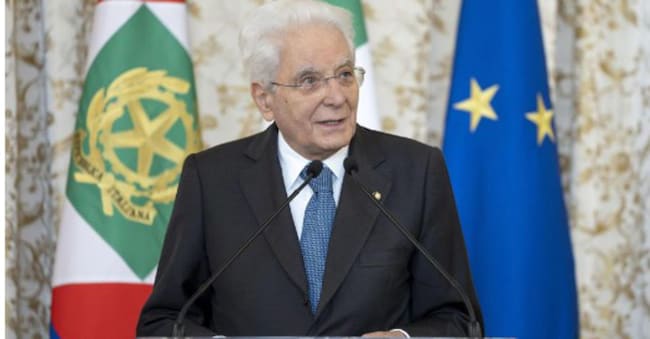
A bustling city, 447 events, 694 participants and an estimated attendance of over 160,000. These are the figures for the 27th edition of the Pordenonelegge festival, which concluded with over 160,000 visitors after five days of events, talks and presentations dedicated to literature and current affairs. The final day of the event, Sunday 20 September, saw the attendance of the President of the Republic, Sergio Mattarella , and Il Volo’s ‘Concerto per l’Italia’.
Mattarella: the ballot paper is a non-violent means of legitimate political debate following a dictatorship
The 27th Pordenonelegge takes place ‘in the midst of the celebrations for the 80th anniversary of the Republic, chosen by the Italian people to establish a system that would guarantee freedom and democracy, the advancement of rights, peace and progress. We have every right to be proud of the path we have travelled. It was the ballot paper – the unarmed weapon of legitimate debate, following the dictatorship and its war – that enabled the country to move forward.’ So said President Mattarella, speaking at the Teatro Verdi. ‘It is dialogue between cultures and the exchange of ideas that drive history forward. This initiative, the “Festival of Books and Freedom”, forms part of our history over these past 80 years.’
The Head of State emphasised that ‘the contribution made by the Dissensio Arena in Pordenone, and the events linked to this initiative – at a time when the temptation of illiberal democracy is emerging globally, as if it could be separated from freedom – have the merit of highlighting, not least through the poignant testimonies of women and men who have paid a personal price, the value of the work of those – intellectuals, artists and dissidents opposed to regimes that disregard human rights – who, through their freedom of thought and action, contribute to the progress of humanity’.
Mattarella: the fight for rights is far from over
According to Mattarella, ‘the battle for rights’ is ‘far from over, and there can be no question of a retreat – unless, that is, some people actually hope for one. We must always remember that the seed of freedom of thought and of life – in other words, the value of people – continues to endure even in the darkest periods of history’. ‘With this edition, Pordenonelegge reaffirms freedom of expression, the right to express one’s thoughts, and the value of dissent – which is all the more precious where it is denied,’ he added.
‘The importance of “thinking differently” and women’s rights
The President emphasised the importance of ‘thinking differently’, which may appear ‘as an annoying behaviour to be suppressed, or even eradicated, as it deviates from a supposed “common consensus”, as if it were an unacceptable disturbance directed against the prevailing views’. On the other hand, groupthink is ‘an instrument of oppression, and the dialectic imposed by free voices – including those of dissent – is, in this sense, invaluable’. Unanimity ‘is characteristic of autocracies and dictatorships and is synonymous with stagnation. It is the pluralism of opinions that, in democracies, prevents power – including digital power – from becoming fossilised in a truth it seeks to impose’. Hence, in a high-profile cultural address, the Head of State defended freedom of thought, quoting Alessandro Manzoni as well as dissidents from Eastern Europe, exiles from Argentina and those from Chile during the military dictatorships. He then referred to Norberto Bobbio – ‘he reminded us that the distinction between a democratic state and an authoritarian regime lies in the “greater or lesser scope afforded to dissent” – but also to samizdat – texts produced by hand and circulated clandestinely, discussed in the kompanye – to Pasternak, Solzhenitsyn. And then, furthermore, the struggles of Nelson Mandela; of the Argentine poet Juan Gelman, persecuted by the dictatorship that destroyed his family; and Rodolfo Walsh, one of the ‘desaparecidos’ in that country’s tragedy’.

