
Porsche, plunging profits and declining turnover: tariffs and electric strategy weigh, but recovery expected in 2026
The Zuffenhausen-based company reports plummeting profits: from EUR 5.64 billion to EUR 413 million, but the new CEO is confident

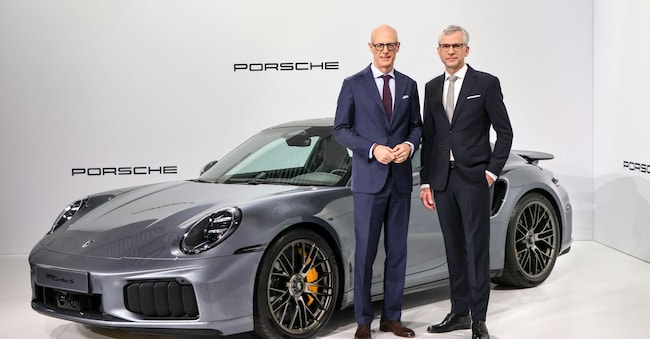
There is one detail that stands out in the choreography of Porsche's 2026 budget conference: the pervasive presence of the legendary 911, the mother of all Porsches, the one that in spite of the all-in strategy on electrics, which has turned out to be decidedly out of touch with market realities, is keeping the Zuffenhausen company on its feet.
The financial year 2025 was marked by a nosedive in profits and sales. Group sales revenue dropped to EUR 36.27 billion in 2025 (2024 was EUR 40.08 billion). And here the estate is called 911.
Operating profit fell from EUR 5.64 billion to EUR 413 million. The reasons for this drop were, according to a note from the German company, 'extraordinary expenses of about EUR 3.9 billion. These consisted of the realignment of the product strategy and the downsizing of the company (about EUR 2.4 billion), additional expenses from the battery business (about EUR 700 million) and US tariffs (about EUR 700 million)'.
Underlying the collapse of Porsche's operating profit by more than 90 per cent are extraordinary costs of around EUR 3.9 billion in connection with the recalibration of the product strategy amounting to EUR 2.4 billion. Added to these are extra costs of 700 million for the electrification of the range and the same amount for US tariffs. "According to CFO Jochen Breckner, 'global challenges and the realignment of the company have impacted the 2025 accounts'. "In 2026," he continues, "our recalibration measures will continue to have one-off effects on results in the order of EUR 1 billion. A 'burden', according to the manager, that the group is prepared to accept in order to 'secure margins appropriate to Porsche's standards in the medium term and increase resilience in the long term'.
All true, but there is more to these words: the switch to full electric in the best-selling Macan has created a haemorrhage in sales. And already with the lithium-ion Taycan things did not go well. It is well known that Porsche is in the process of revising the Macan to make it thermal/hybrid again and aim for higher sales. And so showcasing the 911 at the annual conference gives just the flavour of a desire to get back to its roots. In fact, in September 2025 Porsche unveiled the 911 Turbo S with hybrid technology to make it the 'most powerful 911 ever'. In November, Stuttgart launched the 100 per cent electric Cayenne, which 'completes the offer' in the well-known internal combustion and hybrid sports SUV, underlining Porsche's 'unwavering commitment to a mix of powertrains'. For the current year, the company plans to introduce 'exciting new versions' to 'inspire customers and global fans' of the brand.


