
Porto Rotondo, clash over urban planning future: between landscape protection and new construction
The municipal council approves the detailed plan for 20 thousand cubic metres of new buildings, heir to the old 1998 plan that was never completed. The Porto Rotondo Foundation: "Risk to the landscape balance, more guarantees are needed".

4' min read
4' min read
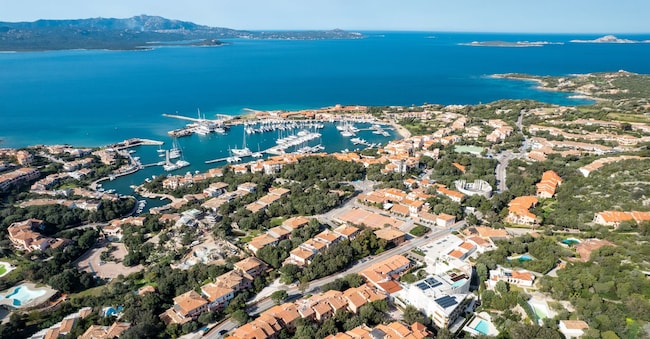
Porto Rotondo returns to the centre of attention for the future of its urban planning. In fact, the Municipal Council discussed, voted on and approved by a majority on 30 July, the new Detailed Plan for the hamlet, famous for its architectural value, bringing to light a profound rift between the positions of the Administration and those of the Porto Rotondo Foundation, which is concerned that new buildings will jeopardise the original spirit of the village.
The node of the Master Plan: new volumes and old unfinished business
The plan approved in the assembly, as mayor Settimo Nizzi explains to Il Sole 24 Ore, 'is not a plan for new buildings in the strict sense, but the completion of what had already been envisaged by the old 1998 detailed plan. A plan that at the time allowed for up to 60 thousand cubic metres of built-up area and which is now reduced to 20 thousand cubic metres, with the simultaneous transfer to the municipality of the urban standards and the construction of the missing infrastructures: roads, the sewage system, lighting, green spaces,' Nizzi points out. The Administration's decision is motivated by the need to 'conclude an administrative process that had been suspended for over thirty years and aggravated by the bankruptcy of the previous companies that had been entrusted with the allotment. Today, the new owners have undertaken to complete the urbanisation and infrastructure works that the previous owners had not completed,' the mayor adds. As for landscape consistency, Nizzi reassures: 'the new buildings will be harmonised with what exists, under the aegis of the superintendence and the competent authorities. There will be no room for ecomonsters or invasive structures'.
The Porto Rotondo Foundation: 'There is a risk of losing the village's identity'
."We have asked for any new building to be stopped and for the entire area to be subject to landscape and environmental protection consistent with the Regional Landscape Plan," Leonardo Donà dalle Rose, president of the Porto Rotondo Foundation, explains to Il Sole 24 Ore. "The concrete risk is to irreversibly alter the balance between the built environment and nature that makes the village unique," continues Donà dalle Rose, who complains about the "lack of public confrontation and the willingness to approve the Plan in the absence of updated and shared general planning". The Foundation's position is that any 'limited' building possibilities should only be allowed if subject to strict control measures, capable of guaranteeing the continuity of the landscape and its spirit and the necessary safety over time.
What are the critical issues identified? "The main landscape risks associated with a real estate project like the one envisaged in the Detailed Plan concern the possible loss of the elements that define the very identity of Porto Rotondo," continues Donà dalle Rose. The village,' he points out, 'is recognisable in a rare balance between built-up areas and nature: public buildings and residences alternate with Mediterranean maquis and granite outcrops according to a precise measure, a calibrated proportion, a horizontal layout that gently follows the course of the landscape. It is in this harmony, between forms and voids, fullness and silence, that the uniqueness of the place and the coherence of its original design lie.
According to the Foundation's president, 'the procedure followed by the municipality appears to be a forcing. It therefore seems to us that the approval of the detailed plan, before the General Urban Plan (Puc), is a forcing. An operation made to anticipate and in fact make useless the confrontation on the rules and protections, to put the citizens in front of a fait accompli'. And again: 'We are not asking for a blind stop to development, but we demand that any transformation be in keeping with the values that make Porto Rotondo a unique place. Urban and demographic analyses do not justify new construction: what is really at stake is not the demand for housing, but rather land valorisation released from the public interest'.
Constraints, landscape and hydrogeological risk
Weighing into the debate are the most recent ministerial constraints that recognise the value of the entire urban layout, starting with the church of San Lorenzo, 'not as an isolated building, but as the fulcrum of a network of architectural, visual and landscape relations that today deserve full protection,' reads the Foundation's comments. In addition, "the Porto Rotondo area is affected by flooding phenomena already mapped by the Plan for Hydrogeological Structure," the president recalls, "and in our observations we had asked that any interventions be subjected to all the necessary in-depth studies and verifications.
Brand connect


Newsletter RealEstate+
La newsletter premium dedicata al mondo del mercato immobiliare con inchieste esclusive, notizie, analisi ed approfondimenti
Abbonati