
Portolano: 'Scenario of permanent competition. Nothing like before, heavy commitment of armed forces'
The speech at the hearing on the Defence Planning Document for the three-year period 2024-2026 before the Senate's Third Foreign Affairs and Defence Committee

6' min read
Key points
- Military tensions between India, Saudi Arabia and South Africa (not taking an international stance)
- Nothing like before, heavy commitment armed forces
- Please define priority level in country security
- Investments in national air and missile defence capability
- The recent attacks on underwater infrastructure
- The front of the ammo
- Land component
- The Naval Fleet
- Submarines
- The sixth-generation fighter
6' min read
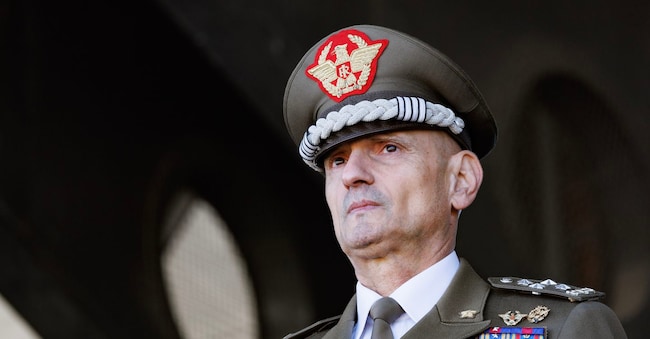
There is not only the conflict in the Middle East, which in recent hours has recorded a truce in Lebanon between Israel and Hezbollah, or the war in Ukraine, or the crisis in the Red Sea, where boats are under threat from drones and missiles fired by Yemen's Houthis. Instability has repercussions in the broader Mediterranean, certainly, but "other concatenated hotbeds of tension, in the Balkans, the Caucasus, the Sahel and the Indo-Pacific, threaten the stability of Western countries, with increasingly bitter and dangerous forms of contention, with actions below the threshold of conflict, in hybrid mode and exploiting the disruptive power of actions perpetrated in the cognitive sphere... (also through the extensive use, for example, of artificial intelligence, machine learning and quantum analysis, etc.)," recalled the Chief of Defence Staff, General Luciano Portolano, speaking at a hearing on the Programmatic Document for Defence, for the three-year period 2024-2026 before the Senate's Third Foreign Affairs and Defence Committee.
Military tensions between India, Saudi Arabia and South Africa (which do not take an international position)
.As if this did not already constitute a 'challenging' defence and security scenario, there is another factor to consider: 'At the same time,' he emphasised, 'other medium-sized powers, such as India, Saudi Arabia or South Africa, are emerging as important players on the global scene. Although they have few characteristics in common, they are exercising their autonomy by modulating their (also military) arrangements, often without taking a position at the international level'.
More broadly, according to the Chief of Defence Staff, 'we are therefore observing a scenario of "permanent competition", the effects of which reverberate as much in the military field as in every other sector of national interest..., from the economic to the industrial, energy and social fields'.
Nothing like before, heavy commitment armed forces
If this is the context, the conclusion is self-evident. "From the perspective of the Chief of Defence Staff, I am aware that nothing will be the same as before and that the armed forces are expected to undergo a heavy and long-term commitment that will require the deployment of personnel, means and materials on a large and growing scale," Portolano confided. "Against the backdrop of such a scenario," Portolano believes "it is essential to develop an increasingly integrated and multidimensional approach that involves institutions and private individuals to protect the country's vital and strategic interests. "In this sense," he continued, "Defence is required to have operational readiness, adaptability and resilience, to deal with conventional and asymmetric threats, even in conditions of prolonged high-intensity conflict...if required.
Please define priority level in country security
.How should we proceed? ''I believe that today, even more than yesterday, we must look at a clear national security strategy, which clearly defines the level of ambition and the priorities and, with respect to which, each institutional actor provides expertise and professionalism,'' is the indication of the Chief of Defence Staff.


