Venice

“Possible Love” – a highly anticipated reflection on cinema and the class struggle

Lee Chang-dong’s film was screened in the main competition at the Venice Film Festival

4' min read

Translated by AI
Versione italiana

4' min read

Translated by AI
Versione italiana


Loading...

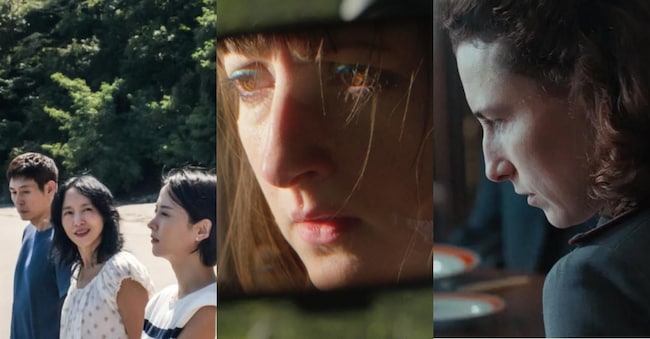
In Venice, the time has come for one of the most eagerly awaited films of the year: “Possible Love”, the new feature film by Lee Chang-dong, one of the greatest masters of Far Eastern cinema, has been presented in competition.

Having made just seven films in a career spanning some thirty years, the South Korean director has finally returned behind the camera following the superb *Poetry* (2010) and *Burning* (2018).

The film opens by telling the story of Ho-seok, a worker who has lost his job, and his wife Mi-ok, who agrees to be filmed and interviewed by Ye-ji, a documentary-maker who wants to make a film about trade union struggles. Determined to capture Ho-seok’s perspective as well, the director delves ever deeper into their lives and eventually draws her husband into a game of couples that grows increasingly ambiguous.

It should be noted straight away that “Possible Love” is inspired by a terrible real-life incident: the mass redundancy of thousands of workers by a large company, which led to violence and unemployment. ““When mass redundancies and the violent suppression of a strike shook Korean society, I felt the need to react. I hesitated, wondering whether it was right to turn those events into a work of fiction”: the director’s own words reveal one of the most important aspects of this ambitious project. Indeed, there is a genuine ‘crisis’ in the work of a female director who becomes increasingly obsessed with constantly filming the couple and who, as an extremely wealthy woman, attempts to put herself in their shoes in a decidedly controversial manner.


Do not covet what belongs to others


It is not merely a reflection on the medium of cinema and the moral implications of how a story like this ought to be told, but also a clear reference to an episode from Krzysztof Kieslowski’s *Decalogue*. ‘Thou shalt not covet thy neighbour’s goods’ in the film is not merely a warning or a facile reference to the envy that wealth can provoke in those who lack it: the commandment, in fact, takes a truly original and brilliant turn during the splendid closing sequences.

“Possible Love” is, in fact, a film that is constantly evolving; it seems to begin in a somewhat didactic manner, only to soar ever higher as the minutes pass, until it reaches its climax in the final half-hour (the total running time is 164 minutes), when it lays its cards on the table and reveals what Lee Chang-dong really seems keen to explore.

Loading...

In 2002, he won the award for Best Director at Venice for the stunning “Oasis”, and the hope is that he will also feature prominently in this year’s list of winners.


The cat wakes up and yawns; then love


In the ‘Venetian Nights’ section of the Authors’ Days, one of the most intriguing Italian films of the entire festival was screened: *The Cat Wakes Up and Yawns; Then Love* by Samuele Sestieri and Federico Francioni.

The film chronicles three months in the life of Chiara, an actress in her late thirties who is trying to find her way in a hectic, tourist-filled Rome. Invisible, living from hand to mouth and perpetually restless, Chiara goes from one experience to the next in a desperate search for something that will make her feel alive.

‘This film stems from an unstable and precarious everyday life: our own’: the two directors have struck an excellent balance with this film, which combines Francioni’s ability to bring unconventional documentaries to life (“Rue Garibaldi” is among his previous works) with the visionary flair that Sestieri had already demonstrated in “I racconti dell’orso” (co-directed with Olmo Amato) and in “Lumina”.

The very first sequence, with its cosmic feel, is enough to convey the ambition of a project that is neither simple nor straightforward, yet one capable of offering reflections of considerable depth through a brilliant and innovative formal approach. An excellent performance by Carlotta Velda Mei, who was called upon to deliver a veritable tour de force of acting.


Woman Unknown


Worth noting among the contenders for the Golden Lion is the Danish film *Woman Unknown* by May el-Toukhy, the only film in the Venice competition directed solely by a female director.

The protagonist, Marie, is about to marry Christian, the wealthy widower for whom she works as a maid and nanny. For her, the marriage means becoming the lady of the house. But there is a secret that could shatter everything: during the war, she had an affair with a German soldier. Now, amidst the chaos of the post-war period, that past is coming back to haunt her. And Marie is prepared to do anything to defend the life she has built for herself.

Filmed with great care and featuring some outstanding performances, *Woman Unknown* is a fairly solid film, let down only by a few implausible plot twists.

It remains, however, a very interesting prospect to discuss the stories of women across Europe who, during the Second World War, formed relationships with soldiers from the occupying armies and who, at the end of the war, suffered extremely harsh consequences.

Here too, it is worth highlighting the excellent performance by the lead actress, Mathilde Arcel, who was called upon to tackle a role that was anything but straightforward.

Copyright reserved ©
Loading...

Brand connect

Loading...

Newsletter

Notizie e approfondimenti sugli avvenimenti politici, economici e finanziari.

Iscriviti