
Postponing lessons because of the heat? Easier said than done
Petitions from families and trade unions are multiplying. However, there are a number of obstacles, including regulatory ones, to changing the timetable

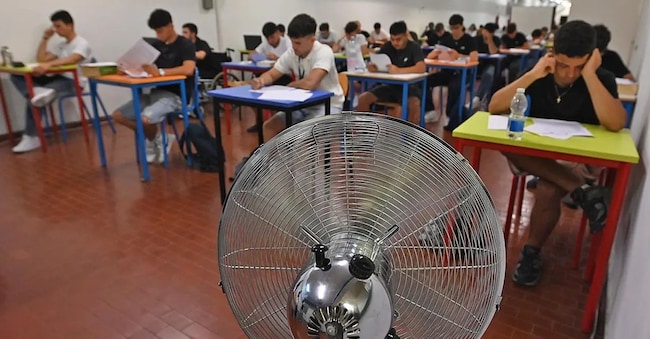
There seems to be no end to the controversy surrounding school term dates. Whilst for years families have been clamouring for the start of term to be brought forward to avoid a ‘black-tag’ September – juggling work and care responsibilities – now, due to the heat, the opposite request is being made. And petitions are multiplying – including from families, with trade unions immediately joining the call – to postpone the start of the school year. It’s a repeat of a scenario we saw back in June, with the arrival of the first significant rises in temperature and calls to bring forward the end of term and the A-level exams.
The ‘calendars’ issue
The issue is by no means straightforward and risks giving rise to the usual Italian controversies. There are at least three reasons why bringing forward (or postponing) the start of the school year is a complex issue in Italia. The first is regulatory constraints: school calendars are required by law to guarantee 200 days of actual teaching. Bringing forward or, in this case, postponing the start of the school year would inevitably mean changing the end date as well, and so there is a risk of the school year running well into June (when it is very hot).
The second reason lies in the regional authorities’ powers over school calendars, which, in theory, allow them to be tailored to specific local needs. This year, the school year begins on 7 September in Bolzano and ends on 17 September in Puglia. It is therefore up to the regional authorities to decide on different arrangements.
The third reason is one of practicality: in Italia, school calendars provide for summer holidays lasting 13 or 14 weeks, the longest in the rest of Europe. Changing them would therefore affect this long holiday period, which is very important to teachers and school staff.
The topic of ‘work’
Alongside these reasons, a fourth factor has emerged in the debate on this issue, linked to parents’ need to balance work and childcare as effectively as possible, particularly for the youngest children. Emilia-Romagna has been responsive to this issue and has launched a pilot scheme whereby primary schools start on 31 August (over 8,000 children are taking part).


Brand connect


Newsletter Scuola+
La newsletter premium dedicata al mondo della scuola con approfondimenti normativi, analisi e guide operative
Abbonati