
Power cuts caused by the heat: why they happen

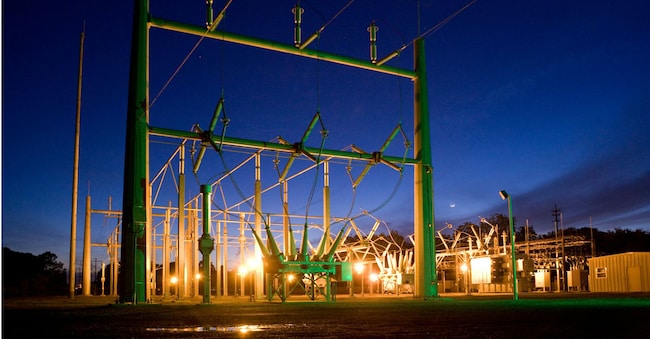
High demand for electricity, driven by the use of air-conditioners, and the persistently high temperatures – which show no sign of dropping even at night – are putting pressure on Italy’s electricity infrastructure. In many parts of the country, power cuts linked to faults in the distribution networks have been reported in recent days. Turin and Naples have been the hardest-hit areas, but there have also been disruptions in the Milanese hinterland, such as in Sesto San Giovanni and San Giuliano Milanese, in Brianza, in Pavia, in the Como area, with reports also coming in from Pescara and Jesolo (Venice).
Unable to dissipate heat
Why do these faults occur? “The flow of current through the various components of the grid, such as cables and transformers, generates heat that needs to be dissipated. When the outside temperature is high, it becomes difficult to dissipate this heat, and this problem is exacerbated as the load increases,” explains Alessandro Bertani, Director of Operations Italia at Cesi (Italian Experimental Electrotechnical Centre). Heat builds up in the components; the heating is continuous and is no longer even interrupted at night, which is now characterised by high temperatures and the use of air conditioning. The electrical components therefore reach their thermal limits and deteriorate, causing blackouts.”
The most vulnerable cities
Urban centres are the most vulnerable and are affected most by this situation. “The problems are particularly acute in cities,” confirms Bertani, “because, on the one hand, they accumulate more heat than the countryside and, on the other, they have underground cables, which make it even harder to dissipate the heat.”
Possible solutions
There are possible solutions, all of which will take time to implement. At Cesi (a company in which Enel and Terna each hold a stake of around 43 per cent, with Prysmian holding 6 per cent and Hitachi Energy Italy 5 per cent), the latest innovations in grid technology are being tested, and the company also provides consultancy on the infrastructure configurations best suited to changing climatic conditions.
Bertani lists some specific areas currently being worked on: ‘New materials to raise the thermal limits of components; strengthening the grid’s interconnections to reduce the current flowing through each cable; and flexibility services capable of disconnecting non-essential loads at the most critical moments. However, these are all medium- to long-term solutions.’


