Practices of resistance to oppression at the 13th Berlin Biennale
Presented is an anthology of 170 works that escape authoritarian regimes and aspire to be a critical conscience of democratic systems

3' min read
Key points
3' min read
Saturday 16 June saw the opening of the 13th Berlin Biennale, open until 14 September, which confirms the strong political commitment present since the first edition in 1998 and its autonomy from the art market. Supported by the Kulturstiftung des Bundes, the German Federal Foundation for Culture established by the government in 2002 and funded by the Federal Ministry for Culture and Media, the biennial has seen increased financial support in 2018 with a contribution of €3 million for each edition.
An anthology of practices of resistance and transformation
Curated by Zasha Colah (Mumbai, 1982), the exhibition presents a selection of practices of resistance and cultural reinvention in contexts of repression and censorship, involving 60 'artistic positions' (collectives, activists and artists) from authoritarian contexts such as Burma, Afghanistan, Sudan, Congo and China, but also from democratic countries. The 170 works, exhibited in four venues (KW Institute for Contemporary Art, Former Courthouse, Sophiensæle, Hamburger Bahnhof), are united by the concept Passing the Fugitive On, which takes its cue from the figure of the fox as a metaphor for "fugitive" artistic content: critical and politically sensitive works, capable of escaping control, crossing geographical and ideological boundaries, and reaching the public as messages to be treasured and passed on. Among the works on display: Indian illustrator Sarnath Banerjee investigates the crisis of critical imagination with an installation inspired by Indian public kiosks; Larissa Araz denounces cultural erasure in Turkey through mural drawings on the forced renaming of species and territories in the name of nationalism; Zamthingla Ruivah Shimray, originally from the Naga Hills in India, transforms fabric into an instrument of memory and resistance, interweaving history, justice and collective practices.
Manifesting with irony
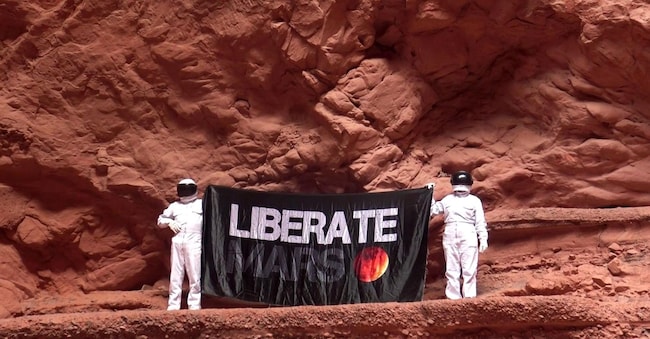
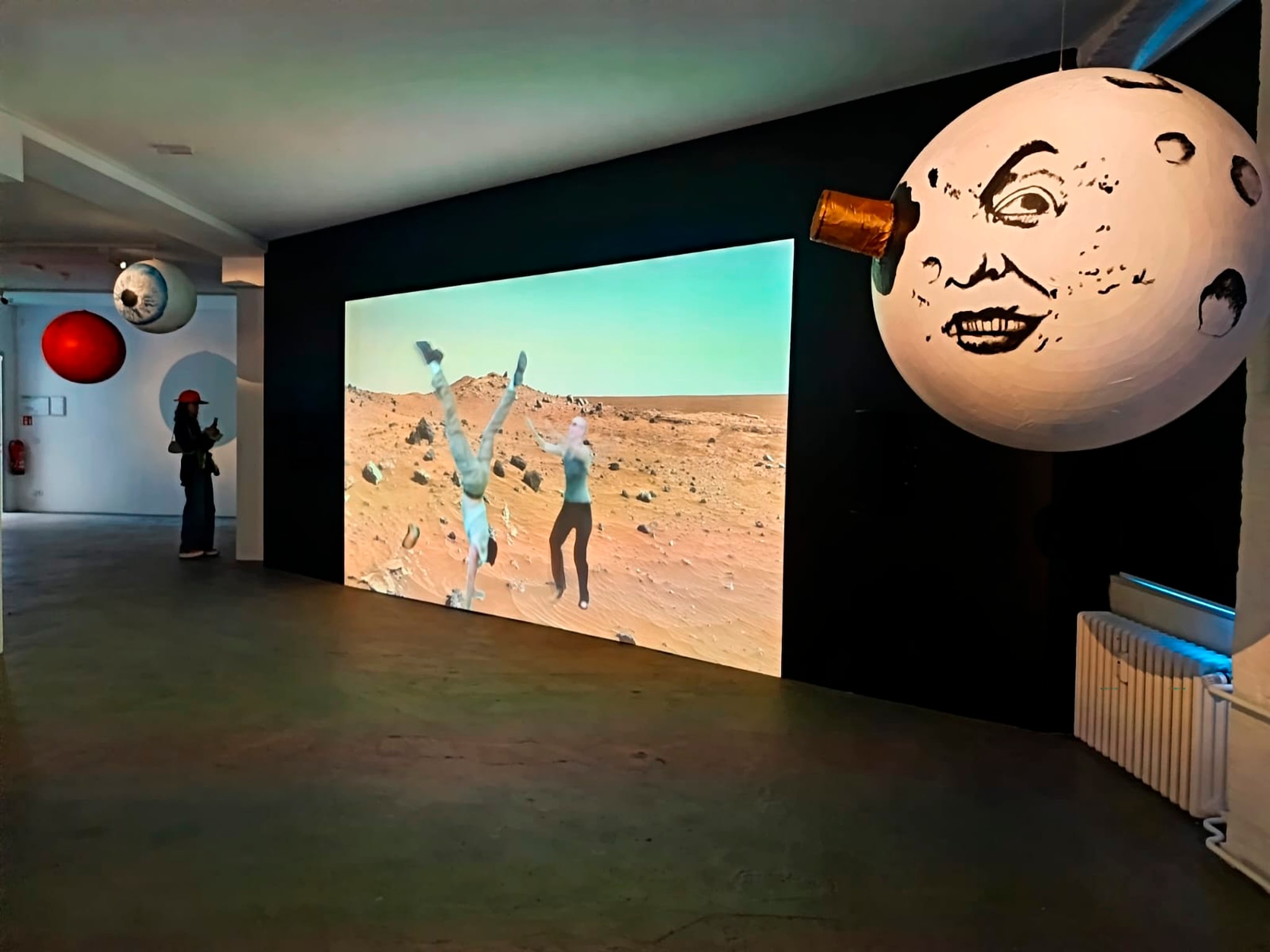
.Some works propose an active involvement of the public, combining political satire and decolonisation strategies. The Thai collective Panties for Peace presents a video game: a feminist action against the Burmese military junta, based on a superstition that women's underwear compromises male power, which recalls a postal action in which the group sent women's panties to the regime's top leadership. The Argentinean independent collective Etcétera (installations approx. EUR 20,000) with 'Liberate Mars' turns the audience into explorers of a colonised planet. At the centre of the video installation is the denunciation of extractivism in the Lithium Triangle (Argentina, Bolivia, Chile), a symbol of the current race for resources masquerading as ecological transition.
Two new productions by Italian artists
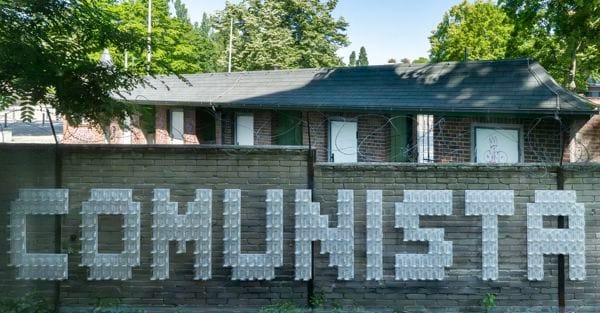
.At the KW Institute, Margherita Moscardini (Gian Marco Casini Gallery and Ex Elettrofonica from €3,500 to €80,000) presents "The Stairway" (2022-2025), a stairway composed of 572 numbered stones that, through a legal device formulated by Professor Lawrence Liang, are donated to supranational bodies, cities, etc., who are asked to qualify them as objects that cannot be owned. who are asked to qualify them as objects that cannot be owned with the aim of creating a work, and at the same time a space, that distances itself from the sovereignty of the national territory it occupies. In the Former Courthouse on Lehrter Straße, Anna Scalfi Eghenter (commissioned work; installation EUR 30,000-150,000) presents "Die Komodie!", openly dialoguing with the history of the place where, in 1916, the trial against a key figure of German communism Karl Liebknecht was held. Through various environments and objects, the artist updates Liebknecht's calls for workers' unity, identifying the contemporary financial market as the new battleground. Outside, the monumental neon sign COMMUNIST, part of the project 'Communio pro indiviso' (2022), reflects the idea of shared ownership, which is at the heart of his practice: in this case, collectors can become communists of the work in exchange for a participation in the project (1 neon pixel for 5,000 euros).