
Prato, the Chinese low-cost clothing district thrives on crime
More than 4,300 companies in the city are able to produce thousands of garments within 48 hours thanks to an army of 'slaves'.

5' min read
5' min read
The signs of the fire are no longer there. The warehouse in Via Toscana in the Macrolotto district of Prato, the former headquarters of the Teresa Moda company in which seven Chinese workers who lived there (in niches made out of plasterboard) and sewed clothes and T-shirts in inhuman conditions, for 14-16 hours a day, burnt to death 11 years ago, has been renovated and re-rented, although there are no signs. The Italian property owners, convicted in first and second instance (six and a half years imprisonment, later reduced to four), were acquitted of the charge of multiple manslaughter in 2019 in the Court of Cassation, a sentence that buried forever the investigative hypothesis of countering the illicit activities of the Chinese firms starting with those who rent them the production spaces without caring what happens in there.
Europe's largest wholesale 'market'
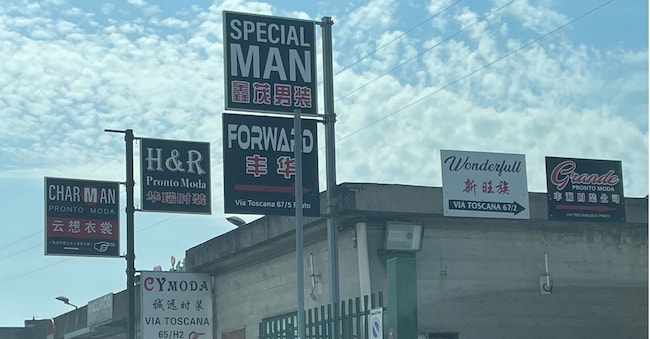
.'Teresa Moda? We don't know anything,' the Chinese and Pakistani workers who work in the nearby clothing factories (the so-called 'pronto moda') answer in monosyllables, peeking out behind 'walls' of brightly coloured summer clothes ready for sale, protected by cameras at every corner. A few steps away are mountains of black sacks containing processing waste, scraps of fabric to be disposed of who knows where. All around is an incessant coming and going of cars, trucks, mopeds and above all Polish, French and Italian vans, coming to stock up on low-cost clothes in Europe's largest wholesale 'market': more than 4,300 Chinese companies that are able to produce thousands and thousands of garments within 48 hours thanks to an army of oriental 'slaves' and, in recent years, also Pakistanis, Bengalis and Indians. The Chinese low-cost clothing district seems to shine as brightly as and more than before.
At the time of Teresa Moda's burning, it was the end of 2013, Prato and Tuscany gasped: 'It is not tolerable,' they said then, 'that in a region adored by tourists and appreciated for good living, such situations of labour exploitation and tax evasion persist. Today the situation is worse than then. Because from illegality and evasion we have moved on to criminality.
'Chinese Mafia', defined the Chief Prosecutor of Prato, Luca Tescaroli, who in recent months has found himself fighting a war between armed Chinese gangs one against the other aiming to control the market of hangers, the metal hangers costing a few cents each that are essential for those who produce clothes and T-shirts. Knives, bars, bullets: fifteen violent episodes since last June and disturbing links with the murder of two Chinese men in Rome in recent days and the burning down of a Chinese clothes warehouse near Madrid, Spain, at the end of February. The response is frightening: international organisations with links to other criminal realities such as 'ndrangheta, camorra, Sacra Corona unita. 'Until now, the risks of Chinese crime have not been perceived,' Tescaroli told Il Sole 24 Ore, 'now we need an awareness on the part of institutions and citizens because the acts of violence that are increasing are a danger and annihilate economic competition'.
The fight against the 'Chinese mafia'
.Just as the local mafia was defeated thanks (above all) to repentants, so Chinese crime can be attacked by extending the same measures of assistance and extraordinary protection to collaborators and witnesses of justice, claims the prosecutor: 'Since 6 February, when I made an appeal inviting exploited people to turn to the judicial authorities, 52 Chinese and Pakistani people have turned up at the Prosecutor's Office,' Tescaroli announces, adding that 'this has never happened in the past'. This may be the sign of a turning point, but it now needs 'political will and legislative intervention'. Also to safeguard the city's healthy economy: 'Chinese evasion conditions free competition, no one can compete with those who exploit workers in an inhuman way'.

