
'Pregnant women' instead of 'pregnant people': BBC recalls journalist after twenty complaints
The British broadcaster's Executive Complaints Unit upheld twenty complaints against the presenter, who was accused of expressing, mainly through her facial expression, a personal opinion on trans identity

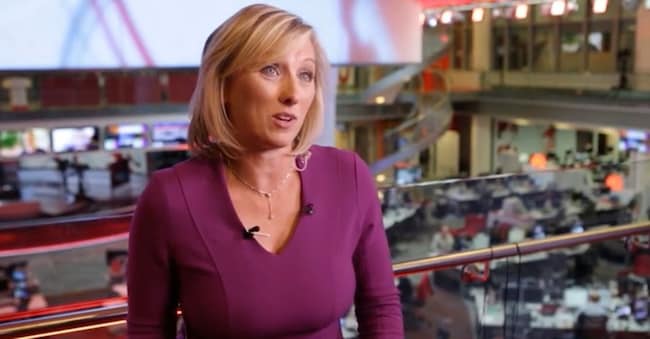
When Martine Croxall, the long-standing face of BBC News, corrected "pregnant people" to "pregnant women" during a June news bulletin, many viewers may have thought it was a simple linguistic nuance. Some will have picked up on a stance, others an instinctive, almost trade-like gesture to make the text flow more smoothly. Only weeks later it became clear that those few seconds, with a slight grimace of the face and raised eyebrows, would be read - and judged - as an emblematic case in the tug-of-war between journalistic neutrality, identity battles and 'culture wars' over gender. The BBC's Executive Complaints Unit (Ecu) has in fact upheld 20 complaints, ruling that Croxall violated the broadcaster's impartiality rules.
The fact
The episode takes place on the BBC News Channel, during the introduction to a report on research by the London School of Hygiene & Tropical Medicine on individuals most at risk during heatwaves in the UK. In the prepared text, the term 'pregnant people' appeared, consistent with language, increasingly popular in academic and health circles, that is intended to include trans and non-binary people who may carry a pregnancy. Croxall, reading the teleprompter, utters the phrase "the aged, pregnant people... women... and those with pre-existing health conditions", pausing for a moment and vocally replacing "people" with "women". In that passage, the camera catches a facial expression that viewers interpreted as disapproval, annoyance and sarcasm.
The BBC position
In the report published on 6 November, the Ecu writes that that expression gave the 'strong impression' of a personal viewpoint on a controversial issue, in particular public disputes about trans identity. The control unit emphasises that an explicit comment is not necessary to violate the standards: even a gesture or a grimace, in such a polarised context, can be perceived as a stance. In the official reconstructions, the most benevolent motivation for Croxall speaks of 'exasperation' at a script deemed 'clumsy', which quoted the language of the press note, including the inelegant 'the aged' and the wording 'pregnant people', not in line with the BBC's usual style nor with the words used by the interviewed researcher, who in the following clip speaks instead of 'pregnant women'.
In fact, however, Ecu comes to the conclusion that even assuming the good faith of the presenter - i.e. that she was reacting to the form of the text, not to the identity content - the result on the screen was to communicate to the audience a judgement on a sensitive topic. In other words: for the viewer, it is not so important what Croxall 'meant' as what appeared. And it appeared, to a relevant part of the audience, as an implicit critique of gender-inclusive language, at a time in history when every lexical nuance on these issues is immediately politicised.
The case explodes on social media. The short video in which the presenter is seen correcting the text and reacting with her eyes wide open is shared thousands of times, accompanied by opposing readings. On the one hand, observers and trans activists or supporters of the cause read the scene as yet another sign of cultural hostility towards a language with inclusive objectives; on the other, those opposed to the concept of 'pregnant people' see in Croxall's choice a moment of 'resistance' to the drifts of political correctness. Writer J.K. Rowling, for years a central figure on the 'gender critical' front, exults on X and calls Croxall her 'new favourite BBC presenter'.


