
Priolo, Isab refinery: new biofuel production line gets underway

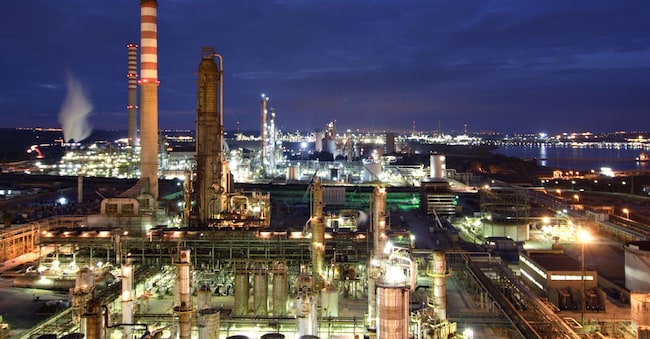
It is a first step. But its significance goes beyond this single initiative, as it marks the start of a transformation of the refineries operated by Isab in Priolo, in the Syracuse industrial area. This transformation begins with the existing facilities and, for the time being, involves one of the two Isab refineries: the one commonly known as Priolo Nord. Here, the processing of vegetable oils has begun to produce bio-petrol and SAF, the sustainable aviation fuel. This is not, of course, the full-scale conversion of the large Syracuse oil complex just yet, but it is the first concrete step in a transformation that can complement traditional refining with new, lower-carbon supply chains.
Production utilises the FCC (Fluid Catalytic Cracking) unit – the refinery process that converts heavy petroleum fractions into lighter, higher-value products – into which POME, the liquid residue from palm oil processing, is fed. The raw material is ISCC-certified, guaranteeing the traceability and sustainability of the supply chain. Production will increase to 500,000 tonnes per year, destined for the Italia market. Ludoil Energy will be responsible for marketing the product.
Ludoil is the commercial partner for the new green energy production and is also the Italian group which, through Ludoil Capital, has signed an agreement with Goi Energy – the Cypriot group that controls the refineries – to acquire Isab. The transaction is divided into two phases, the first of which concerns 51 per cent of the share capital. The transfer is subject to the Government’s decision under the ‘Golden Power’ procedure and the competition authority’s approval, both of which have yet to rule on the transaction, as well as other regulatory requirements. Until the deal is finalised, the refinery remains under the control of Goi Energy, which acquired it from the Russian company Lukoil in 2023.
Co-processing makes it possible to process organic raw materials in an existing plant, reducing the time required compared with building a new biorefinery. However, Isab’s core production remains centred on crude oil: the new line marks the start, not the completion, of the conversion.
The project goes beyond SAF. The aim is to transform Isab from a traditional refinery into an integrated energy company, expanding its activities from crude oil processing to advanced bioenergy, renewables, logistics and distribution. In the medium term, production chains are planned for HVO, SAF, bio-oil, second-generation bioethanol and BioETBE, with investments in line with the RED III Directive. A further 20 megawatts from renewable sources is expected to be added to the 540-megawatt power and cogeneration plant.

