
Priolo, turning point for Isab: refinery returns to Italian hands with Ludoil
The Ammaturo family group signs the agreement with Goi Energy to take over the Priolo refinery. First step on 51%, operation subordinated to Golden Power and Antitrust: at stake the largest refining pole in Italia and about one thousand direct employees

Key points
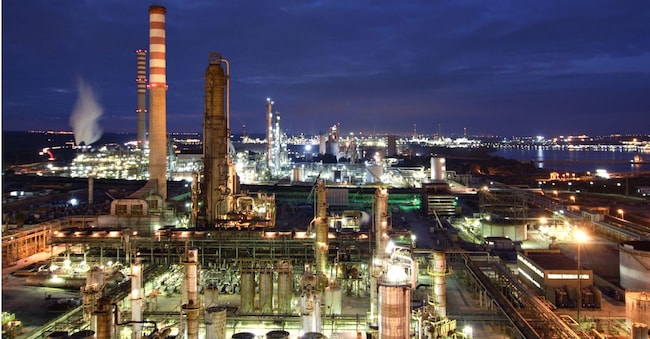
Italy's largest refinery is again changing its industrial outlook and preparing to return under Italian management. Ludoil Capital, a wholly-owned subsidiary of the holding company Ludoil Energy, has signed a sale and purchase agreement with Goi Energy to acquire the latter's stake in Isab, the company that owns the Priolo Gargallo refinery and the industrial, logistics and energy infrastructures connected to the Syracuse site. The transaction is being constructed in two phases: the first concerns 51% of the shares and will have to pass the government's scrutiny through the Golden Power procedure, as well as Antitrust and regulatory approvals.
It is not a simple change of shareholder. Isab is one of the most sensitive assets in Italy's energy system with two refineries in Priolo Gargallo, in the heart of the industrial area of Aretusa, and has an authorised capacity of 20 million tonnes per year and a balanced capacity of 15 million. It is the largest refinery in the country and a strategic infrastructure for security of supply. A plant with a capacity of about 320,000 barrels per day, equal to about one fifth of Italy's refining capacity.
For Ludoil, the transition is decisive. The group belongs to the Ammaturo family, a Campania entrepreneurship that grew up in the oil distribution and logistics business. The origins date back to 1954, when Donato Ammaturo, grandfather of the current president of the same name, started a family business in fuel distribution in the Centre-South of Italy, starting from a storage depot in Nola that is still operational. In 1998, the current Donato Ammaturo, following in the family footsteps, founded Ludoil S.r.l. and started growth through acquisitions and development of the proprietary network. With Isab, the group entered directly into crude oil processing and tried to integrate refining, procurement, downstream, bioenergy and renewables. Ludoil estimates that the new scope can generate consolidated revenues in excess of EUR 10 billion per year, propelling the company into the role of Italy's leading private multi-energy company.
From the Russian dossier to the Goi management
The Priolo refinery comes to this new operation after a very delicate phase. Until 2023 it was linked to the Russian orbit of Lukoil, through Litasco. The war in Ukraine, sanctions and the European embargo on Russian oil had turned the Syracuse site into a national case: a strategic infrastructure for Italia, but with a shareholder that had become politically and financially problematic. In May 2023, the takeover by Goi Energy closed that phase. Goi presented itself as the energy arm of Argus, a Cyprus-based private equity and asset management fund regulated by the Cyprus Securities and Exchange Commission. In the communiqué issued at the time of the deal with Litasco, the company named Michael Bobrov as CEO and explained that the operation should open a new phase for Priolo, also thanks to the commercial agreements with Trafigura for the supply of raw materials and the withdrawal of refined products. The move to Ludoil did not come on neutral ground. In February 2026, Isab announced that it had successfully concluded a negotiated crisis settlement procedure, initiated to manage financial tensions and redefine the industrial structure of the site.
The price remains confidential
The value of the Ludoil-Goi transaction has not been disclosed. This is the most sensitive point from a financial point of view. The official press release indicates the industrial impact of the new perimeter, with consolidated revenues expected to exceed EUR 10 billion per year, but does not provide the price of the sale. There is currently no official figure that can be used as a certain value for the Ludoil-Goi transaction. The actual valuation may depend on debt, working capital, inventories, commercial contracts, litigation, investment plans, environmental guarantees and employment commitments. The only certainty is that the dossier concerns a systemic asset: in terms of industrial size, employment weight and centrality in the Italian energy chain.


