
Prison and work: those who train have less risk of reoffending
Social cooperatives' balance sheet on labour insertion in prisons

3' min read
3' min read
Training courses and work as an antidote to the risk of reoffending. Out of every 100 inmates who follow training and work placement paths in prison in social cooperatives, less than 10% return to crime: this is "an important reduction in recidivism compared to those who are subjected to standard treatment" and "there is room for increasing the commitment of social cooperation in this area".
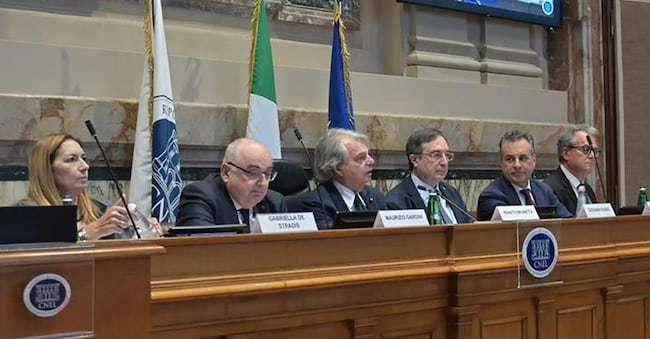
This is the picture provided yesterday by the president of Confcooperative Federsolidarietà Stefano Granata, speaking at the conference on 'Social cooperation and justice: a bridge between prison and society. Experiences of innovation and social impact" organised at the Cnel by Confcooperative Federsolidarietà. Granata recalled that every third prisoner employed in the private sector is employed by a social cooperative associated with Confcooperative Federsolidarietà. And over 1,500 prisoners and ex-prisoners are involved in training courses, internships and work grants. While there are 3,000 ex-convicts who, having started working in a social cooperative, remain there even at the end of their sentence.
The location chosen for the event is no coincidence, because it was precisely the Cnel that launched the 'Zero Recidivism' project and in mid-April drew up a package of regulatory proposals at the end of a day promoted together with the Ministry of Justice, crowning the path started in June 2023 with the memorandum of understanding signed between president Renato Brunetta and the Guardasigilli Carlo Nordio (see IlSole24Ore of 17 April). 'Our goal is zero recidivism,' Brunetta confirmed yesterday, 'or the lowest possible recidivism. Recidivism is too high because no one invests in training, schooling, and work, which are the break in the perverse circuit that only provides for an afflictive sentence. Economically it is a nonsense because the state spends 4 billion to manage prisons, but without hope, without visions of the future; they are a cost and not an investment, prison becomes an economic and social trap'. Turning to Brunetta, the president of Confcooperative Maurizio Gardini: 'We feel we can accept the challenge of zero recidivism,' he said. 'We need a great work of subsidiarity that keeps state and intermediate bodies together. For ethical, social, economic reasons. We need to invest more in social and economic infrastructure, both material and immaterial'.
Returning to Granata's speech, the latter emphasised that 'as also emerged from the Cnel proposal, it is important to make the public administration become a stable purchaser of the services provided, through a social procurement plan of the Pa, so as to make the services and the connection with the territory more effective. Considering that a prisoner costs our country more than 150 euro a day, investing in these tools for social and work reintegration is also convenient from an economic point of view.
Social cooperatives represent an important link between prison and the outside world: there are about 110 social cooperatives that are members of Confcooperative that have regularly employed (with salaries provided for by the social cooperatives' collective agreement signed with Cgil, Cisl and Uil) disadvantaged people in the justice system, in intramuritary work or outside prisons, about 1,107 people including prisoners, those admitted to alternative measures to detention and outside work. More than 4,000 people use residential services for prisoners and ex-prisoners, in particular with psychiatric and addiction problems, and other social and work reintegration services once their detention is over.


