
Prisoners with addictions, more alternatives to prison
The government corrects the measure: yes to semi-residentiality. In the event of failure the course may be repeated

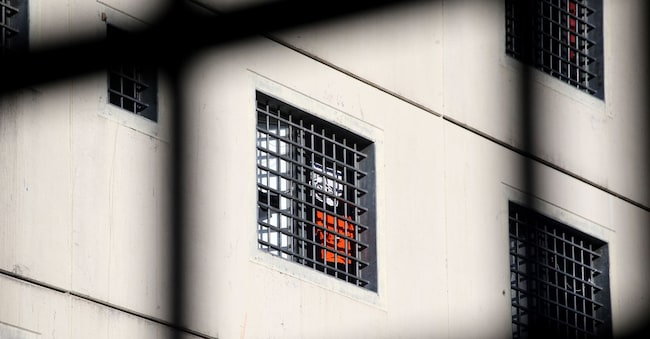
The perimeter of the offenders concerned is widened, semiresidentiality is opened up, and repeated use is allowed. The government modifies the bill on home detention for the rehabilitation of drug and alcohol addicts, under discussion in the Senate Justice Committee, and meets with substantial support from the opposition. That these are measures that are not to be ascribed to one political side, moreover, is stated by the undersecretary to the Presidency of the Council of Ministers Alfredo Mantovano himself, holder of the delegation for anti-drug policies, in his speeches in committee.
The shared objective is to strengthen an alternative circuit to prison centred on community residential facilities to foster the recovery prospects of a widespread and particularly problematic category of offenders. As of 31 December 2024, there were more than 19,755 inmates with drug addictions (about 31% of the prison population), to which about 6,300 alcohol addicts had to be added.
What the amendment envisages
In detail, the government's amendment envisages extending the maximum limit of 8 years of sentence to be served, for access to the community system, also to cases of aggravated robbery and aggravated extortion, offences excluded in the original version of the measure because they were considered more serious and to be included in the lower limit of 4 years. These are crimes, Mantovano explained, very often committed within the family walls in connection with addiction: 'As for the possible concern for safety, he reiterates that it is not a cost to be paid because through recovery courses the addiction, i.e. the cause that led the subject to commit the crime, is eliminated at the root'.
Another new element introduced by the government amendment, but also contained in the oppositions' amendments, is the opening to semiresidentiality. In fact, what emerged was not only the need to expand the number of facilities available, but also the possibility of offering the prisoner a path of recovery within a family nucleus that can facilitate the exit from drug addiction.
The ban on the repetitive use of the benefit was then cancelled. "In fact," Mantovano emphasised, "in keeping with the rehabilitation purposes of the institute, the possibility is admitted that the process may not be completed for reasons other than the reiteration of the offence, but, for example, for reasons connected to the failure to enter the right rehabilitation community.


