
Data Protection Authority: unsolicited telemarketing – one call every five minutes
In 2025, there were over 104,000 complaints. In the first seven months of 2026, there were more than 37,000 – over 170 a day. We need better consumer protection.

Key points
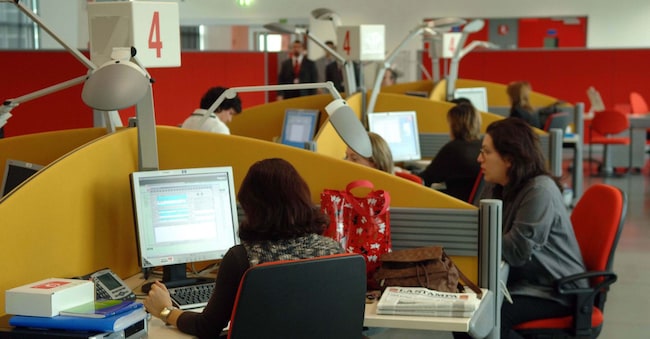
In 2025, the Data Protection Authority received more than 104,000 reports of unwanted calls: one every five minutes; and in the first seven months of 2026, there were more than 37,000, over 170 a day. This was announced by Agostino Ghiglia, a member of the Board of the Italian Data Protection Authority, speaking this morning at the conference ‘Digital Life and Personal Data’, organised by the Authority itself as part of a public meeting with consumer organisations. The event, organised in collaboration with the Ministry of Enterprise and Made in Italy, took place in Rome at the Auditorium della Tecnica.
‘Behind those phone calls lies a black market in which personal data has become a commodity. In just one of the cases we have penalised, a network had made around 70,000 promotional calls over two years and secured 50,000 contracts. On this front,” said Ghiglia, “since 2020 we have imposed penalties totalling over 200 million euros, but we have not limited ourselves to this; in the face of the most systematic violations, we have ordered the confiscation of databases, thereby depriving the abusive networks of their very capital. A substantial body of information, acquired unlawfully, which in this way can no longer be put back into circulation, not even through third parties’.
But we must remain vigilant not only when interference is most obvious, but also when the ‘harassment’ is less conspicuous: ‘Whilst an unwanted phone call is an intrusion that everyone notices, there are others that go completely unnoticed, and in such cases the Authority’s primary task is to bring them to light,’ explained Ghiglia. ‘This is the case with email: every day we receive dozens of emails, including newsletters, offers and service communications, and many of them may contain an image just one pixel in size, which is transparent and invisible. When the message is opened, that single pixel tells the sender that we have viewed it – when, how many times and on which device – without us even realising it. Consumers can stop feeling alone only if the authorities and associations learn to work as a network’.
The ‘Big Brother’ risk
The risk highlighted by the Chairman of the Data Protection Authority, Pasquale Stanzione, is that of a “Big Brother” who draws up our identikit. ‘In the absence of a robust data protection framework, the digital society risks becoming a society of surveillance and profiling, and the internet, from being an extraordinary democratic resource, may degenerate into a tool for global surveillance by the major economic powers’. The digitisation not only of the economy but, I would say, of our lives – continued the Data Protection Commissioner – ‘has brought to the fore new protection needs that traditional legal frameworks struggle to meet, demonstrating the urgent need to rethink the forms of protection afforded to the weaker contracting party’.
Artificial intelligence
In this context, artificial intelligence. ‘With the increasingly significant spread of AI, the mutual synergies and interrelationships between data protection and consumer protection are becoming ever deeper. In fact, both – as the Authority’s president stated – underpin a shared need to restore balance in the face of the asymmetries and distortions of the socio-economic system, brought about by a socio-economic context so profoundly altered by new technologies. Guaranteeing the right to data protection means preventing the exercise of unchecked powers, based on the exploitation of our most private information, thereby at least partially counterbalancing the risk of a return to feudal-like social relations.”

