Alternative finance

Private Credit, Amundi: 'US lacks discipline, but Europe is stronger'

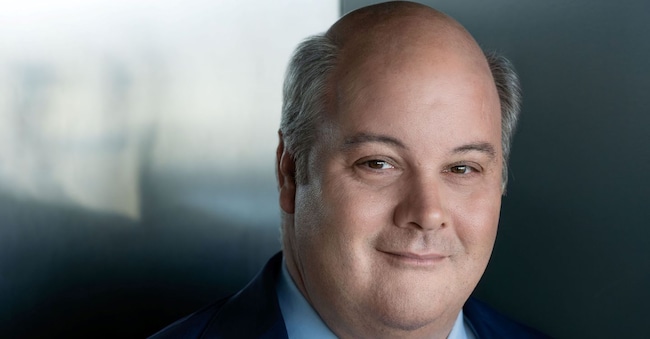
Investment manager Vincent Mortier does not see a systemic risk in investors' flight from US funds and emphasises the differences with the European market.

by Maximilian Cellino

2' min read

Translated by AI
Versione italiana

2' min read

Translated by AI
Versione italiana

'A significant problem certainly, but one that I would describe as local and not systemic at the moment'. Vincent Mortier does not underestimate the tensions in the private credit sector in the United States in recent weeks, with the wave of redemptions that is challenging even experienced operators. However, Amundi's head of investments joins the chorus of experts who seem to want to throw water on the fire at all costs these days and to emphasise, above all, the structural differences that exist with Europe.

Why are you convinced that the critical issues remain largely concentrated and are not able to spread much further?

Loading...

Despite having reached a size of USD 1.7 trillion, the private credit segment is not yet large enough or overly leveraged to put the entire financial system at risk. However, this does not detract from the fact that there has been a loss of discipline in the US: too many players have raised large amounts of capital that need to be deployed and bargaining power has shifted from lenders to borrowers.

In practice, a real short circuit: how could this have occurred?

Basically, some operators ignored the fundamentals: due diligence was not always performed properly and collateral management was often deficient. The pressure to deploy the capital raised prompted the refinancing of unsound companies or fragile business models, even opening the door to potential fraud. Many banks, faced with the refusal of some companies to provide answers, stopped lending money, but other less rigorous operators took their place in order to keep liquidity at a standstill.

You are referring, however, essentially to the United States, where in addition to the issue of credit quality there are also other issues, the composition of portfolios for example.

Absolutely. The US private debt portfolio is extremely unbalanced because about 35% is concentrated in software and we also find aggressive investments in healthcare and refinancing ofdata centres. This lack of diversification exposes investors to a high risk of obsolescence, the exact opposite of what a well-constructed portfolio can achieve.

Why do they say that Europe is different instead?

Here, the situation is actually much better: the private debt market is much smaller, has developed more recently and is, above all, less sectorally concentrated. Investments are more widespread, there is probably less leverage and more regulation. In this sense, Europe has so far maintained a discipline that in the US seems to have been lost under the weight of oversupply of capital, but there is no shortage of attention points that could be a potential 'recipe for disaster'.

Does this refer to anything in particular?

I am thinking of the so-called 'semi-liquid' structures offered to savers. These funds are sold by emphasising the possibility of high nominal rather than real returns and supposed liquidity. In reality, redemption clauses, often limited to 5% per quarter, are sometimes poorly emphasised. It also happens in some cases that nominal returns are advertised while ignoring the cost of risk, i.e. the expected default. Selling an illiquid product as if it were liquid, without clarifying its real risks, can be extremely dangerous.

Copyright reserved ©
  • Maximilian Cellino

    Maximilian CellinoRedattore

    Luogo: Milano

    Lingue parlate: italiano, inglese, tedesco

    Argomenti: Mercati finanziari, politiche monetarie, risparmio gestito, investimenti, fonti alternative di finanziamento, regolamento del sistema finanziario

    Premi: Premio State Street 2017 per il giornalista dell'anno - Categoria Innovazione

Loading...

Brand connect

Loading...

Newsletter

Notizie e approfondimenti sugli avvenimenti politici, economici e finanziari.

Iscriviti