


Le elezioni in Bulgaria e il rischio di un “nuovo Orban” nel cuore della Ue
Dal nostro corrispondente Beda Romano

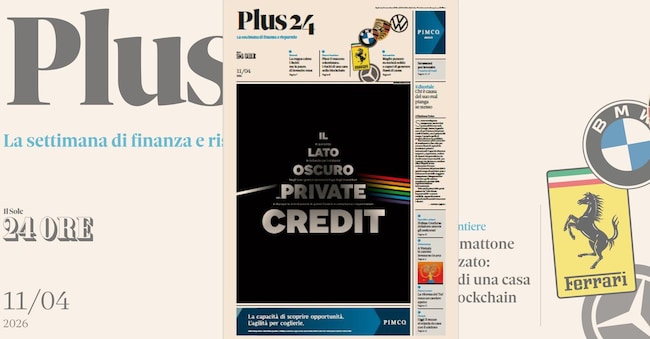
Without adequate transparency, even supposedly real data, like lies, have short legs. And for the private credit sector, the risk, over time, is precisely that of losing credibility altogether. Narratives of double-digit returns are no longer enough to attract capital flows from private and institutional investors: opacity fuels suspicions and, above all, waves of redemptions that may gradually become unstoppable, with managers struggling to sell illiquid assets without forced write-downs.
It is therefore time for the private debt industry to change course and take the path of greater transparency, and to go well beyond the minimum currently required by international regulation. This is the only way private debt can move from being an 'impenetrable closed club' to a credible sector, capable of attracting stable capital instead of chasing redemptions.
At the heart of the problem is the valuation of assets: portfolios of unlisted loans, the value of which is estimated with internal mark-to-models that ignore real deteriorations, with values that depreciate by as much as 20-30% abruptly when a loan contractual clause (covenant) is breached and, even worse, if the debtor goes into default.
Valuation methodologies verifiable in real time by investors are required. Against the backdrop of an increasing trend of redemptions, the private credit industry cannot afford to present itself at the time of asset liquidation with valuations that differ significantly from market valuations. This fuels doubts about artificially inflated valuations to attract capital.
It is unthinkable to enhance the reputation and give confidence to the market, when not even the amounts collected and the type of customers to whom these products are offered are disclosed. As the following pages show, many operators have not communicated these simple data to Plus24 with granularity. An industry that has set in motion intense lobbying in Brussels to strengthen the Eltif offering - with a 2.0 version - and expand the pool of potential investors. Private credit funds are now sold with minimum entry thresholds of one euro.

