
Pro-Palestinian protest sweeps US campuses
Controversy over hundreds of arrests. Professors and employees also stand in solidarity with the students

3' min read
3' min read
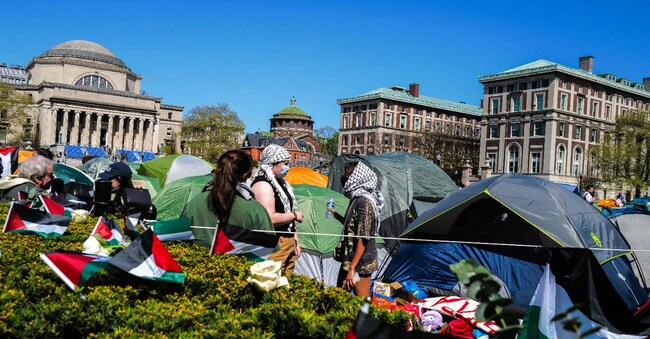
The war in Gaza and the Israeli-Palestinian drama are shaking major American universities. The climate is tense after the heads of prestigious universities, from New York University to Yale after Columbia University, called for police intervention to clear protest campuses, operations that saw the arrest of dozens of pro-Palestinian protesters in a climate of heated controversy and division.
On the one hand, there are accusations of anti-Semitism and intimidation of Jewish students, raised by demonstrations where sympathies for Hamas have also been echoed; on the other hand, there are claims for the right to peaceful expression and academic freedom, called into question by crackdowns that have few precedents.
Both the actions of the police and new calls for dialogue, however, seemed unable to restore calm at the moment. Harvard as a precaution has closed off access to Harvard Yard, in the centre of campus, while tents have been erected at MIT. Demonstrations and occupations, which since Monday have coincided with the beginning of the Jewish Passover holiday, have also taken place in Berkeley, California, where a dozen tents fly the 'Solidarity with Gaza' flag, as well as at the University of Minnesota.
The unknowns emerge above all in New York, in the chain of events and stances at Columbia, the epicentre of the crisis. Rector Nemat Shafik last week was the first to call for the police to enter the university, which had not happened since the protests against the Vietnam war in 1968, leading to a hundred or so arrests and sanctions against numerous students. Now in order to contain the risks she has offered students the option of taking classes remotely to complete the semester, which ends on 29 April.
But the demonstrations continued and hundreds of professors and university employees, according to the New York Times, signed letters critical of the crackdown and ventilated possible symbolic censure of the rector by the university senate. Shafik, who during recent congressional hearings had pledged to respond vigorously to demonstrations deemed illegal and to incidents of anti-Semitism, said she was aware of the "debate over whether or not to use the police on campus" and stressed that a "better respect for the rules would avoid the need to rely on others to keep our community safe".


