
Producers or algorithms? Who is really calling the shots in the music industry today?
A prompt, a few seconds, and the hit is ready. But what remains of true artistic identity? The end of craftsmanship

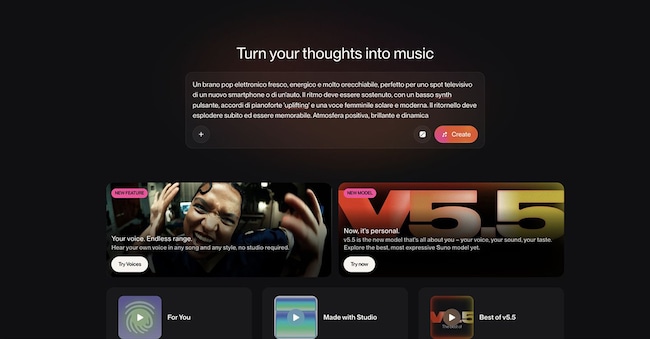
Up until five years ago, unless you’d studied composition or had a thorough grasp of some DAWs, the only way to release a track was to rely on a producer. You were lucky if you had a brother, a friend or a cousin in the industry, or else you were forced to spend a small fortune on a production that was, at the very least, professional. Today, the landscape has changed radically. Many independent artists rely directly on generative AI to produce their own music. And it’s not just them: even major brands, for their TV and other advertising campaigns, are opting for AI-generated productions which, in my view, come across as bland and formulaic, betraying the lazy intent behind a prompt such as: ‘make a trendy, catchy and easy-to-remember song’.
What immediately catches the ear is that typical compression of certain frequencies and that ‘plastic-sounding’, uniform mix, devoid of the micro-dynamics and natural imperfections that we are used to hearing in a track produced without the use of artificial intelligence.
The power of the prompt: Focus on Suno
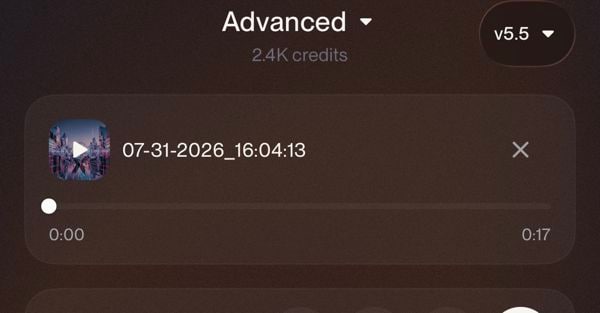
All of this has become disarmingly simple, thanks in particular to tools such as Suno, which is currently the most popular music AI platform alongside Udio. It’s straightforward to use and adapts to every need through three tiers: the Free Plan, which is free of charge and offers 50 credits per day and access to the v4.5-all model without commercial rights; the Pro Plan, which for €7.20 a month (billed annually) unlocks the v5.5 model, 2,500 monthly credits, commercial rights, advanced editing features and the ability to record and pitch-correct tracks using your own voice; and finally the Premier Plan, which for €22 a month increases credits to 10,000, unlocks three types of track separation and includes direct access to Suno Studio.Even by upgrading to the Pro plan, for example, you can upload a raw audio file of yourself singing — even just your voice humming the melody —, specify the desired style and let the software generate the lyrics, if you don’t already have some ready. Once you’ve got the track, you can download the individual tracks to import directly into your DAW to work on them. If, on the other hand, you opt for the Premier Plan, the platform provides its own integrated DAW (Suno Studio). Within a few hours, you’ll have a song with a full arrangement, enhanced by the effects of the requested style and ready to sound, to the untrained ear, like a genuine studio production. However, behind this apparent technological magic lie some rather dubious tactics. On 31 July, in fact, a German court found Suno guilty of copyright infringement, ruling that the platform had trained its algorithms using protected tracks without having obtained the necessary authorisations or paid the required royalties. The ruling emphasised that such conduct breaches both German and US legislation, ordering the company to pay damages – the amount of which has not yet been specified – setting a decisive precedent for the future of the entire generative AI sector.
The streaming bubble
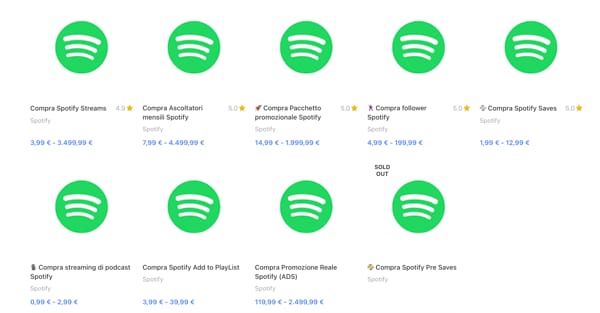
This democratisation and the hyper-production of standardised content have created a veritable bubble, in which artificial intelligence is exploited both to flood the market and to clean it up. On the one hand, scammers use generative AI to churn out thousands of tracks in a continuous cycle, uploading them to music stores to be fed to bots that play the track on a continuous loop just enough to meet the minimum threshold required to count a stream, thereby siphoning royalties from the global funds of platforms such as Spotify, Amazon Music and Apple Music. This is a very low-cost operation, considering that it costs just between 2 and 5 euros to reach 5,000 plays.The platforms’ response, however, was not long in coming: in the last year alone, Spotify has removed over 75 million tracks classified as spam or mass-generated by AI. To distinguish genuine human engagement from synthetic noise, the ‘Verified by Spotify’ badge has been introduced – a seal of approval that recognises only those who demonstrate genuine engagement, effectively excluding profiles based solely on artificial content. Furthermore, the platform actively monitors unnatural listening patterns and suspicious spikes, imposing severe penalties that affect not only individual artists but also the entire distribution chain that facilitates these practices.
Beyond the algorithm
In conclusion, as in any field, artificial intelligence is pure efficiency, not creativity. It can replicate patterns, anticipate trends, speed up processes and propel an artist to the top of the charts – even if that artist does not exist. FIMI has also stepped in to confirm this urgent need for protection, issuing specific guidelines and criteria on artificial intelligence and stipulating that the official charts must remain a space reserved for and dedicated to human creativity. Precisely for this reason, the value of the future will lie exclusively in human authenticity. At the heart of every artist – as opposed to a mere craftsman – there is always a feeling, an experience, a subjective perspective that they wish to share with the world. AI is constantly being trained on what has already been said, but an artist who sincerely wishes to have their say will have something new to offer that AI may not have anticipated. And let’s face it: we like an artist for the way they sing and for their originality; often we like a song simply because it’s by a particular artist, and this will always trump artificial intelligence.

