
Denatality, production and retail forced to rethink models
A drop in volumes and new opportunities for more targeted products, with packaging suitable for small families, are on the way

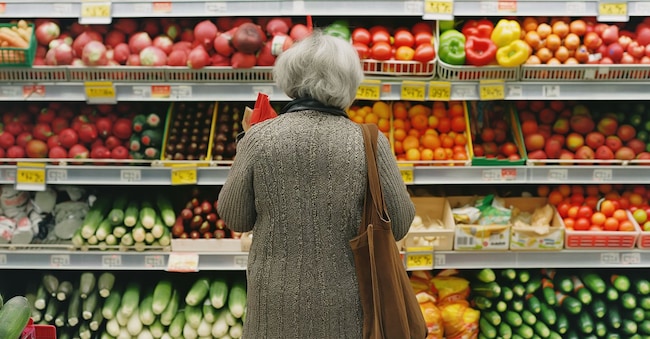
It is a silent revolution and it is there for all to see. The birth rate is falling, births in 2025 were 355,000 with fertility dropping to 1.14 children per woman, with an impact on consumption and supply. Single-person households are at 37% while one in four Italians is over 65. Looking ahead, in 2050 there will be 55 million in Italia against 58.9 in 2025. "With less population, it is inevitable to expect a contraction in volumes," said Matteo Bonù, Food industry leader at NielsenIQ on the second day of Linkontro, an event organised by NielsenIQ in Santa Margherita di Pula (Cagliari). At the same time, the ongoing transfer of wealth and the different composition of households open up a huge space for a recomposition of value. The real challenge is to intercept future consumption, not chase past consumption'. Over the next 25 years, in fact, around EUR 1.7 trillion will be transferred in Italy in the form of inheritances, a factor that will boost spending capacity, especially in the older segments of the population such as, for example, millennials.
A new demographic composition and new consumption patterns. "This is not only a challenge, but also an opportunity to rethink consumption patterns and supply, because the mature generations have a growing weight on spending and the economy," warns Letizia Mencarini, professor at Bocconi University. Globally, the over-50s will generate 39% of world GDP by 2050, an increase of 9 percentage points over 2026, and will account for 60% of global spending. The perimeter of this transformation involves the advanced economies of Europe. "Italia is today one of the most advanced countries in the process of population ageing: already today one in four people is over 65. After Japan, our country represents a laboratory for developed economies and will soon be followed by Germany and France,' she continues. The reduction in the population will inevitably lead to a drop in the volumes purchased, and at the same time new opportunities are opening up to build value, through increasingly precise choices: products will have to be more targeted to specific needs, with formats suitable for small families, single-person households, with targeted assortments, point-of-sale layouts that shorten time and decision-making effort, photographs and precise product descriptions to feed the AI that supports consumer choice. Tomorrow's FMCG will be about understanding who consumers are and how they are changing.
The New Trends
The driver of new consumption ranges from wellness to time management and the support of technology. According to models elaborated by Nielsen, the personal wellness chapter will involve the person, their relationships and the mind. 44% of the sample observed declare that they spend a lot or a fair amount on beauty products, an increase of 20 percentage points compared to 2015. Products enriched with vitamins or with beneficial ingredients (rich from) are consumed by almost a third of people. The contribution of experiences and relationships that contribute to personal well-being is also on the rise.
Time' becomes a scarce resource and redefines habits. Time dedicated to cooking is down by -13% compared to 2019, only 53% still consider cooking for others a pleasure but the role of domestic conviviality is on the rise as people prefer to invite friends home. Boomers have become increasingly digital: one in two over-55s has gone online shopping and spends up to 75 minutes online every day compared to 18 minutes in 2015. The arrival of generative Ai impacts decision-making processes and the shopping experience.

