Veneto: economic outlook

Production is returning to growth against a backdrop of moderate confidence

Metals, transport and mechanical engineering are leading the way, whilst marble, glass, ceramics, rubber and plastics are struggling. Expectations are moderately positive

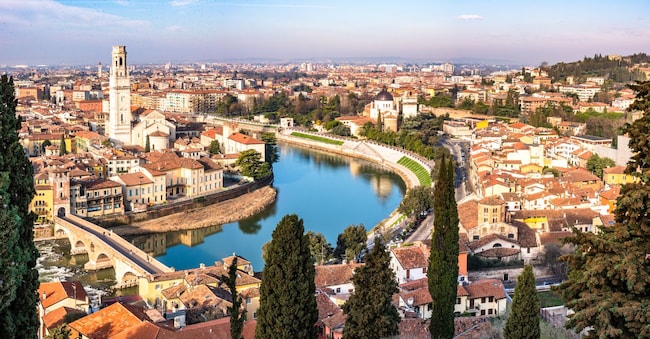
Verona (Adobe Stock)

5' min read

Translated by AI
Versione italiana

5' min read

Translated by AI
Versione italiana

Industrial production in the Veneto region remained in positive territory between July and September, although it showed a slowdown compared with the strong performance of the first half of the year, due in part to the usual summer lull.

The signs of stability on a year-on-year basis reported by VenetoCongiuntura are encouraging, the economic analysis of the manufacturing sector carried out by Unioncamere del Veneto on a sample of around 2,020 firms with at least 10 employees – representing a total workforce of over 86,000 – and presented at the Verona Chamber of Commerce.
Loading...

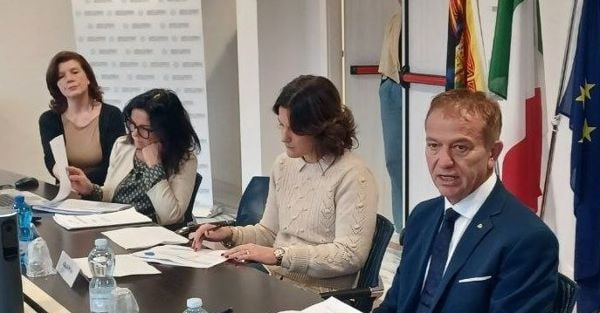
Paolo Arena Presidente Camera di Commercio di Verona e Vicepresidente Unioncamere del Veneto

Indicators

Production is returning to growth following two years of contraction in 2023–2024 and a stable 2025.

In the third quarter of 2026, the outlook for the Veneto manufacturing sector is one of moderate growth. Industrial production rose by 0.5 per cent compared with the previous quarter and by 1.8 per cent year-on-year: a more subdued pace than in the first half of the year, but one that confirms a return to positive territory. However, performance remains mixed across sectors: the strongest performers are metals and metal products (+4 per cent), transport equipment and machinery and mechanical appliances (both +3 per cent), whilst marble, glass and ceramics (-2.6 per cent) and rubber and plastics (-1.3 per cent) are showing a decline.Capacity utilisation stood at 71 per cent, essentially stable compared with the 69 per cent recorded in the same quarter of 2025.

On the demand side, orders show moderate growth: the export component (+2.9 per cent) is more buoyant than the domestic component (+2.3 per cent) and is supporting business activity more than the domestic component, although there are no particularly marked changes. Turnover is growing at a more modest rate (+1.9 per cent), in line with production (+1.8 per cent) but lower than that of orders. Businesses’ expectations for the final quarter of 2026 confirm a picture of moderate confidence, essentially stable compared with the third quarter of 2025. The outlook is more favourable for production and turnover, with 44 per cent and 46 per cent of entrepreneurs, respectively, forecasting growth. Expectations regarding orders, however, are more cautious: in the domestic market, forecasts for growth and stability are roughly equal, whilst for foreign demand, a trend towards stability prevails. Greater caution is therefore evident on the international front.
According to Prometeia, the Veneto region’s GDP is expected to grow by 0.8 per cent in 2026 and by 0.6 per cent in 2027. Growth in 2026 will be driven by household consumption (+1.2 per cent) and gross fixed capital formation (+2.6 per cent). In 2027, investment will slow to +0.7% with the end of the NRRP, whilst consumption remains among the strongest in the country (+1%). Exports of goods are forecast to grow by 3.5 per cent in 2026 and 3.3 per cent in 2027, above the national average (3.4 per cent and 2.4 per cent).

The analysis

“This is a picture of moderate growth, albeit in a global context that remains complex and in which shocks are no longer isolated events but rather permanent structural factors,” comments Antonio Santocono, President of Unioncamere del Veneto. “ At a time in history when economic cycles and geopolitical balances are changing at a rapid pace, having access to the timely and comprehensive data collected by the Unioncamere del Veneto Research Centre and the network of Chambers of Commerce provides an indispensable compass for guiding the strategic decisions of our entrepreneurs and public decision-makers.”

And according to Paolo Arena, President of the Verona Chamber of Commerce, ‘Verona’s manufacturing sector has demonstrated its resilience, whilst showing a slowdown compared with the first part of the year, against a national and regional backdrop characterised by modest growth and persistent uncertainties on the international stage. In the third quarter, industrial production grew by 1.5 per cent year-on-year and turnover by 3.6 per cent, with positive signs also emerging from order books. The strength of Verona’s economy lies in the diversification of its productive base, which comprises over 82,000 active businesses and a manufacturing sector capable of generating 94 per cent of the province’s exports. This entrepreneurial heritage continues to demonstrate its ability to adapt and will need to focus on innovation and competitiveness to meet the challenges of the coming years.”

Focus on Verona

A focus on the province of Verona reveals that the manufacturing sector remained broadly stable in the third quarter of 2026. Industrial production grew by 0.3 per cent quarter-on-quarter, in line with the regional average, and by 1.5 per cent compared with the same period in 2025, although it showed a slowdown compared with the first half of the year.

Commercial indicators also showed a positive trend, with turnover up 3.6 per cent year-on-year and orders rising in both the domestic market (+2.5 per cent) and the export market (+2.6 per cent).

Loading...

Expectations amongst Verona-based business owners for the final quarter of 2026 are also moderately optimistic, in line with those for the third quarter of 2025. Forty-six per cent anticipate an increase in production and turnover, whilst around 37–38 per cent expect conditions to remain largely stable. The outlook also remains favourable in terms of orders, with 43 per cent of businesses forecasting growth in domestic demand and 45 per cent in foreign demand. On the latter front, however, there has been a slight decline in the proportion of optimists (-2 points), confirming a more cautious outlook on international markets.

To complete the picture, data from the Verona Chamber of Commerce’s Research Centre paint a picture of an economic fabric comprising over 82,000 active businesses, whose strength lies above all in their diversification of production. Services, trade, agriculture, tourism and logistics complement industry, contributing to the resilience of Verona’s economy even during the current prolonged crisis. Manufacturing plays a central role, accounting for 9 per cent of businesses in the province yet generating 94 per cent of Verona’s total exports. This sector combines traditional production, innovative sectors and the metalworking industry, all united by a growing focus on innovation. This results in a diversified export base, driven by sectors of excellence such as machinery, food and wine, fashion, marble, wood and furniture, and chemicals and pharmaceuticals, with an increasingly established focus on European Union markets. This production structure, despite the downward trend in value recorded in the first half of 2026 – linked above all to the slowdown in long-standing partner markets such as Germany and the United States – enables Verona’s manufacturing exports to remain at around 7 billion euros.

Copyright reserved ©
Loading...

Brand connect

Loading...

Newsletter

Notizie e approfondimenti sugli avvenimenti politici, economici e finanziari.

Iscriviti