Investing in contemporary art

Art advisor profession: a consultant for orientation in the art market

Newcomers to collecting and the most discerning investors are competing for them. They are the best international experts who know the talents, prices and fluctuations of the international scene.
by Silvia Anna Barillà

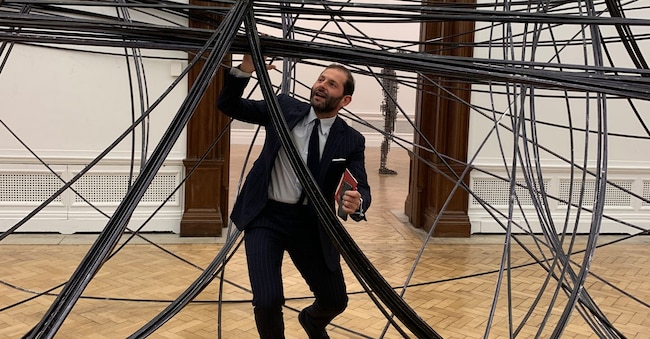
Sacha Zerbib con “Clearing VII” (2019), di Antony Gormley. © Antony Gormley

8' min read

8' min read

In order to buy a work of art, it is often not enough to have the financial means, especially if you are targeting trendy contemporary artists. Rather, it is necessary to be part of a specific circuit. It may happen that, when contacting an international gallery to purchase a work, a list of those already in the collection is requested: the gallery's interest is to build up the artist's career, and this is also achieved by placing him in the most prestigious collections, which do not resell for speculative purposes.

But how can you proceed, then, if you are just starting out? How do you identify the right piece and how do you fit it into your home space? There is a professional figure who accompanies beginners in building their collection, advises them and assists them in every aspect, guaranteeing access to the art world to those who do not have it: he is the art advisor. Here are some who operate between Italy, Europe, the United States and the Middle East, who have decided to share the secrets and specificities of their profession.

Loading...

CLARICE PECORI GIRALDI

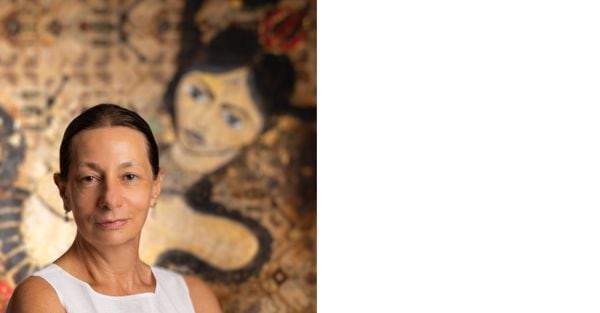
Clarice Pecori Giraldi: alle sue spalle, “Shahmeran” (2020), di Zehra Doğan. ©Guglielmo de Micheli

'My job is like that of a good general practitioner, who knows how to listen to those in front of him, asks the right questions and then refers them to the specialist'. This is the metaphor that Clarice Pecori Giraldi, based in Milan, uses to explain her role. Over the years at Christie's and Sotheby's she has developed a variety of skills. "I have become an excellent co-ordinator, able to accompany the client through the different stages of collection management," she explains. "There is not only the valuation of the work: you have to know the export regulations, the tax aspects, check the state of preservation, intervene in case of succession".

Confirmation of her expertise came from the Association of Professional Art Advisors, an organisation that sets standards in the sector, which appointed her as an executive member with responsibility for the Italian territory. 'In this profession there is a code of ethics made up of unwritten rules,' Pecori Giraldi points out. For example, the art advisor must always be paid by the collector and never by the gallery, otherwise he would not be in the client's interest, and he must not have a stock.
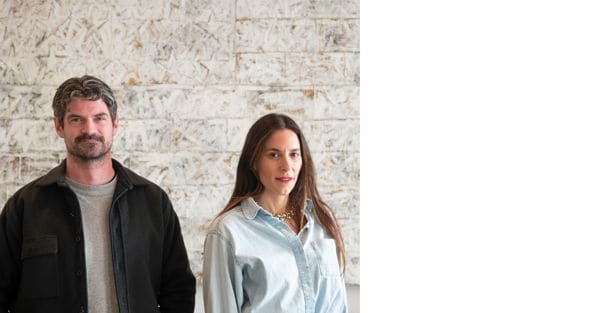
"Of the collectors, I admire the naturalness with which they coexist with the works, which enter every room, right down to the kitchen and the services. Personally, I love the delicacy of works on paper and fabric, they give me serenity. I bought a drawing of a meadow of flowers that I move around the house, because I like to look at it all the time".

DIEGO CASSINA

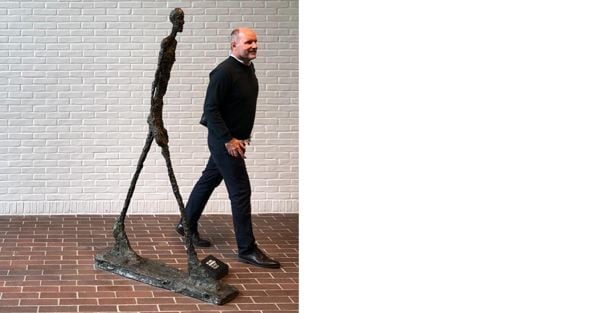
Diego Cassina con “Homme qui marche” (1960), di Alberto Giacometti.

The relationship with architecture and the environment is central to the work of Diego Cassina, an art advisor based in Lugano with a past at Sotheby's. For him, the starting point is always the client's taste, which he accompanies in the choice of works that, in addition to being pleasing, must possess a quid. For a number of years, he lived in a large flat in a historic building in Lugano: here he conducted a project room where he showed how art can enter the domestic space, creating dialogues between works and furnishings.

He often works with architects, such as Massimo Adario and Luciano Giorgi. "With Giorgi we collaborated on the renovation of an early 20th century house in Milan, with works by historicised artists such as Willem de Kooning and Franz Kline and contemporaries such as Nicolas Party and Stefano Arienti, in a harmonious relationship with Italian furniture and design. Sometimes the dialogue is with the architects of the past, as in Aurelio Galfetti's attic in Lugano inside a building belonging to Mario Chiattone, which houses masterpieces from Futurism to Russian Constructivism to the post-war period with Burri and Morandi. Or again, it is a dialogue at a distance: in another Milanese flat, Cassina has placed a work by Gilbert & George that came from Rem Koolhaas' famous Maison à Borde aux. 'You can learn a lot from experienced collectors,' he comments. "I consider myself an eclectic, as beauty can be found in all areas and in all eras."

SACHA ZERBIB

An art advisor who truly cares about the client does not select the artwork according to the home, but, on the contrary, puts the artwork first and then adapts the home to it: the choices must fall on works that are truly relevant to art history, not just decorative. This is the attitude of Sacha Zerbib, art advisor in Paris, who started in this profession working for a Belgian family after training at the Nathalie Obadia gallery and Sotheby's. "The art world is highly competitive and for an art advisor it is fundamental to cultivate relationships with galleries and to maintain a high reputation. It is like a game, sometimes you win, sometimes you lose". Since 2008, Zerbib has reaped many successes, even managing to win works that Leonardo DiCaprio has contended for. "To recognise the right work, you have to know a lot and then identify the novelty factor compared to what you have already seen," he explains.

Over the years, Zerbib has bought important works for extraordinary villas in the south of France or in Sicily, but has also overseen the creation of a collection that will go to establish a foundation in Austin, Texas, the Ostillo Art Foundation. "For some works we had to wait two years, for example for one by Rauschenberg that was not for sale and another by Schütte. He did not work with Americans while Trump was in power, but then he realised that he could trust us'.

NAZY VASSEGH

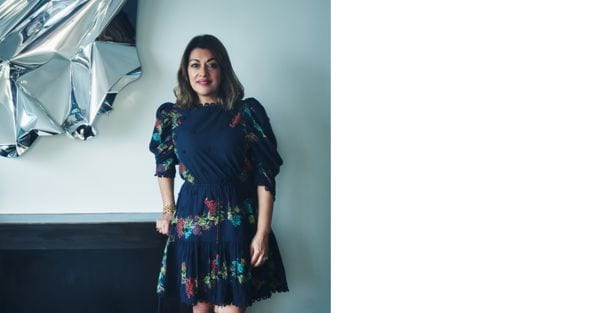
Nazy Vassegh con “Hurricane Silver” (2015), di Fredrikson Stallard. ©Alex Board

The juxtaposition of art and design is the approach that characterises Nazy Vassegh's work. Based in London, after an experience at Sotheby's she switched to the world of fairs, but continued to work as an art advisor. From 2013 to 2017 she was the director of Masterpiece London, an event dedicated to masterpieces from antiquity to the present day, while today she directs Eye of the Collector, a fair-boutique that has done away with stands to show art in dialogue with design and architecture, just as within a living context. "Art provokes emotions and reflections in the observer and thus adds meaning and depth to a space," he explains. "It is very important to find a narrative balance between works of various periods and genres, from paintings to ceramics to glass, so that a personal and unique style is created. The artwork is able to lead the eye to a certain point in the room: for example, in a minimalist country house I placed a green fountain that recalled the outdoors; in a beach house with hollowed-out walls, I worked with fabric works by Peter Collingwood and aluminium works by Fredrikson Stallard, which capture the light. I love pieces that also convey craftsmanship, such as Susie MacMurray's incredible installations, which take up to a year to make, or those that blend traditions with new technologies, such as those by Gareth Neal".

DIANE ABELA

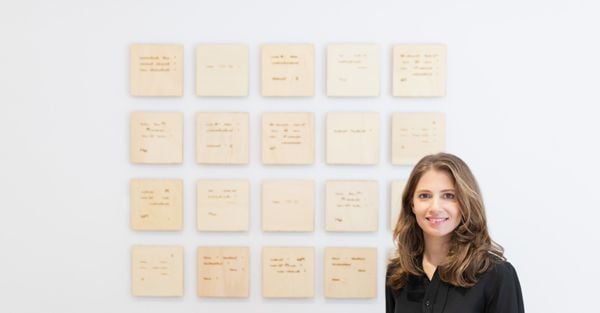
Diane Abela: alla parete, “Mute Melodies” (2013), di Christine Kettaneh.

Being an art advisor does not only mean dealing with art. Diane Abela, half-Lebanese and half-Italian, who works for Gurr Johns, a London-based consultancy, has brokered the purchase of collectibles in a wide variety of fields, from jewellery to NFT, from ancient art to Middle Eastern art, and even fossils and a dinosaur for a client in the Middle East. "Exceptional episodes often occur: once we had a street in London closed to install a sculpture in a collector's garden. On another occasion I recognised a work by Etel Adnan in a client's house: she did not know it was such an important piece, she had inherited it from her mother, who actually knew the artist'.

An important feature, operating in different areas of the world, is to understand different types of sensibilities. For example, in the Middle East it is more difficult to acquire representations of nudes. But there are also factors related to the different ways of living: again in the Middle East, houses are more spacious than in London, but the very strong light is a deterrent to buying works on paper, which fear the sun. "Clients often have multiple residences and are used to moving the pieces they love most from one house to another," Abela concludes.

NINA MOADDEL

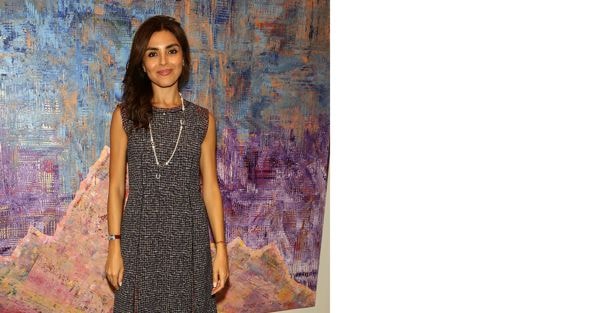
Nina Moaddel. @Getty Images

An art advisor does not always have an art background. Nina Moaddel was a lawyer specialising in structured finance, but coming from a family of collectors and art lovers, she also decided to delve into art history and started working as an art advisor, first for friends and colleagues, then opening her own business, in 2019. Born in Iran, based in London, she attends international fairs, such as Art Dubai, to identify trends and growing artists. 'It is important to understand the client's needs and conduct market research. When placing a work in a living context, you have to consider the spaces, the colour palette, the lighting, the lifestyle of the people living in the spaces. I always suggest exploring different styles and mixing, to give character to the environment'. For example, a neon work by Tracey Emin can add depth to a room and create an element of storytelling. "It is important to select works that reflect the client's personal interests, experiences and values. It is nice if the works tell a story or evoke memories, cultivating a sense of connection and emotional involvement within the space. In the office environment, on the other hand, I suggest selecting pieces that have a connection to the work, and that can serve as a conversation starter".

ALEXIA WALKER

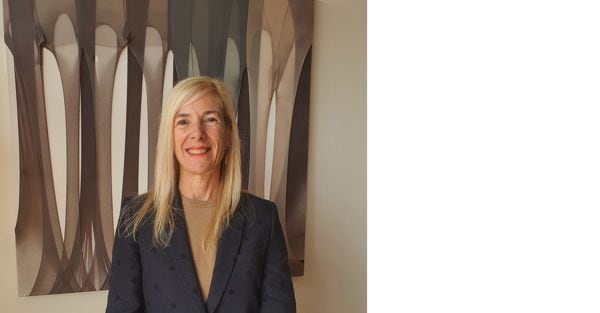
Alexia Walker con “uBusisekile eSifazaneni” (2017), di Turiya Magadlela.

Of Australian origin, born and raised in Paris, Alexia Walker has been working in South Africa, more precisely in Johannesburg, for 25 years. With a past in the music industry, today her focus is on modern and contemporary African art, which she buys for the homes of private clients, but also for the headquarters of large companies. "The figure of the art advisor in Africa is quite new, but then the collector understands that, in addition to studying the strategy of the collection, the art advisor has a better understanding of market values and is able to negotiate the price."

Walker recently managed to purchase a work by the famous Malawian artist Billie Zangewa for an entertainment tycoon. 'It was a great satisfaction: in the current weak local currency, established African artists have more of a market abroad than on the continent'.

When working for companies, Walker is often involved as early as the design phase of the environments. "Recently many companies have moved to the Sandton area, where there are glass skyscrapers and there is often a lack of walls for the artwork, so I have worked with architects to create or reinforce existing walls. The trend, which is very much in use today, of coloured or wallpapered walls does not help the artwork either. A positive side, however, is that in South Africa houses are very spacious, so you can choose very large installations,' he concludes.

ROBERT MCKENZIE, ELEANOR CAYRE

Robert McKenzie ed Eleanor Cayre con “Johns White Flag” (1991), di Sturtevant. ©Jamie Sutton

The United States is the home of the art advisor. While in Europe collectors often go it alone, in the US many rely on the art advisor because they do not have the time or the knowledge to engage in the business of collecting. Robert McKenzie, based in New York, studied to become an artist, but then chose the consultant route, gaining experience with a famous art advisor of the 1980s-1990s and 2000s, Thea Westreich. For about a year and a half, he has been working together with Eleanor Cayre. "The art world is relatively opaque," McKenzie points out. "We help bring transparency. We give information that is not public,' which is useful when making choices. A key aspect of this work is the education of the collector, whom the art advisor accompanies to exhibitions and museums. "You have to be aware of the environment for which you are buying the work," Cayre explains. "For example, we recently bought pieces for a boat and had to give great consideration to the conditions they would be in. One of our customers is a hotel in Switzerland, for which we procured outdoor sculptures by Thomas Schütte and Isa Genzken: in winter they are in a snowy white setting, in summer in the green mountain nature, and they have to function at both times. We chose them because they are among the greatest artists of our time'.

SPECIALISTS DIANE ABELA, @dianezaccar. DIEGO CASSINA, @d_ cassina. ROBERT MCKENZIE AND ELEANOR CAYRE, cayreartgroup.com. NINA MOADDEL, ninamoaddel.com. CLARICE PECORI GIRALDI, pecorigiraldi.com. NAZY VASSEGH, nazyvassegh.art. ALEXIA WALKER, walkerart.co.za. SACHA ZERBIB, @octobreartadvisory.


Copyright reserved ©
Loading...
Loading...

Newsletter

Notizie e approfondimenti sugli avvenimenti politici, economici e finanziari.

Iscriviti