Tackling the cost of living

USB strike: student and worker marches in 60 cities. Tensions in Rome and Turin

According to estimates by the USB, there were one and a half million participants; the union highlights “a huge turnout of students and young people” and states: “We certainly won’t stop here”.

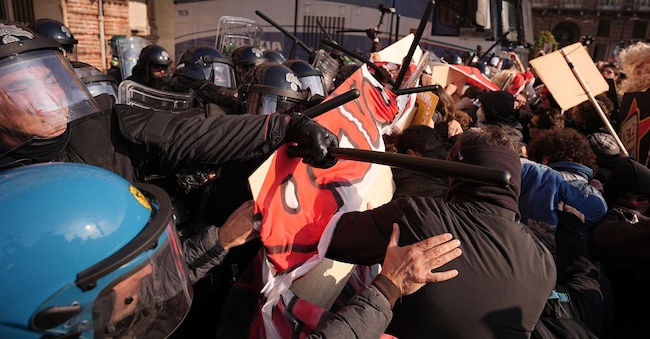
Cariche della polizia durante il corteo organizzato a Torino in occasione dello sciopero generale nazionale  lanciato dall’Unione Sindacale di Base (USB), con l’adesione di collettivi e gruppi studentesti, oltra ad altre sigle sindacali. LAPRESSE

3' min read

Translated by AI
Versione italiana

3' min read

Translated by AI
Versione italiana

‘Lay down your weapons, raise your wages’. This is the slogan of the general strike called for today, Friday 30 October, by the grassroots trade union USB, which has brought a diverse array of demonstrators onto the streets of over 50 Italian cities to protest against rearmament policies and the high cost of living. From Milan to Naples, via Turin, Bologna and Rome, marches in over 60 cities saw workers, pensioners, students, housing rights groups and pro-Palestine organisations take to the streets.

The protest brought together several generations but escalated into violence in the evening – with bottles being thrown at police officers, police charges and water cannons being deployed – in the centres of Rome and Turin.

Loading...

According to estimates by the USB, there were one and a half million participants; the union highlights “a huge turnout of students and young people” and states: “We certainly won’t stop here”.

The day of protest, for which security measures were heightened, saw participation from a range of sectors: from farmers to schools, and from the film industry to the audiovisual sector. Thousands of people poured into the squares and streets of dozens of cities, marching peacefully and without causing any disruption to public order. Rome and Turin were the exceptions.

Tensions in the Colosseum area of Rome

The morning marches went off without a hitch, but tensions then flared up. In the capital, a group broke away from the main march near the Colosseum, throwing objects at police officers and setting fire to some rubbish bins: the police responded with a dispersal charge.

Tensions flared up again a few hours later, first on Ponte Sisto in Trastevere, when a large group attempted to march towards Parliament, and then on Lungotevere Testaccio, where water cannons were deployed to disperse the crowd. Piazza Montecitorio, in front of the Chamber of Deputies, and Piazza Colonna, in front of Palazzo Chigi, were closed off and manned by officers in riot gear. Eight people were arrested for repeatedly attempting to break through the ‘barricades’.

Water cannons were deployed, eggs were thrown and police charged in Piazza Castello in Turin to push back demonstrators who had approached the cordons protecting the Prefecture. Then, further clashes broke out in the evening, again in the historic centre, when a barrage of bottles was hurled from the march, to which the police responded with tear gas.

There was also some tension in Mestre, where seven police officers sustained bruises and cuts when the marchers tried to break through the cordon blocking the road, and in Vicenza, where ten people – including demonstrators and police officers – were injured in the disturbances that broke out when they attempted to occupy the ring road.

Traffic at a standstill on the Tangenziale Est in Milan

In Milan, however, which was the scene of violence and looting two weeks ago, there were only disruptions: after marching for more than two kilometres along the eastern ring road – blocking it for an hour and a half – the protesters returned to the city, leaving behind graffiti painted on the sides of the carriageway reading ‘Hang Salvini’ and ‘Hang Meloni’. The protest also reached the ports with a campaign launched by several trade unions, involving over 100 ports in 17 countries in the fight against arms trafficking. In Genoa and Naples, students and workers marched into the port areas without causing any trouble. And today proved to be another test for security.

The Ministry of the Interior had given assurances that it would put in place a “comprehensive plan to safeguard the right to peaceful protest” and isolate those resorting to violence. And indeed, most of the marches ended without any major incidents, with demonstrators and the police never coming into contact with one another. The security measures put in place by the Ministry of the Interior had been agreed with the prefects, police chiefs and senior officers of the other law enforcement agencies in all the regional capitals.

Copyright reserved ©

Brand connect

Loading...

Newsletter

Notizie e approfondimenti sugli avvenimenti politici, economici e finanziari.

Iscriviti