
Eurovision vote, political case breaks out in Moldova, with boycott accusations against Romania and Ukraine
State TV director dismissed: thousands protest the boycott of the Chisinau jury against Romania and Ukraine
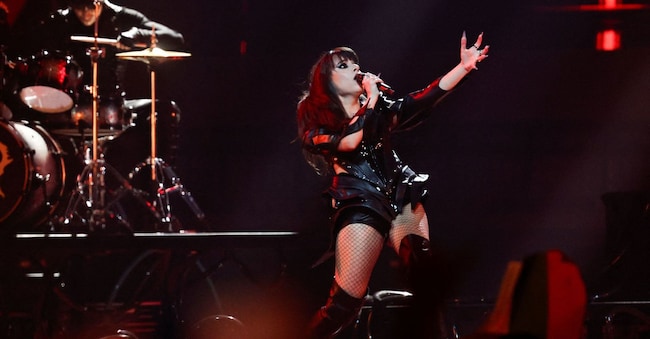
It is increasingly difficult to keep politics out of the Eurovision Song Contest, the European song festival, which on Saturday 16 May saw Bulgaria win for the first time. The controversy over Israel's participation has now been joined by protests in Moldova, where thousands of citizens have accused their national jury of deliberately boycotting the songs of two 'friendly' countries like Romania and Ukraine. The social media posts became an avalanche, and the avalanche overwhelmed the director of the state TV station Teleradio-Moldova, Vlad Turcanu, who hastened to resign, taking full responsibility for the incident.
In the last elections, Moldova elected a pro-European government, applied to join the European Union and immediately condemned Russia's invasion of Ukraine, siding with Kiev. The country also shares strong linguistic and cultural ties with Romania: many Moldovans also hold Romanian passports, relations between the two neighbouring countries are stable, and the inhabitants consider themselves to be on friendly terms.
This is why many viewers of the Eurovision Song Contest did not like the fact that the Moldovan jury, selected by the public broadcaster, awarded the maximum score of 12 points to the Polish song, 10 points to Israel, only 3 points to Romania and not even one to Ukraine. An even more glaring distortion when one considers that the online vote of the Moldovan public had massively gone to the Romanian singer, who came first among the viewers.
At this point, the music issue became a political issue. First many hundreds of fans used social media to denounce the vote cast by the Moldovan jury. Then Moldova's former defence minister, Anatol Salaru, intervened on Facebook: 'The only thing that counts are the votes of ordinary people,' he wrote, 'this was a vote between brothers. The rest are irrelevant details'. The Moldavian representative at the contest, Satoshi, also reiterated the point, declaring that the strong popular support for Romania 'reflects the real opinion of our society'. So the state TV was left with no choice but to take note and draw the necessary consequences.


