
CNEL-Fondazione Roma Protocol: social inclusion of prisoners and urban regeneration in Rome
The agreement promotes concrete actions for the re-employment of prisoners and the enhancement of urban spaces, integrating research, institutions and civil society for sustainable development.

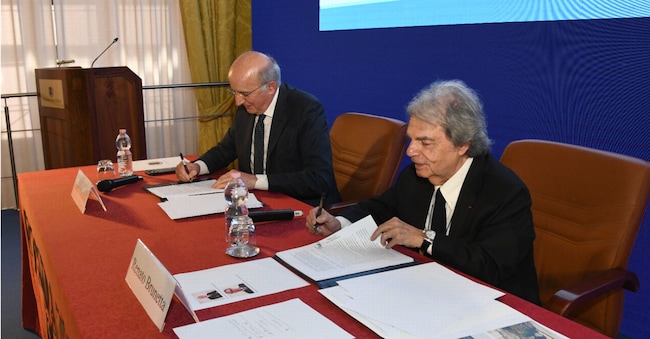
Strengthening the dialogue between institutions, research and civil society to address the country's major economic and social transformations, translating it into concrete actions on the ground. This is the objective of the memorandum of understanding signed between the National Council for Economy and Labour (CNEL) and the Fondazione Roma. The agreement is part of the national framework defined by the Protocol signed between the CNEL and the Acri (Association of Foundations and Savings Banks) and aims to contribute to the implementation of the UN 2030 Agenda, with particular attention to the quality of public services, sustainable development, labour market transformations and social cohesion.
The Strategic Axis
With this new agreement, the Fondazione Roma and the CNEL consolidate a common path aimed at transforming institutional confrontation into projects with a high social impact, territorial interventions and concrete proposals for the country's future. The strategic axis of the agreement concerns theeconomic, social and work inclusion of persons deprived of their liberty, with targeted actions both within prison institutions and in the reintegration phase after detention. The cooperation envisages the planning and implementation of direct and indirect actions aimed at vocational training, prison labour, financial education, and the promotion of a business culture, with a special focus on inmates nearing the end of their sentences, persons admitted to alternative measures, and former inmates.
Training and work in prison
The Annual Report of the programme "Recidivism Zero. Study, training and work in and out of prison", promoted and implemented by the CNEL in agreement with the Ministry of Justice since the signing of the relevant agreement in 2023, which, thanks also to Fondazione Roma, will be enriched with national and territorial focuses, aiming at bringing together institutional competences, the production world, universities, the Third Sector and social partners to develop structured paths of socio-occupational integration. The objective is to concretely reduce recidivism rates through the strengthening of professional skills, the creation of job opportunities and the accompaniment towards full social reintegration.
Urban Regeneration
Among the other areas of intervention, the urban, landscape and cultural regeneration of the area of the Villa Borghese Urban Park and of the Villa Lubin context, the CNEL headquarters, is particularly important. The agreement provides for the promotion of joint initiatives aimed at the redevelopment and enhancement of public spaces, pedestrian paths and green areas, with the aim of improving the usability of the urban park and strengthening its function as a civic, cultural and social gathering place. The objective is to build a regeneration model capable of combining heritage protection, environmental sustainability and restoring value to the city, while promoting new opportunities for territorial and employment development.
Networks between institutions and civil society
'The alliance with Fondazione Roma,' says the President of CNEL, Renato Brunetta, 'is a real demonstration of how networks between institutions and civil society can produce a concrete impact for the country. Social and labour inclusion work for prisoners and our 'Recidivism Zero' programme are a pillar of this agreement, in the common conviction that only training and employment guarantee true reintegration and lower recidivism rates. But the strength of this method pushes us further: together with the Foundation we are taking care of the city's heritage, launching an ambitious urban regeneration project for the benefit of all citizens. The CNEL confirms itself as the place where sustainable development and social cohesion become measurable and tangible projects'.


