
Provost (Renault Group): 'Continuity strategy with Luca de Meo. We focus in parallel on electric and hybrid cars'
The new CEO of the French group on the sidelines of the Clio 6 reveal emphasises flexibility and technological neutrality

3' min read
3' min read
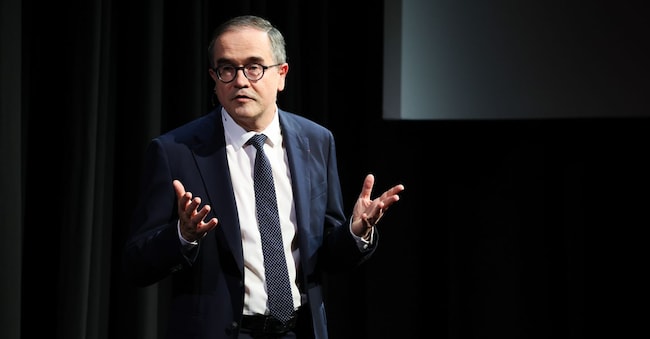
My strategy is clear: continuity with the Renaulution launched in 2021. M will be progressively adapted to the changes that are taking place and will take place in the automotive world'. This is how François Provost, CEO and chairman of Renault Group since 31 July, outlines the programme for the post-Luca de Meo era. The new number one of the French group, which includes Dacia and Alpine, spoke at a round table restricted to a few members of the trade press on the sidelines of the presentation in Munich of the sixth-generation Clio, historically a mainstay model of the La Spezia brand. A car that has long been at the top of the sales charts in Europe. "And the fact that it is hybrid or LPG," explains Provost, "clearly indicates that we intend to continue with a strategy based on two main axes: a range of electric cars and one of hybrid thermal cars. But not only that: with the Clio 6, Renault is relaunching in the B segment, the one at the base of the market where historical models such as the late, lamented Ford Fiesta are now missing. "Renault,' he says, 'is Clio: this model is in our roots and we want to continue to produce affordable, high-volume cars. The new Clio, built in Bursa, Turkey, is therefore the thermal counterpart to the electric R5 and symbolises Renault's twin-track policy of reducing CO2 emissions.
Provost, like other CEOs of major European automotive groups, faces a systemic and epoch-making crisis in the automotive industry pressurised by increasingly stringent EU emissions regulations that will culminate in the controversial (and debatable) ban on internal combustion engines decided for 2035.
'It is clear,' Provost explains, 'that the context has changed: the sector has taken a different direction from what was expected with 100% electric cars. We therefore focus on flexibility, we have to adapt to market demands with products that meet demand. Of course we continue to focus on electric, but now we have to rely on two product lines: Ice and Bev".
In this difficult context, where cost pressure is enormous also due to the price war triggered by the Chinese, Renault is trying to respond, on the one hand by expanding its presence in key markets such as India and Latin America, but on the other hand by leveraging accelerated model, powertrain and battery development. "We have for example developed the new Twingo in less than 24 months, this is one of our answers to keep operating costs down and convince stock market analysts that we are worth more (in recent months Renault has lost a third of its value).
Renault, in the review of the industrial plan set up by Luca de Meo, is aiming at technical alliances. And this is where Horse, the thermal and hybrid engine division created in a joint venture with the Chinese group Geely, comes in.


