
Proxigas: here are the proposals to help the gas sector grow
Priorities include strengthening security and diversifying supply, promoting efficient wholesale markets and making the most of the country’s infrastructure assets. Not to mention consumers and the regulatory framework

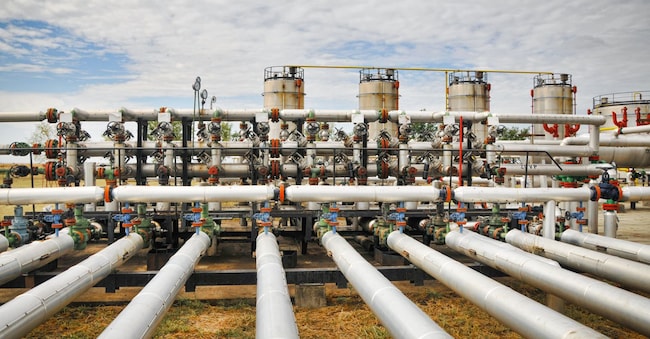
Strengthening security and diversification of supply, promoting liquid and efficient wholesale gas markets, and making the most of the national infrastructure assets. Furthermore: to establish a regulatory framework that facilitates decarbonisation, to strengthen the integrity of the retail market whilst safeguarding its dynamism, to promote an accurate representation of the market in order to increase consumer awareness and engagement, and to simplify the ROSS regulations. These are the main proposals from Proxigas – outlined by the chairman Pier Lorenzo Dell’Orco during the hearings on the strategic framework of ARERA – to support the evolution of the gas system “by creating an environment in which a resource destined to remain central to the national energy system can be enabled to realise its potential in terms of competitiveness, security of supply and sustainability”. All this is also in light of indisputable figures, which highlight how gas plays an essential role for the country’s economy, both for electricity generation (where it accounts for between 40% and 50% of supply), for businesses, and for households.
Strengthening ARERA’s role and security of supply
Among the proposals identified by Proxigas is undoubtedly the strengthening of ARERA’s role in Europe to ensure the efficient integration of national systems, with a view to defining and consolidating ‘legislation designed to ensure the competitiveness of gas in Europe and in Italia through the effective and efficient functioning of the market, whilst also taking into account the specific characteristics of the Italian system’. At the same time, security of supply must also be strengthened by improving the efficiency of the wholesale gas market. It is explained that we must return to ‘a vision of the energy system that recognises gas infrastructure, the operators managing it, as well as the operators contributing to the inflow of gas into the national system, as having a strategic role – including for the future – in ensuring security of supply, enabling diversification, efficiency and, overall, the competitiveness of supply sources for the national energy system’. Nor should we forget, given the new role played by LNG in the supply mix, the need for ‘greater and more efficient use of Italian terminals, for example by adapting the relevant rules governing access to capacity, in support of long-term contracts and price stabilisation’. It is also emphasised that action is needed through specific mechanisms, such as the Capacity Market, which are necessary to safeguard the economic sustainability of thermal power generation in light of the support it provides to the system in integrating the interruptibility of renewables.
Enhancing Italia’s infrastructure assets
In this context, another key point is the enhancement of the national infrastructure assets, ‘which ensures security of supply and the flexibility of the energy system and can place the country in a favourable position, particularly during times of crisis and global market shocks such as those currently being experienced, given Italia’s central location in the Mediterranean’. In this context, – it is emphasised – investment is needed in gas supply, interconnection and storage infrastructure in order to ensure the diversification of supplies, security of supply and the resilience of the energy system, whilst at the same time promoting the path towards decarbonisation through biomethane, hydrogen and gas with reduced or zero CO₂ content, and the roll-out of carbon capture technologies, supported by the prompt establishment of a regulatory framework enabling the development of the sector in Italia in line with the objectives set out in the Pniec. It adds that, with this in mind, an incentive should also come from the tariff regulation.
The crux of the regulatory framework
Among the points highlighted by Dell’Orco is also the need to have, well in advance, the regulatory framework relating to the determination of recognised costs and the guarantee of the economic and financial equilibrium of infrastructure operators. In this regard, ‘it is worth considering the regulation of tariff setting based on total expenditure for the determination of recognised costs (ROSS), moving towards simplification and a review of certain underlying principles, thereby reducing administrative complexity and avoiding potential distortions in terms of cost allocation within tariffs’. There is also the urgent need to define the regulatory framework enabling decarbonisation and – with regard to retail markets – the hope “that ARERA will promote a tightening of the mandatory requirements for remaining on the list of gas suppliers and continue its monitoring activities to combat fraudulent behaviour by authorised sellers”. This is with a view to protecting both end customers and the system as a whole; the commercial quality, organisational soundness and reliability of operators accessing the retail markets are essential prerequisites for ensuring a reliable supply to consumers and for preserving the integrity of the markets.
The focus on consumers
Finally, two points that should not be underestimated. The first concerns the promotion of ‘effective communication to raise consumer awareness’. The numerous measures proposed in the strategic framework for consumer protection are, in fact, based on the assumption that the end customer has not yet reached a satisfactory level of awareness and, therefore, of active participation in the free market. Even though retail monitoring data paint a picture of the national market that appears to be functioning better than other European markets: switching rates indicate that, by 2025, 1 in 4 end customers will have switched supplier at least once during the year and 1 in 3 domestic customers will hold a fixed-price contract, confirming that consumers are using the tools the market offers to protect themselves against price volatility. The other point relates to the fact that the transition requires consumer involvement. In particular, the introduction of the emissions trading scheme for the buildings sector, known as ETS2, ‘presents an ambitious challenge for Italia, where over 70 per cent of buildings are gas-heated and, for technical, architectural and/or financial reasons, the electrification of residential consumption appears to be a very slow process, limited to certain areas’. Therefore: given that the ETS2 scheme will have a very significant economic impact on Italian households (estimated at around 160 euros extra per year, assuming an average value of 60 euros pertonne of CO₂), it is therefore essential to initiate a discussion on the sustainability of the implementation of ETS 2 and, where appropriate, on how to communicate and manage the impact on Italian consumers.


