
Proxigas: for Italian households, excise duties weigh more heavily on gas
Compared with the electricity bill, the proportion is even higher when electricity is used to heat homes

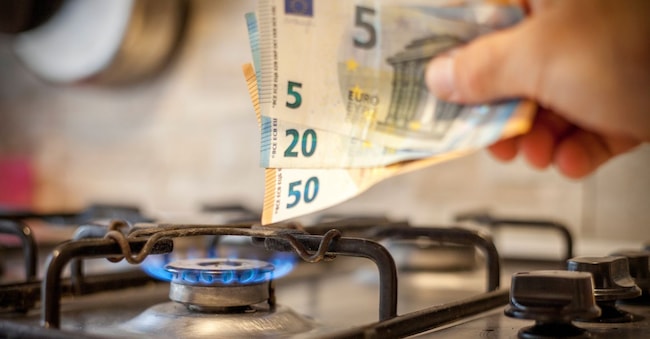
In Italia, for households, the burden of excise duties on electricity bills is already lower than that on gas bills, even when electricity is used to heat homes. This was stated by the president of Proxigas, Pier Lorenzo Dell’Orco, during a recent hearing before the 14th Committee of the Chamber of Deputies regarding the proposed EU Regulation amending the rules governing the electricity market. During the hearing, Dell’Orco himself highlighted the real obstacles to the electrification of consumption in our country.
The impact of excise duties on electricity and gas bills
Today, in our country – as reported in a statement by Proxigas – the impact of excise duties on electricity bills is already lower than that of excise duties on gas bills. Whilst for the latter it amounts to approximately 174 euros per year (based on an annual consumption of 1,100 cubic metres for cooking and heating), for electricity bills it is just 4.5 euros per year for use limited to household appliances and lighting (annual consumption of 2,000 kWh) and 113 euros if heat pump heating is included (estimating an annual consumption of 5,000 kWh). Furthermore, looking ahead, the introduction of ETS2 on gas consumption for domestic use will significantly increase the tax burden on households’ gas bills.
The role of gas
Furthermore, in recent years, gas consumption for end-use purposes – both industrial and domestic – has remained stable, despite the price volatility seen in the markets. “This demonstrates just how difficult it is, in our context, to replace gas, an essential resource for meeting the energy needs of households and businesses across the country,” emphasised Dell’Orco. “We must bear these difficulties in mind and avoid imposing further burdens on gas consumers, which would ultimately unfairly penalise households and businesses that rely on gas as their only available source of energy to meet their needs.”
Proxigas itself points out that natural gas can draw on a network stretching over 270,000 km, capable of serving almost 90 per cent of local authorities and 22 million customers. Furthermore, it heats 70 per cent of homes and also plays a significant role in powering district heating systems, covering approximately 70 per cent of energy requirements. Furthermore, many gas-intensive industrial sectors that are difficult to decarbonise – and which represent a significant part of Italia’s manufacturing base – are difficult to electrify as they require high process temperatures.
The issue of Italia’s building stock
Furthermore, the specific characteristics of Italia’s building stock and context mean that the prospects for the electrification of domestic heating are very limited due to technical, architectural, social and economic constraints. Of the approximately 16 million homes in energy classes F–G, the installation of heat pumps would be technically feasible in fewer than 6 million, a figure that falls to fewer than 2 million when income-related economic constraints are taken into account. Gas consumption, Proxigas concludes, has risen in recent years to support electricity generation and balance the intermittency of renewable electricity sources, whose annual share of generation has risen from 33 per cent in 2019 to 41 per cent in 2025, but is subject to significant seasonal variability. More specifically, it is noted that heat pumps consume electricity mainly during the winter months and in the evenings, when this energy is predominantly generated by gas-fired plants (the renewable share of the energy consumed can vary between 28% and 35%). Therefore, replacing a boiler with a heat pump does not mean eliminating the use of gas.


