
Leo (Mef): corrective manoeuvre? No way
The deputy minister at the Mef denies the hypothesis put forward by Vice-Premier Antonio Tajani

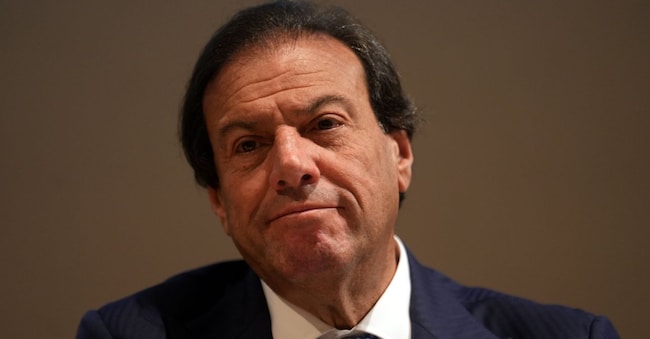
"There is no question of corrective measures to the manoeuvre". The Deputy Minister for the Economy, Maurizio Leo, flatly denies the hypothesis floated by Foreign Minister Antonio Tajani of a correction to the accounts in light of the crisis triggered by the war in the Middle East.
Leo claimed the work done by the government on the public accounts front. 'We have made a huge effort,' he explained, 'because we have gone from a deficit-to-GDP ratio of 8.1 per cent, when the government took office, to 3.1 per cent'. A result that, according to the deputy minister, shows how the executive is 'keeping the public accounts under control'.
Asked about the effects of the war in Iran, Tajani said: 'Now let's see what to do, I do not exclude that there could be a corrective manoeuvre'. He added: "Now, however, it is crucial to work so that Europe also realises that there must be more flexibility with regard to the aspects linked to the cost of energy," Tajani added, emphasising that "just as there is flexibility for defence spending, there should be more flexibility for the costs caused by the increase in energy prices due to external factors, not internal ones. We have nothing to do with the war in Iran, we are paying for it'.
Government sources: no corrective manoeuvre, priority aid for energy
His words had been downplayed by government sources. "No corrective manoeuvre hypothesis is taken into consideration by the government," Palazzo Chigi had let it be known by the Italian government, which pointed out that it is now working with Europe to make the defence clause more flexible so that it can also be used for energy-related expenses, a mechanism that is possible - according to Italia - on the basis of certain possibilities provided by European rules for exceptional situations. The government's priority objective is to help households and businesses cope with the increase in energy costs following the impact of the conflict in the Middle East and the blockade of the Strait of Hormuz.

