Development

‘Public-private dialogue to meet the challenges of innovation, growth and sustainability’

A discussion on competitiveness between the Government, European institutions, businesses and representatives of the manufacturing sectors at the Remind Forum

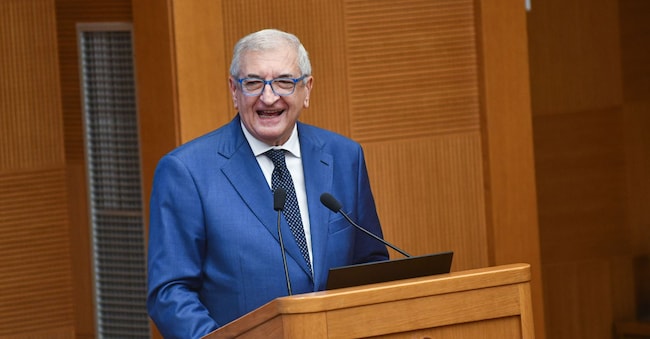
Tommaso Foti, ministro per gli Affari europei, il PNRR e le Politiche di coesione (Imagoeconomica)

4' min read

Translated by AI
Versione italiana

4' min read

Translated by AI
Versione italiana

Technological innovation, sustainability, industrial competitiveness and new housing policies. These were the main themes to emerge from the 2026 Italian Innovation and Sustainability Forum, organised by Remind, the Association for Best Practice in Italia’s Manufacturing Sectors, which took place yesterday in the Sala Europa at the Palazzo delle Generali in Rome. A round-table discussion between the Government, European institutions, businesses and representatives of the productive sectors, focusing on the conditions needed to strengthen the competitiveness of the Italian economic system, with particular attention to investment, the energy and digital transitions, and the enhancement of the property portfolio.

The Government: maintaining the momentum of the NRRP through investment and research

Loading...

Three ministers outlined some of the key priorities of national policies on innovation and competitiveness. The Minister for European Affairs, the PNRR and Cohesion Policies, Tommaso Foti, highlighted the achievements of the PNRR and the need to make the innovations introduced in the public administration permanent: the challenge – following a Plan that has mobilised €194.4 billion, contributing to the modernisation of infrastructure, digitalisation and the reduction of regional disparities – will be to consolidate the reforms, simplify administrative procedures and encourage new private investment.

Adolfo Urso, Minister for Enterprise and Made in Italy, emphasised the link between technological transition, energy security and manufacturing competitiveness. “A manufacturing nation like Italia can only grow if it innovates, and innovation can only endure over time if it is sustainable in the broadest sense,” said Urso, referring to the new Transition Plan 5.0 and policies for energy diversification. The minister reported that, since 12 June, over 22,000 applications have been submitted, representing nearly 7 billion euros in investment.

The Minister for Universities and Research, Anna Maria Bernini, emphasised the strategic role of education, research and technology transfer in strengthening the nation’s capacity for innovation. Particular attention was paid to developing human capital, attracting talent and fostering links between universities, businesses and the healthcare system.

Fausta Bergamotto, Under-Secretary at the Ministry of Infrastructure, Transport and Digitalisation (MIMIT), highlighted how innovation and sustainability are two inseparable components of economic development and emphasised the need to manage technological change, balancing environmental objectives with the protection of business competitiveness. This approach is based on technological neutrality, the strengthening of strategic supply chains and the reduction of industrial and energy dependencies.

Innovation and sustainability

The discussion was opened by the president of Remind, Paolo Crisafi,, who emphasised the need to overcome the traditional divide between innovation and sustainability. “Today, innovation and sustainability are no longer two parallel issues; they are the same national objective,” he stated, highlighting the strategic role of digital infrastructure, data security and the circular economy. “We must transform the growth of the digital market into national growth, always placing the individual, their knowledge and their awareness at the centre.”

Digital sovereignty

“European digital and financial sovereignty,” emphasised Fabrizio Burlando , Chief Executive Officer and Director General of Bancomat, in his speech, “is not built by replacing the capabilities of individual countries, but by connecting them: it must be the sum of national sovereignties and their ability to collaborate. In the payments sector, this means having robust and secure national and European infrastructures and ensuring their full interoperability in order to achieve an adequate scale.”

Housing Plan and Urban Regeneration

Among the topics addressed during the Forum, particular attention was paid to housing policies and the regeneration of the housing stock, with the participation of Felice Squitieri, Special Commissioner for the ‘Piano Casa’ programme. The discussion centred on the relationship between housing needs, the availability of existing housing stock and the capacity to mobilise investment for the regeneration of buildings and local areas. The housing issue is, in fact, one of the most tangible aspects of economic and social sustainability, with implications for the affordability of housing, workers’ mobility, the attractiveness of local areas and quality of life. From this perspective, the Housing Plan serves as a forum for dialogue between public authorities, property developers, businesses and the financial sector, all of whom are called upon to identify tools capable of facilitating the construction and regeneration of housing, including through the enhancement of existing properties.

Loading...

Infrastructure, safety and innovation: the challenge facing the motorway network

The modernisation of infrastructure is another key factor in the country’s competitiveness. Antonino Turicchi, Chairman of Autostrade per l’Italia, spoke on this topic, highlighting the strategic role of the motorway network in mobility, territorial cohesion and economic development. Central to his remarks was the need for an ongoing programme of infrastructure modernisation and maintenance, given the challenges posed by the ageing network, evolving mobility patterns and the effects of climate change. In this context, safety, technological innovation and sustainability are closely interlinked. Digitalisation and advanced monitoring systems can help improve the ability to prevent and manage risks, facilitating increasingly predictive maintenance and greater operational efficiency.

Public-private partnerships as a catalyst for investment

Finally, the Forum highlighted the need to strengthen dialogue between institutions, businesses and investors in order to turn the opportunities offered by innovation into concrete projects. From the digitalisation of public administration to the energy transition, and from scientific research to urban regeneration, there is a clear need for a strategy capable of integrating public planning, private capital and industrial expertise.

Copyright reserved ©
Loading...

Brand connect

Loading...

Newsletter

Notizie e approfondimenti sugli avvenimenti politici, economici e finanziari.

Iscriviti