
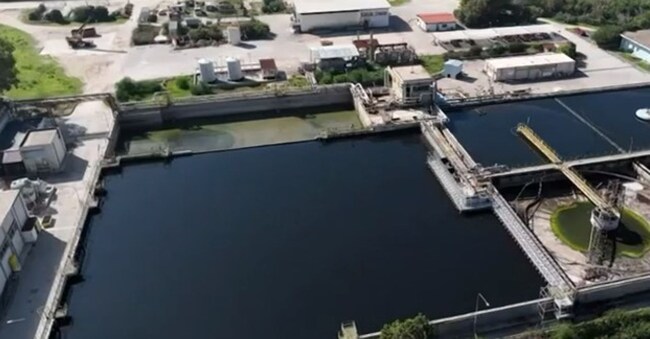
Priolo purification plant, task force at work to obtain release from seizure
Summit in Rome at the Ministry of Enterprise: the aim is to gather new data to submit to the judge for preliminary investigations in Syracuse
by Nino Amadore
3' min read
Key points
3' min read
A technical task force between the Ministry of Enterprise and Made in Italy, the Ministry of the Environment and Energy Security, and the Sicilian Region to collect and analyse new data on emissions from the Ias purifier in Priolo. Data to be provided to the judge for preliminary investigations at the Court of Syracuse and thus obtain the release from seizure and unblocking of the purifier, which is used by large companies in the industrial area. This is the firm point that emerged from the technical round table convened in Rome by the Minister for Enterprise and Made in Italy Adolfo Urso after the decision of the Court of Re-examination in Rome that confirmed the ban on the continuation of the conferment of activities to the Priolo Gargallo purification plant by local industries that had been ordered by the Syracuse judge. A blockade that jeopardises the continuity of production in the entire industrial area and the jobs of thousands of workers.
The new surveys
."Recent surveys, conducted by the managers of the individual industrial plants and by Arapa Sicilia, would indicate a positive trend in the values of industrial effluents," reads a note from Mimit. The task force, the ministry goes on to explain, will be able to provide all the useful elements to solicit a new pronouncement from the GIP of Syracuse, in order to allow the continuation of the activities of the Ias purification plant in Priolo Gargallo and the completion of the necessary work to adapt the water treatment plants by early 2026.
Minister Urso's appeal
.For his part, the minister reiterates: "The government and the Sicilian region have made every effort to safeguard the Priolo chemical district, but at present only the Syracuse judge, in the light of new evidence on emissions that are now clearly improving, can stop the process of closing the purification plant," Urso says. "Closure that would jeopardise the activities of major chemical companies, putting thousands of jobs at risk and wiping out an entire industrial sector in Sicily. We trust in responsibility and common sense, especially in the light of objective elements that certify the validity of the path undertaken'. During the meeting, the major users of the industrial area (Isab, Versalis, Sonatrach, Sasol, and Consorzio Priolo Servizi) all confirmed their ability to detach their activities from the purification plant by 2026, thus starting operations on effluents independently and in full compliance with the chronoprogram determined by the Mimit-Mase interministerial decree of 2023.
New monitoring entrusted to Arpa Sicilia
"We are not dealing with a Sicilian dispute, but with a national issue. We are fully aware, in fact, of the importance that the activity of the companies in that area has for the industry and the entire Italian chemical chain, both in terms of production levels and in terms of employment,' Minister Urso said. And the President of the Sicilian Region, Renato Schifani, who attended the meeting in Rome together with the Regional Councillor for the Environment, Giusy Savarino, wished to emphasise: 'Our proposal to set up a technical-legal round table to deal with the issue of emissions in the Priolo industrial area in a structured manner has been accepted. Arpa Sicilia will be in charge of carrying out constant and punctual monitoring of the emission values, ensuring transparency and scientific rigour,' he said. 'The Region is following this matter with the utmost attention, with the dual objective of safeguarding the continuity of the industrial site and ensuring compliance with environmental regulations.
Cgil: 'There is no concrete act'
.The CGIL (Confederal Confederal Secretary Pino Gesmundo and Filctem General Secretary Marco Falcinelli) is critical: 'There is no concrete action on the part of the government to speed up actions to avert production stoppages and to combine environmental protection with the right to work in an area that is fundamental for Sicily and the country,' reads a note. 'The judiciary, once again, intervenes as a result of the delays of politics and companies. Thus, only judgments remain to decide on industrial policies, risking that the workers are the only ones to pay for the production stoppage. In fact, we are waiting for the ruling of the Constitutional Court, which may not arrive for six months at the earliest'.


