
Putin and Xi Jinping strengthen the axis between Russia and China. 26 agreements signed
Main areas of interest digital economy, investments, the Siberian gas pipeline, biosecurity and a permanent research base on the Moon

3' min read
3' min read
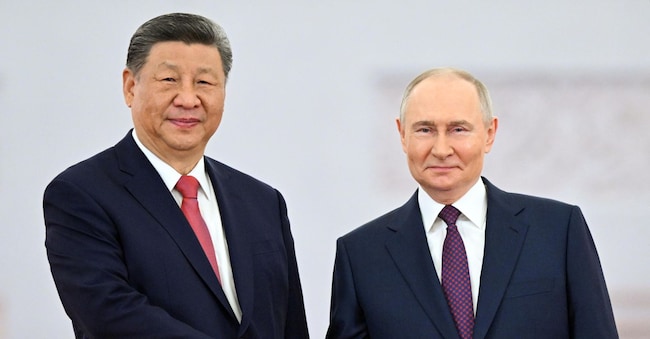
As always, and now after more than 40 meetings, they greeted each other very warmly: at the end of the day of negotiations in the Kremlin, last night Vladimir Putin accompanied Chinese President Xi Jinping to his car, waving 'hello' several times. He will have him back at his side today: guest of honour among the 29 foreign leaders present, Xi will attend the Military Parade on Red Square, the culmination of the celebrations for the 80th anniversary of the Victory over Nazism.
A sacred moment in the past of the Soviet Union and then Russia: but one that since 2022 in the Kremlin's narrative has been placed in direct connection with the ongoing war. In which Moscow has placed Ukraine on the side of the enemy, exalting instead the link with China, which in these three years has provided crucial support, preventing Putin from appearing isolated and launching a more or less clandestine 'lifeline' to the Russian economy.
On the Ukrainian issue and the relationship between Russia and the United States, revolutionised by Donald Trump's return to the scene, Putin and Xi spoke alone, away from the spotlight. Leaving nothing to leak out except their determination to show unity regardless of any developments between each of the two capitals and the White House. The "most sensitive and delicate" topics, advisor Jurij Ushakov had explained, would be dealt with "face to face" informally at the "chaiepitie": tea time, where the two president-friends sat in front of the teapot and pastries, with only the interpreters beside them. In the previous hours, during bilateral meetings with delegations and then in the signing ceremony of 26 documents, the subject of the war in Ukraine had not been mentioned.
Yet it is against the backdrop of the international situation resulting from this war that the meeting between Putin and Xi takes on a particular prominence, fitting into the complicated diplomatic tangle that sees Xi in turn engaged with Trump on the trade front, and eager to reconnect with Europe to address that game. From this perspective, the Beijing-Moscow link is both a weapon and a hindrance for Xi Jinping. In their official statements, however, Xi and Putin emphasised their desire to lead a multipolar world, advocates of a more balanced order as an alternative to American hegemony. They extolled their strategic partnership, a 'steely' friendship in the face of global uncertainties, and vowed to strengthen cooperation in the military, commercial, energy, and scientific fields.
In a joint statement, Putin and Xi criticised Trump's intention to create a missile defence shield over the US, a 'Golden Dome' that would destabilise space by militarising it. Xi described the sacrifices made 80 years ago as a symbol of today's strength, against "unilateralism and the dominance of powerful countries" and "for the promotion of an inclusive globalisation that benefits everyone". Putin reiterated the importance of the bond in defending mutual interests, but added that the alliance between Beijing and Moscow 'is for the benefit of our peoples, and not against anyone'.


