
Qualcomm gets its hands on PCs with new AI chips: open challenge to Intel and AMD
Latest Snapdragon laptop with artificial intelligence unveiled. The share price rallies on the stock exchange
by our correspondent Biagio Simonetta
 Aggiungi Il Sole 24 Ore
ai preferiti su Google
3' min read
3' min read
BERLIN - Leadership in the mobile market is no longer enough for Qualcomm, which is trying to get its hands on the personal computer market with a series of new chips. And it is doing so facilitated by a new trend that is about to change this market: the arrival of Copilot PCs, i.e. PCs with artificial intelligence.
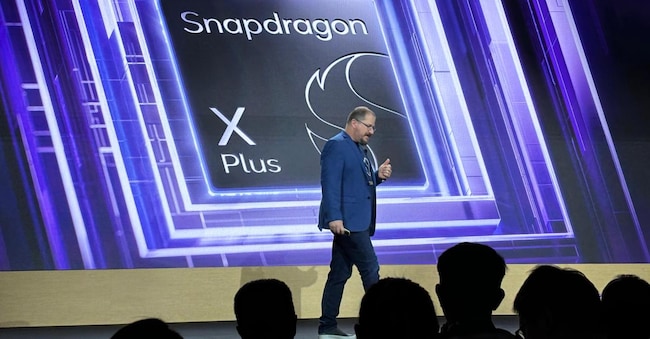
In Berlin, the days of IFA (Europe's most important event in terms of digital innovations), the American giant unveiled the new chips of the Snapdragon X family, in particular the 8-core Plus model. A processor that in terms of performance, but above all in terms of price (lower than its predecessors) takes Qualcomm a new step forward in the world of laptops: bringing AI PCs to a more consumer grade, because it is closer to the pockets of the average user.
The partnerships announced during the keynote held by Qualcomm's CEO, Cristiano Amon, are diverse, ranging from Acer to Asus, and even Microsoft (the Snapdragon X Plus will also arrive on the famous Surface). And they point to a very clear story: Qualcomm has decided to diversify its business, until yesterday focused on chipsets for mobile devices. And this diversification is taking Snapdragon to PCs, where the biggest gauntlet is being thrown down to Intel and AMD. The real difference is that Qualcomm's Snapdragon X series is based on the architecture of the British chip designer Arm. And this particular one allows the processors to run complex applications with good energy efficiency. This is crucial for extending battery life on devices, especially at a time when PCs - called upon to perform AI functions - are becoming more power-hungry.
Speaking of Intel, there is a precedent to be set: the Santa Clara giant resoundingly lost the challenge for chips dedicated to smartphones. And that challenge was won, years ago, by Qualcomm. Which is now knocking at the door of PC chips, and doing so with some force. Because although PCs currently account for a small part of Qualcomm's total turnover (it has been investing in this sector for only a few months), PCs with Qualcomm processors could grow by 300% this year compared to last year, according to analyst firm Counterpoint Research.
Amon explained that the PC market is changing due to two factors: the convergence of PCs and mobile devices (users expect the same performance as their phones, such as battery life, on PCs) and the arrival of artificial intelligence on personal computers.


