
Quality of life: landslides, floods and services, the tweaks to 90 indicators to tell the present story
27 parameters debuted, including hydrogeological risk, Cig, GDP trend and income inequality. House prices compared to salary
4' min read
4' min read
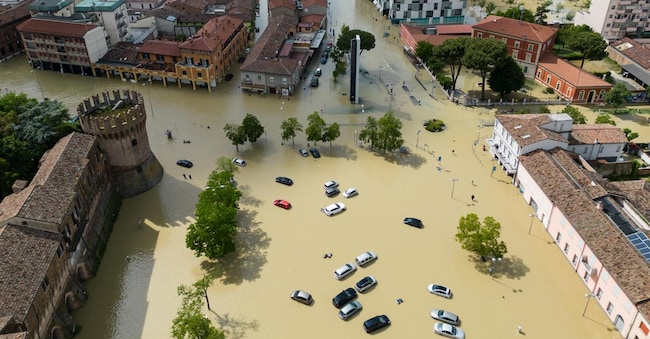
From the drop in production to the hours of redundancy payments required by companies, mostly those in the textile and mechanics industries. From income inequalities to the monthly salaries needed to buy a house, both of which are on the rise in large cities. From areas at risk of landslides or flooding to the average travel time to reach essential services (stations, hospitals and schools).
These are just a few of the 90 indicators of the Quality of Life 2024, selected by the editorial staff and referring to the 107 Italian provinces, which seek to take a snapshot of the most recent current events and the most complex phenomena that are changing our country. Each year, the choice of indicators that make up the ranking is guided by the desire to tell the story of the present. This is why no less than 27 parameters used this year are different from those used in 2023, with the aim of finding statistics that are more up-to-date and better able to tell the story of the year that has just gone by.
Loading...
News 2024
Among these, there are in particular nine new features introduced in the category "Environment and services", the most renewed compared to the previous edition, which makes the thematic ranking difficult to compare on an annual basis. It debuts the efficiency of drinking water distribution networks; the irregularities of the electricity service; the seat-kilometres offered by local public transport; the average annual concentration of PM10; the density of all photovoltaic plants; the areas at risk of landslides and floods; the municipalities with services for families entirely online; and ISTAT's urban fragility index (constructed through the combination of twelve elementary indicators describing the main territorial, environmental and socio-economic dimensions of fragility on a municipal basis).
Particularly decisive are also the innovations in the 'Wealth and Consumption' category, where parameters already used in past years have been re-introduced, such as the percentage of pensioners with pension income below EUR 500 and the average annual salary of private sector employees.
What makes the difference, however, and has a marked impact on the stage ranking, are the new indicators relating to the trend of per capita GDP (annual % change in the 2024 estimate over 2023, source: Prometeia) and the parameter of inequality of declared net income (last quintile/first quintile ratio). The latter is the result of an unpublished elaboration by the Ufficio studi del Sole 24 Ore starting from the tax statistics of the Ministry of Finance on declared incomes for 2022.


Brand connect
Loading...
